Physical education
Parallel PE™
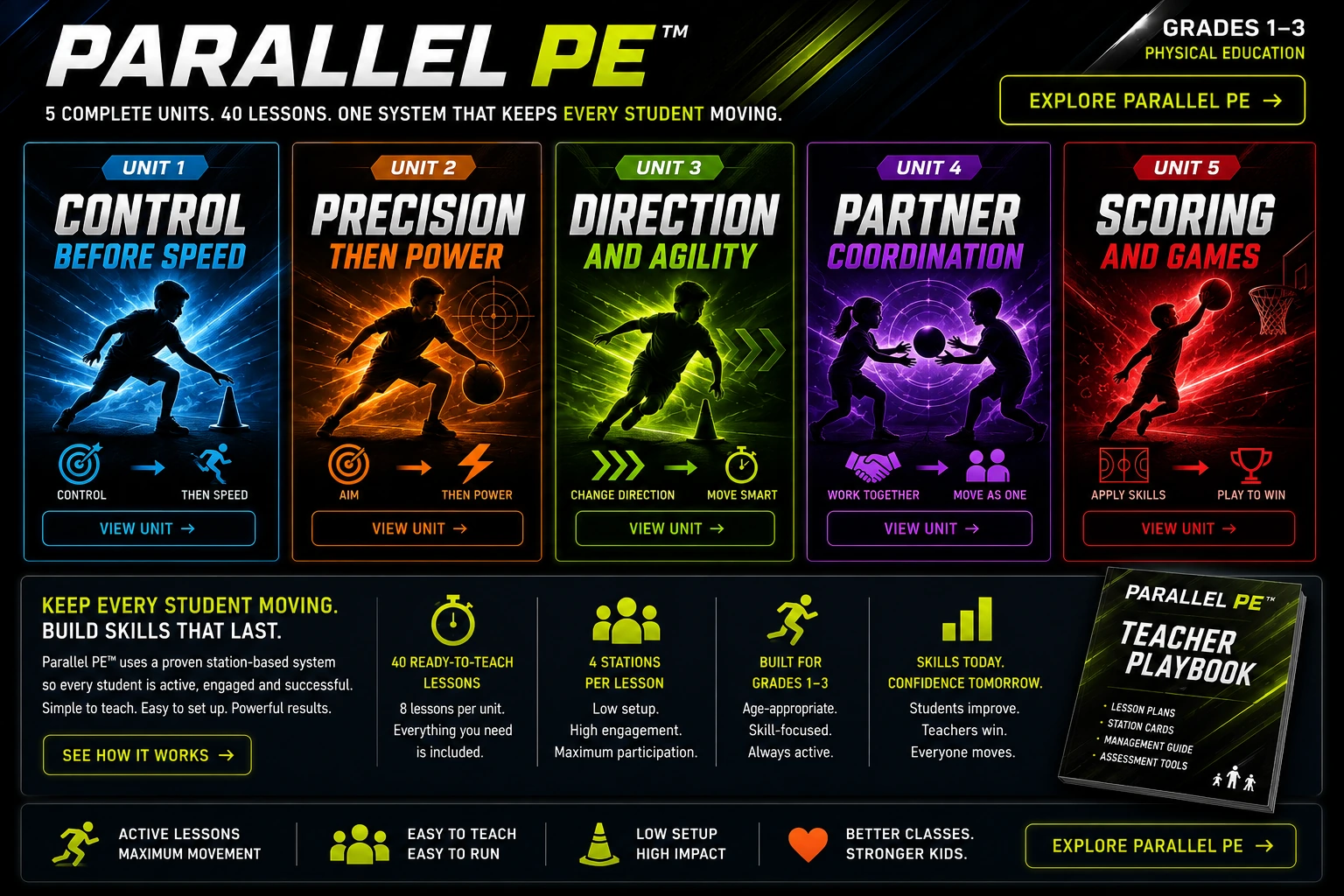
Five complete PE units with projectable teaching pages and classroom-ready lesson structure.
Grades K–3Five unitsMovement
Explore teacher page →Movement works better when the organizational grammar stays familiar. Parallel PE gives teachers five distinct units, The Launch Fix handles K–3 PE arrival, Signal Cube provides a short movement reset, and Quick Check adds a reusable assessment visual for performance-based learning.
Five complete PE units with projectable teaching pages and classroom-ready lesson structure.
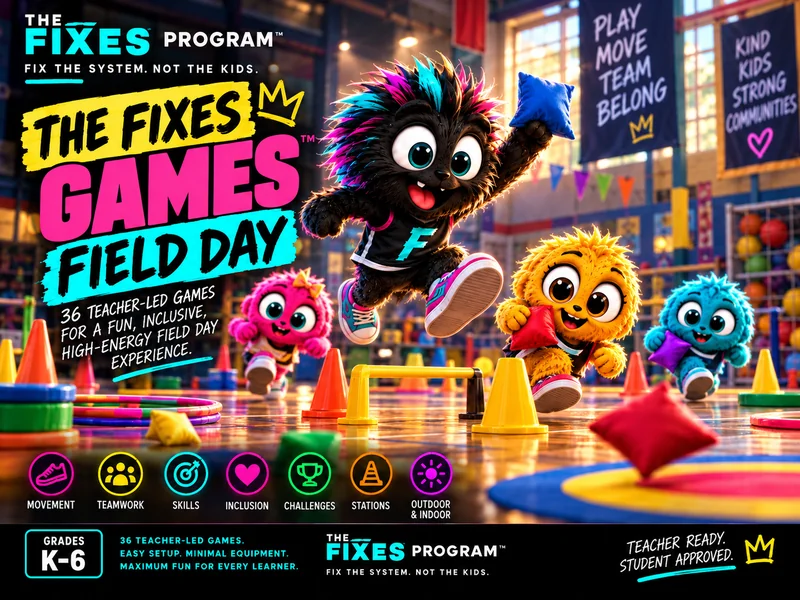
36 original teacher-led games with stations, printable cards and a full field-day plan.
Explore teacher page →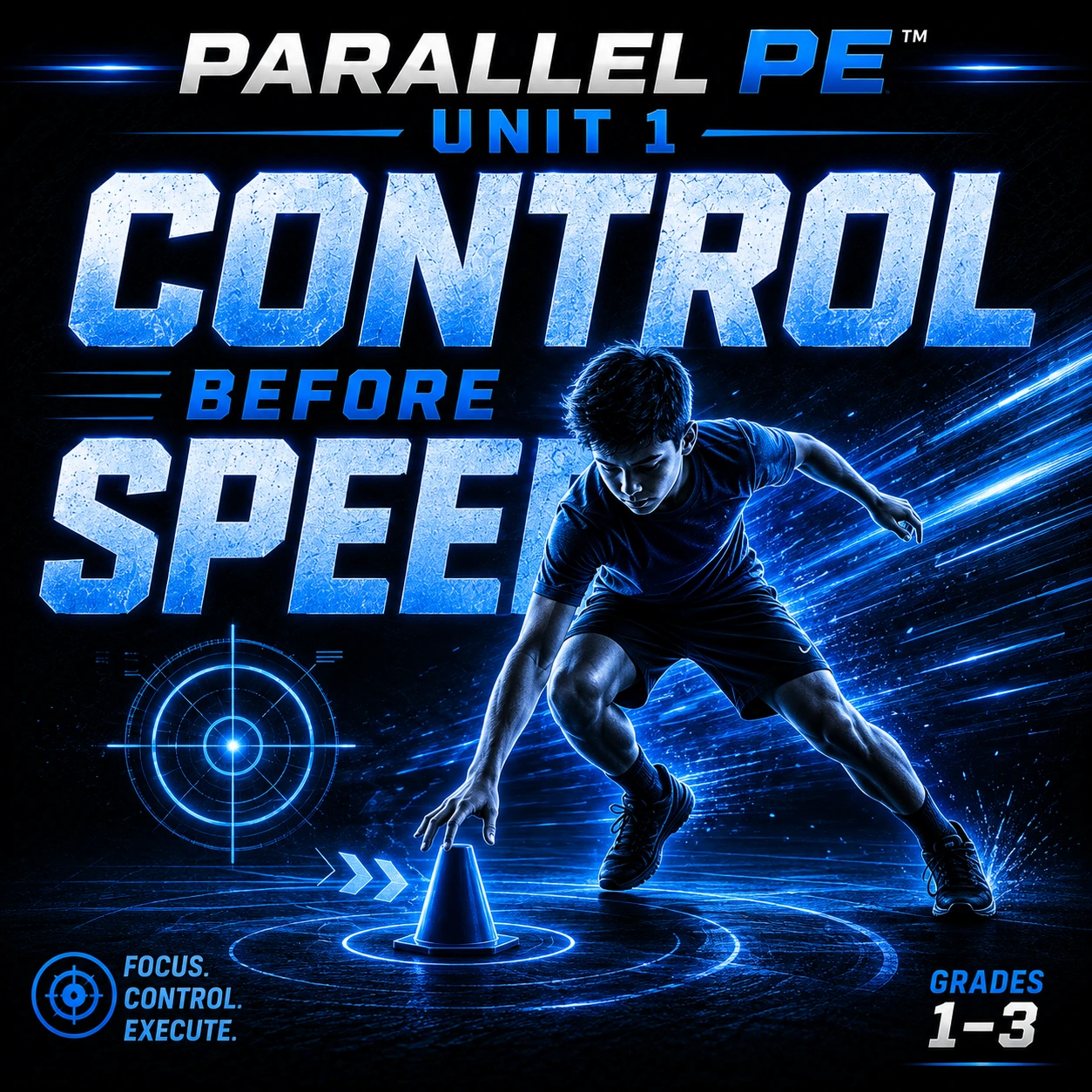
Parallel PE™ Unit 1: Control Before Speed is a classroom-ready Parallel PE™ unit for Grades K–3 focused on control before speed and foundational object control. Explore the teacher overview, then open the clean unit.
Explore teacher page →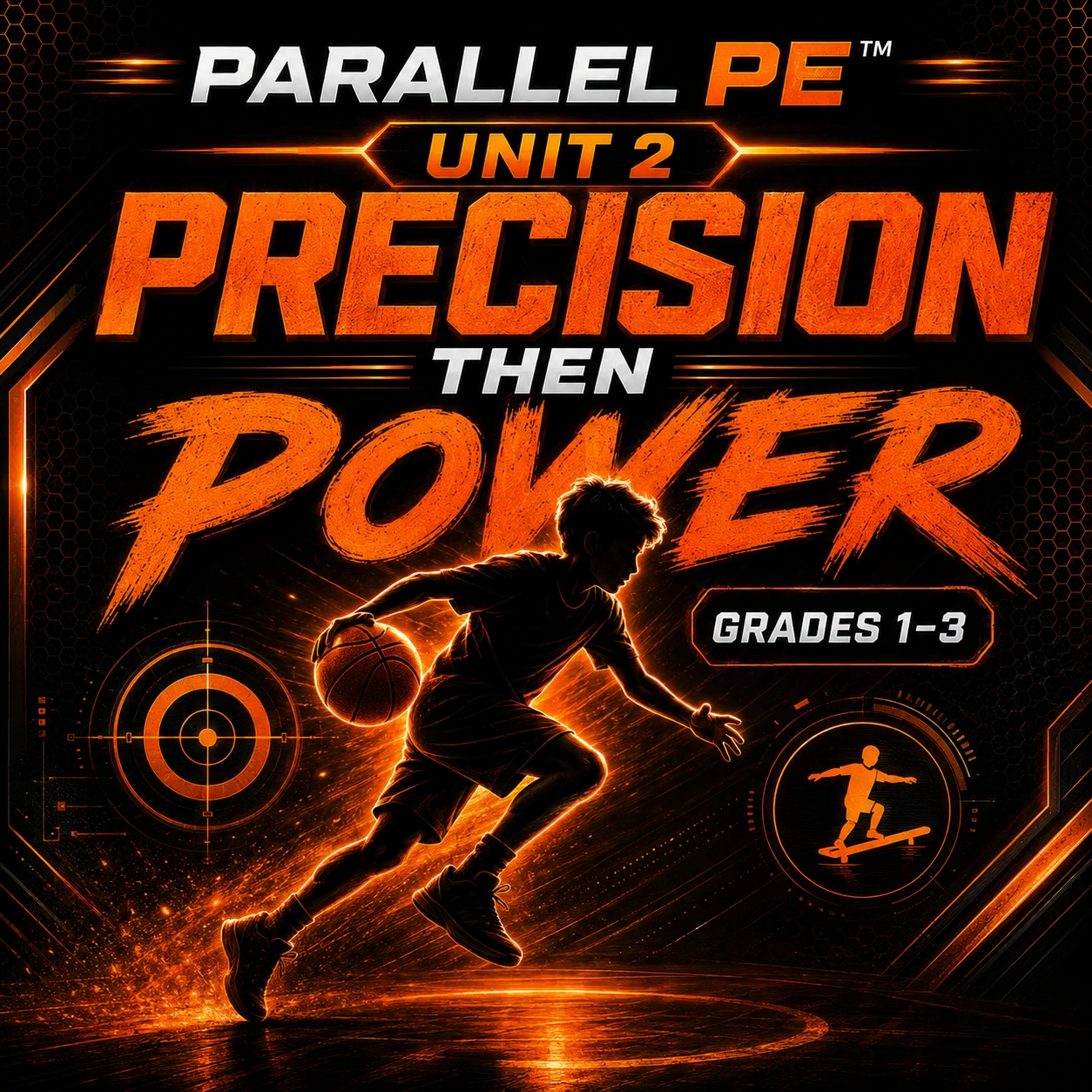
Parallel PE™ Unit 2: Precision Then Power is a classroom-ready Parallel PE™ unit for Grades K–3 focused on precision, accuracy and power. Explore the teacher overview, then open the clean unit.
Explore teacher page →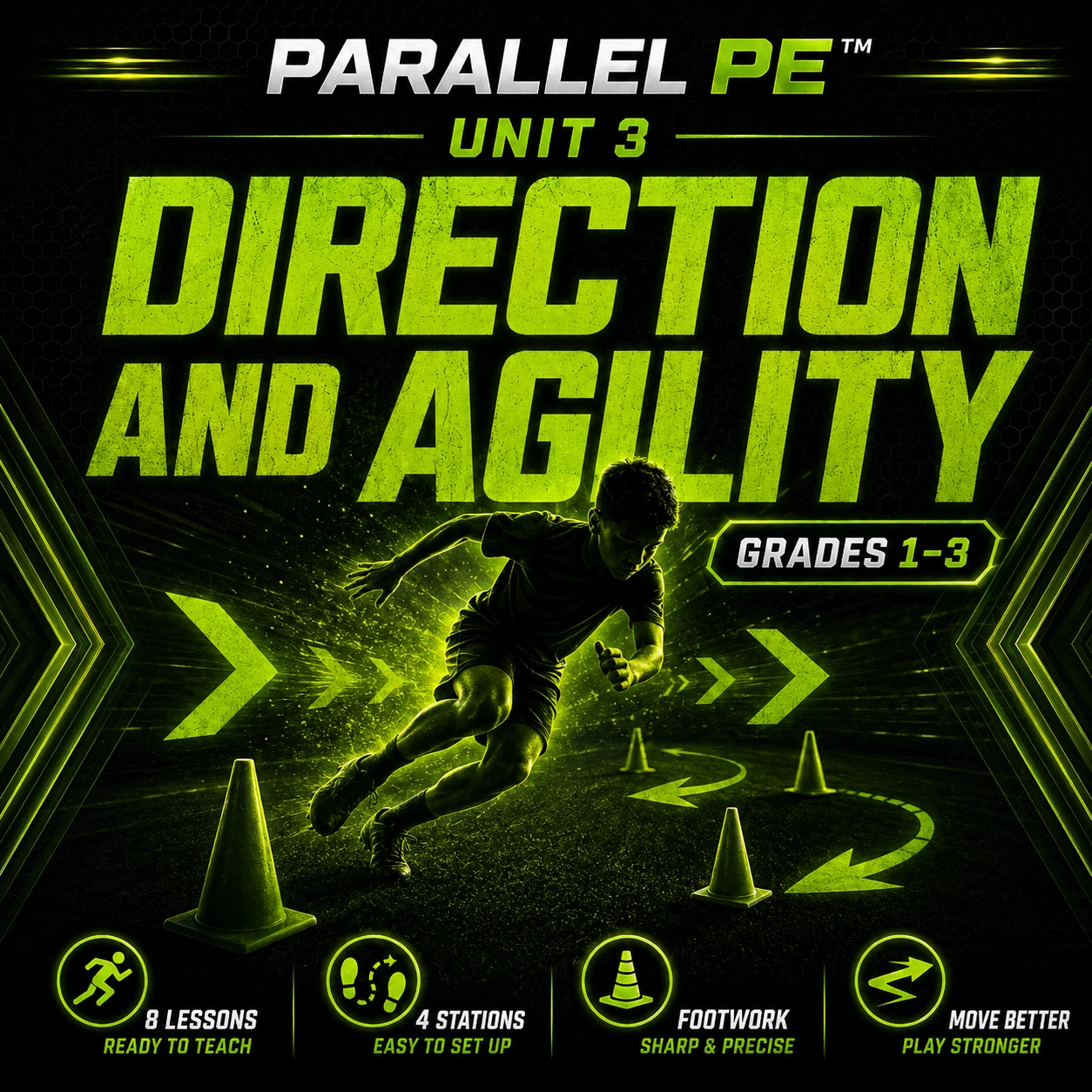
Parallel PE™ Unit 3: Direction & Agility is a classroom-ready Parallel PE™ unit for Grades K–3 focused on direction changes, movement pathways and agility. Explore the teacher overview, then open the clean unit.
Explore teacher page →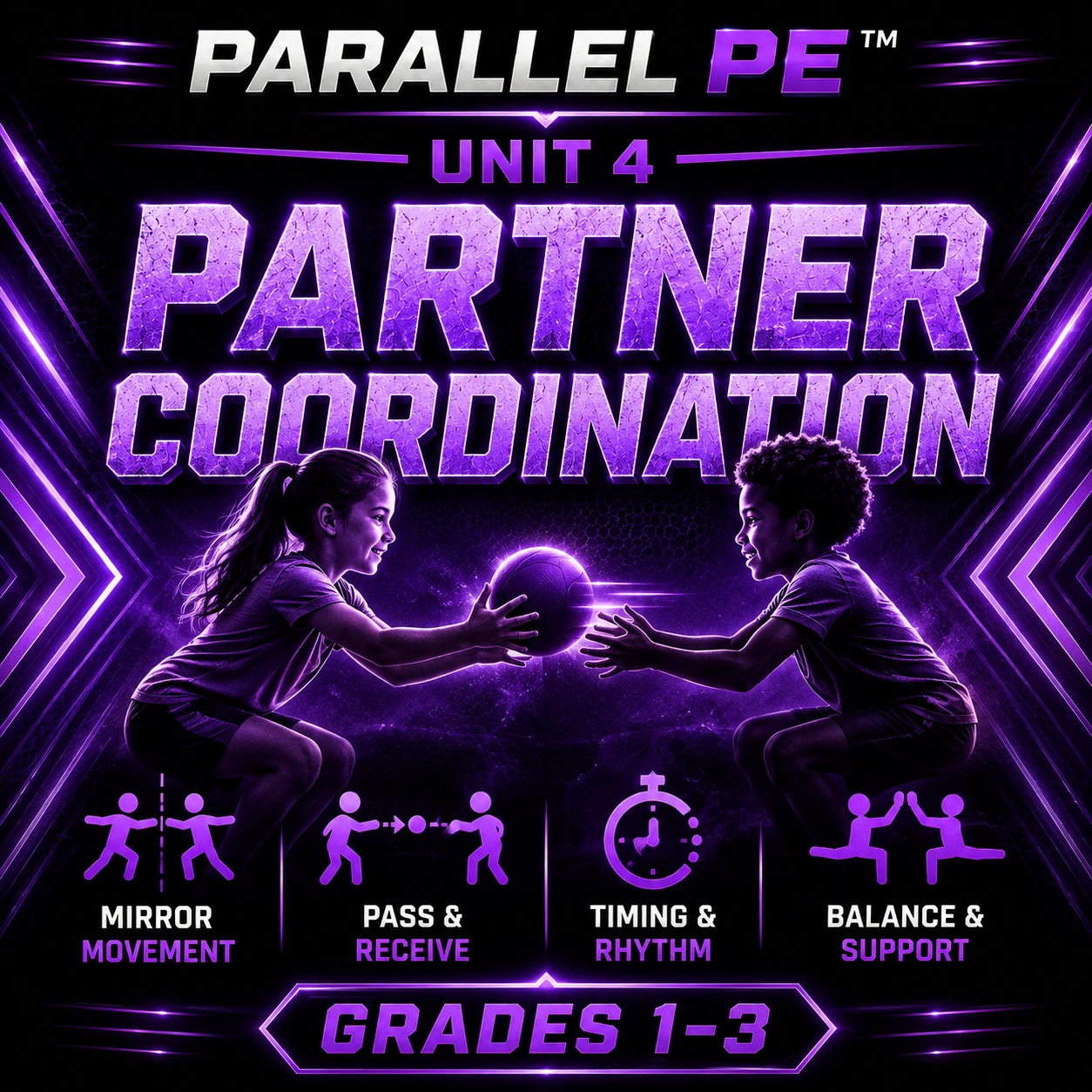
Parallel PE™ Unit 4: Partner Coordination is a classroom-ready Parallel PE™ unit for Grades K–3 focused on partner coordination, passing, mirroring, timing and balance. Explore the teacher overview, then open the clean unit.
Explore teacher page →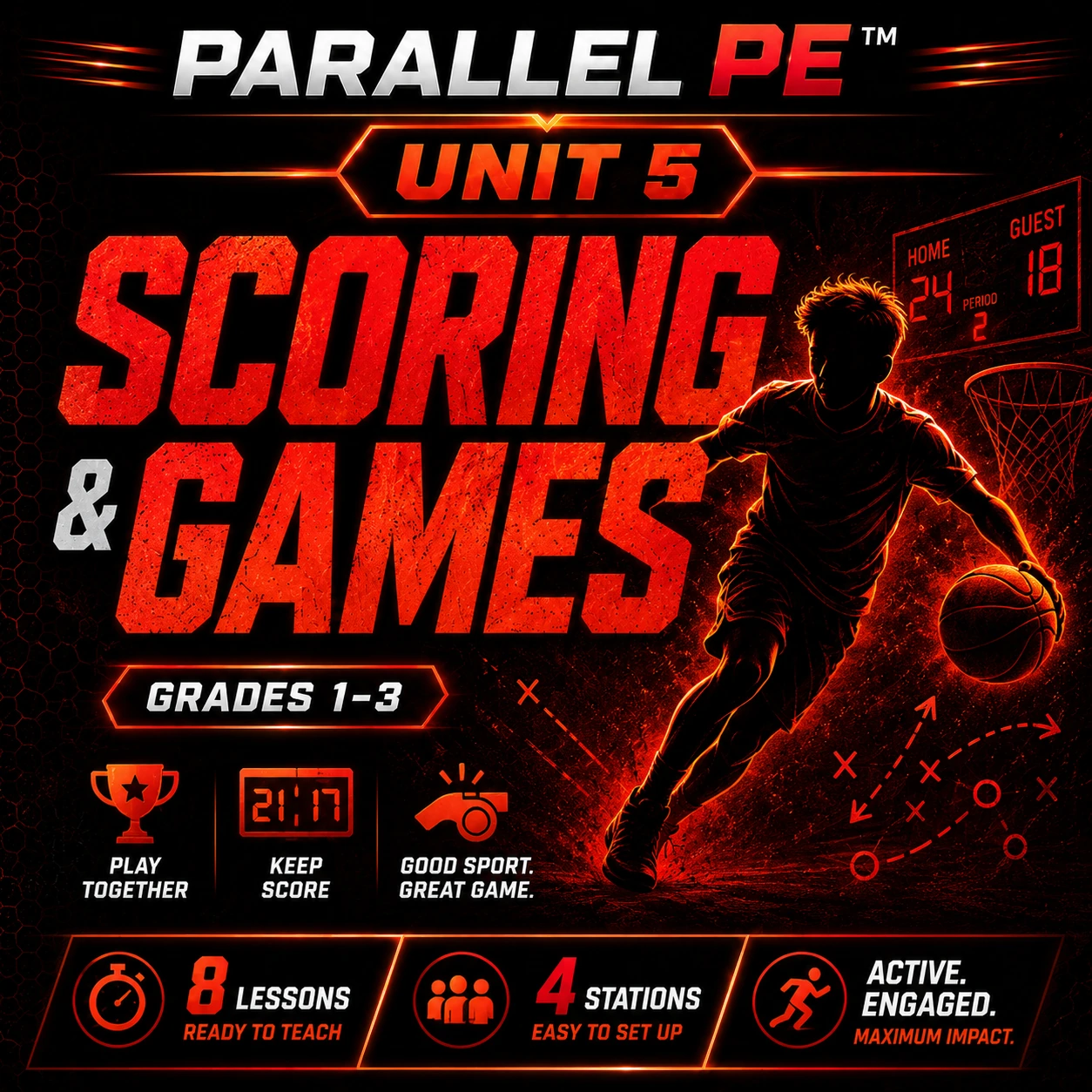
Parallel PE™ Unit 5: Scoring & Games is a classroom-ready Parallel PE™ unit for Grades K–3 focused on scoring, object control and cooperative games. Explore the teacher overview, then open the clean unit.
Explore teacher page →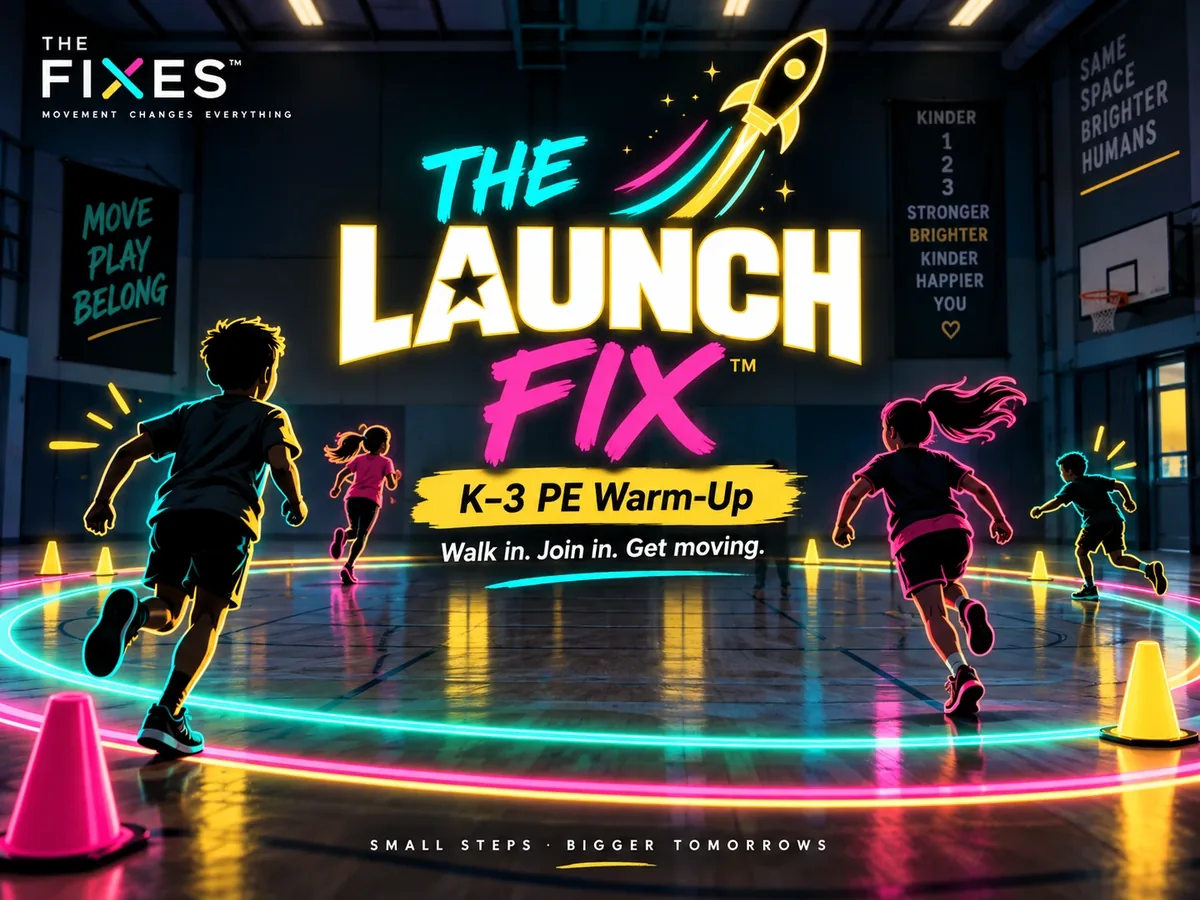
A projector-first PE arrival warm-up with visual movement models, a Launch Meter and a clean finish at the meeting spot.
Explore teacher page →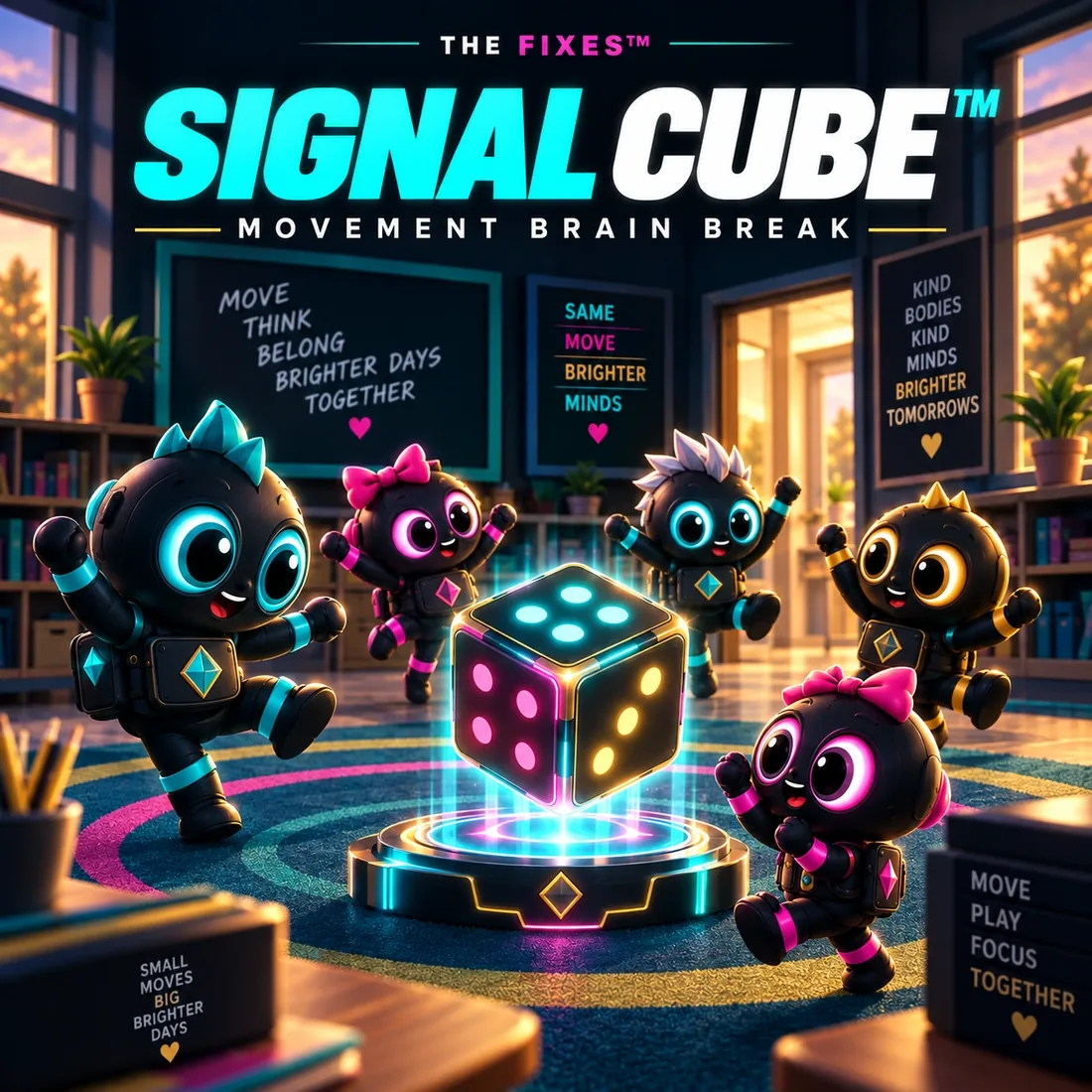
A 3–4 minute watch-copy-lock movement break with six cube faces and a locally saved Class Core.
Explore teacher page →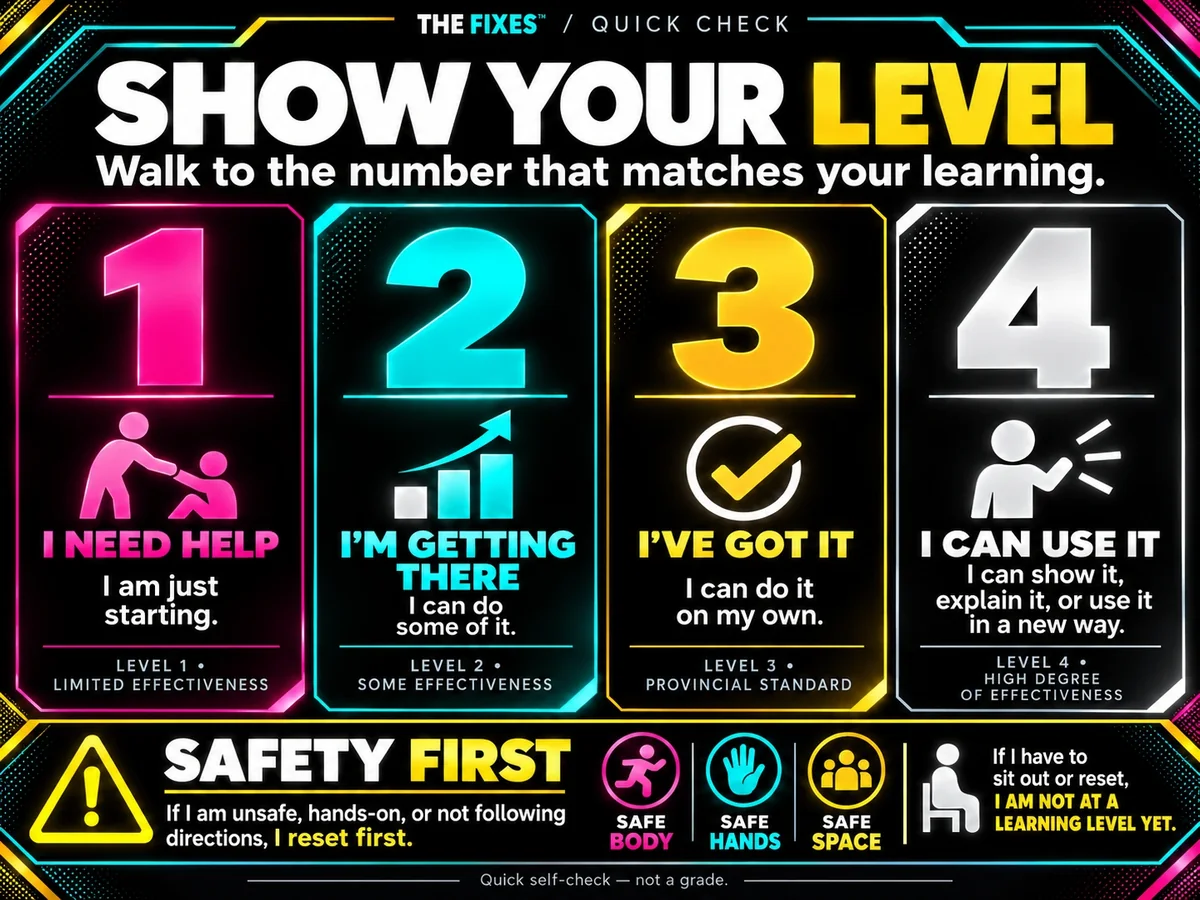
A four-level visual self-assessment support for PE, drama, dance, health and other performance-based learning.
Explore teacher page →Movement lessons can lose time in explanations, equipment distribution, team selection and long turns. The Fixes PE resources are built around short instructions, visible cues and formats that keep participation broad. The screen can organize a sequence, but the teacher still owns safety, space and skill feedback.
Choose the resource by the job you need it to do: warm the class up, teach a movement pattern, keep groups active in parallel, or give students a quick shared challenge.
Parallel PE is organized as complete units rather than a single warm-up. The design priority is simultaneous participation: students should spend more time practising and less time waiting for one line or one performer.
Launch Fix is a short visual movement start. Keep the cue simple, make the safe space obvious and let the movement begin before the explanation grows longer than the activity.
The four-level visual can help students show where they think their current performance sits. Ask for evidence—what did you do, notice or improve—so the number becomes a reflection prompt rather than a hidden grade.
If a movement is breaking down, change distance, speed, target size, partner demand or the number of decisions. A simpler task can preserve the intended skill while giving students a better chance to succeed safely.
A quick stop signal, equipment home and known restart position keeps a lively lesson from becoming a series of long teacher resets. The transition is part of the PE system, not dead time between activities.