
Use a consistent frame so one spectacular play or one familiar name does not quietly become the entire evaluation. The final selection remains a human coaching decision.
The Fixes™ / Coaching
COACH THE TEAM.
FIX THE SYSTEM.
Some of the hardest coaching problems are not drills. They are who plays, how the group functions, and how hard decisions get explained. These tools give coaches a simple system before the moment gets messy.
Choose the problemSIX HARD MOMENTS.
SIX HARD MOMENTS.
ONE SYSTEM EACH.
The coaching wing stays deliberately focused: choose the friction point, open the system and get back to the team.
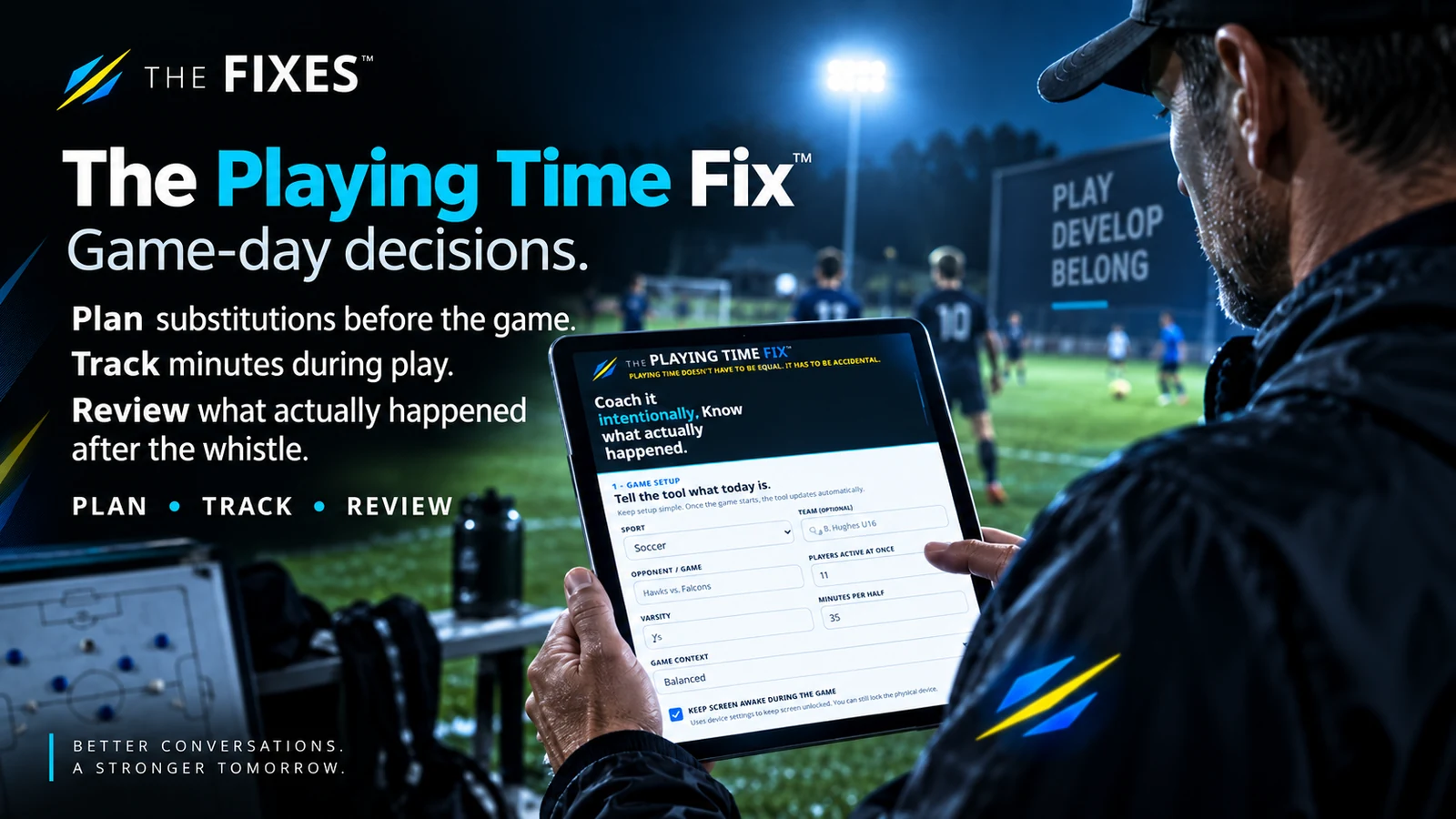
Playing time
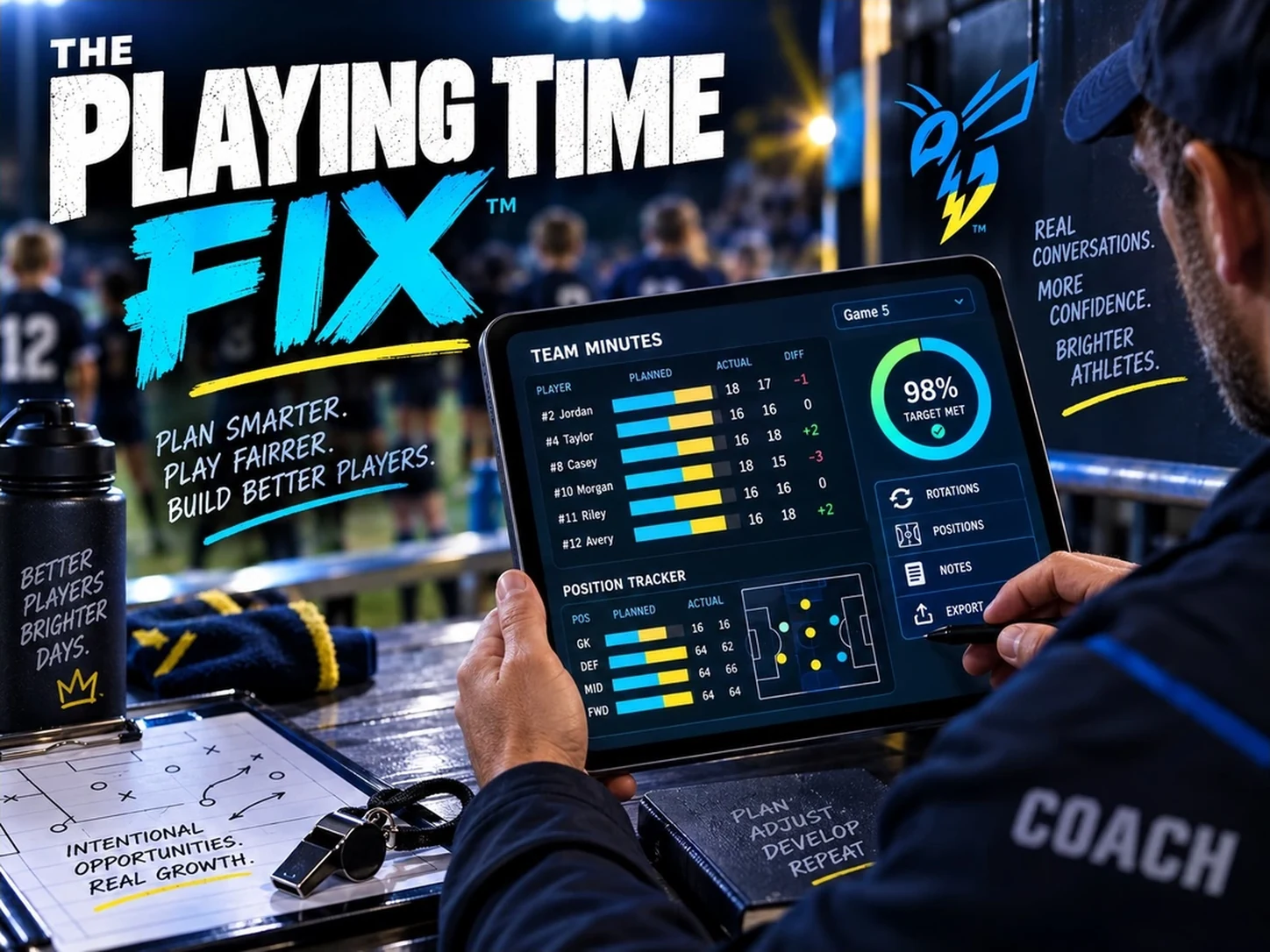
The Playing Time Fix™
Plan substitutions, track real minutes during play and review what actually happened after the whistle.

Practice culture
The Team Fix™
Choose a fast team activity, preview it, then run it in the first 5–10 minutes of practice.

Roster decisions
The Cut Fix™
Score players clearly, make the roster decision and save feedback you can actually explain to families.
NEW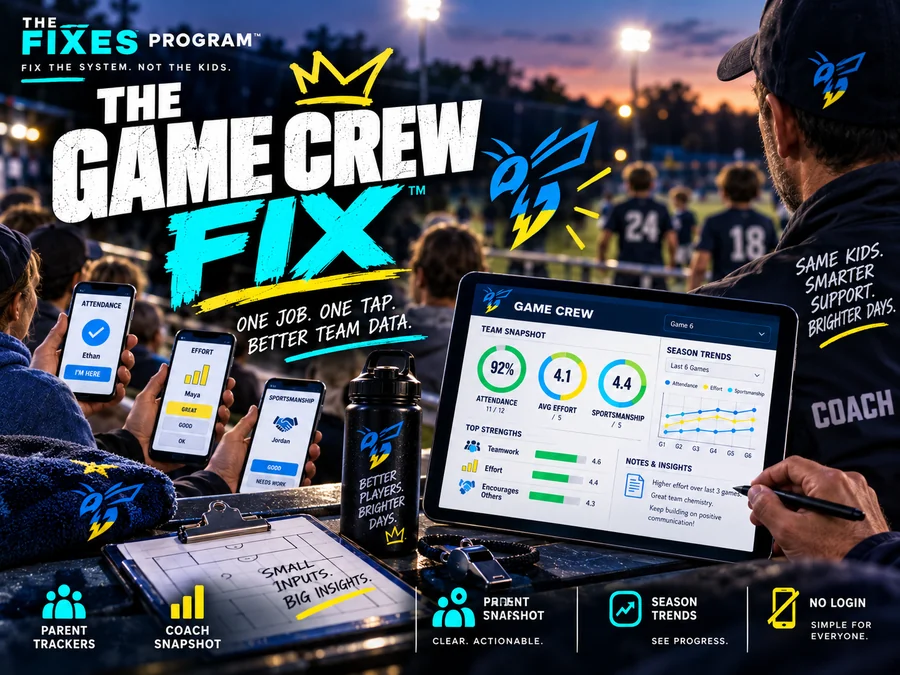
Game-day support
The Game Crew Fix™
Give each parent one simple tracking job, then bring useful game results back to the coach without accounts or a cloud database.

Game goals
The Focus Fix™
Give a player a few attainable game goals before the whistle, then bring their reflection back to the coach.
NEW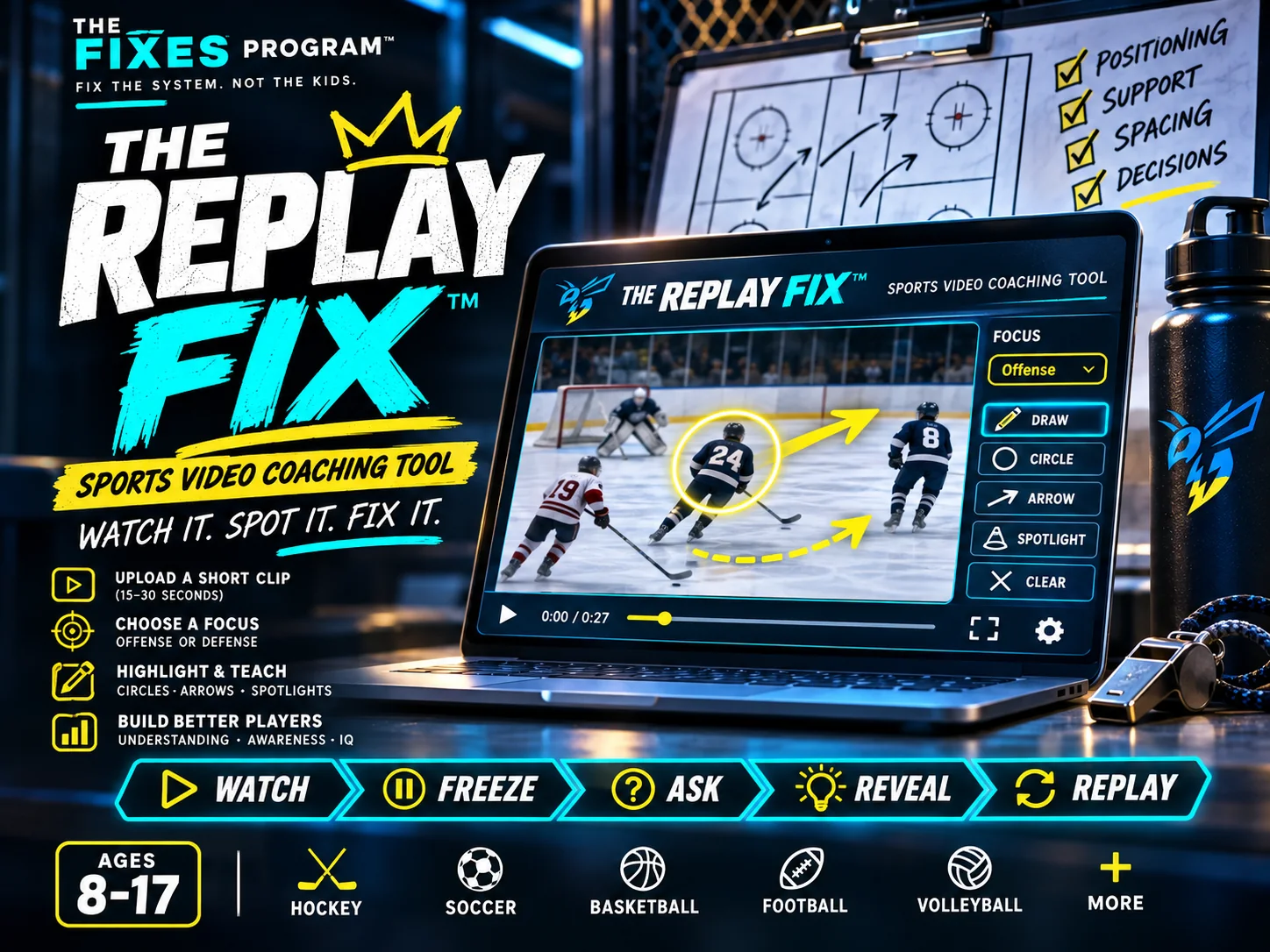
Video teaching
The Replay Fix™
Freeze a game clip before the outcome, ask the team what they see, then reveal and replay. Video stays on your device.
Why this existsTHE MOMENT SHOULD NOT
THE MOMENT SHOULD NOT
OUTRUN THE SYSTEM.
Good coaches still get put in bad decision environments. The Fixes gives the process somewhere to live before emotion, memory and time pressure take over.
01 · BEFORE
Set the frame
Make the important choices while there is still time to think clearly.
02 · DURING
Keep attention on people
The tool should reduce mental load, not turn coaching into data entry.
03 · AFTER
Review and explain
Leave with something concrete instead of relying on memory after a long day.
Coach NotesUSEFUL THINKING
USEFUL THINKING
AROUND THE TOOLS.
Original, practical notes for the parts of coaching that rarely fit neatly into a drill plan.
Playing time
Track playing time without coaching the spreadsheet
A simple way to separate the plan, the game, and the review so the numbers support judgment instead of replacing it.
Read Coach Note → Team cultureWhy the first ten minutes of practice matter
How short, purposeful team activities can make communication and connection part of practice instead of a speech.
Read Coach Note → Roster decisionsExplain tryout decisions without hiding behind clichés
A clearer structure for evaluation, decisions and feedback when players and families deserve more than “it was close.”
Read Coach Note →Fix the coaching system
The hard parts of youth sport are often decisions, not drills.
A coach can have an excellent practice plan and still struggle with the moments around the sport: tryout criteria, playing time, parent conversations, player development, team culture and getting an explanation to transfer from the whiteboard into play. The Coaching Fixes are built for those system problems.
The tools do not make roster, playing-time or development decisions for the coach. They make the criteria, plan or communication structure visible enough that the coach can make and review those decisions more deliberately.
Set an intention before the game, record reality quickly and review the gap afterward. The tool is not an equality calculator and should not pull the coach’s eyes away from the game.
A player benefits more from one clear strength, one need and one next action than from a vague “keep working.” Development language should help the next practice look different.
Use a structure when emotions are already high so the coach can explain the decision, evidence and next step without hiding behind generic phrases or arguing every detail.
Communication, trust, focus and recovery improve when players get short repetitions inside practice. A five-minute activity can be enough if the behaviour transfers into the sport afterward.
A tool can improve consistency without pretending every coaching decision is objective. Sport context matters. Age, competition level, injuries, attendance, position and development goals all change what a reasonable decision looks like.