
What this Fix is for
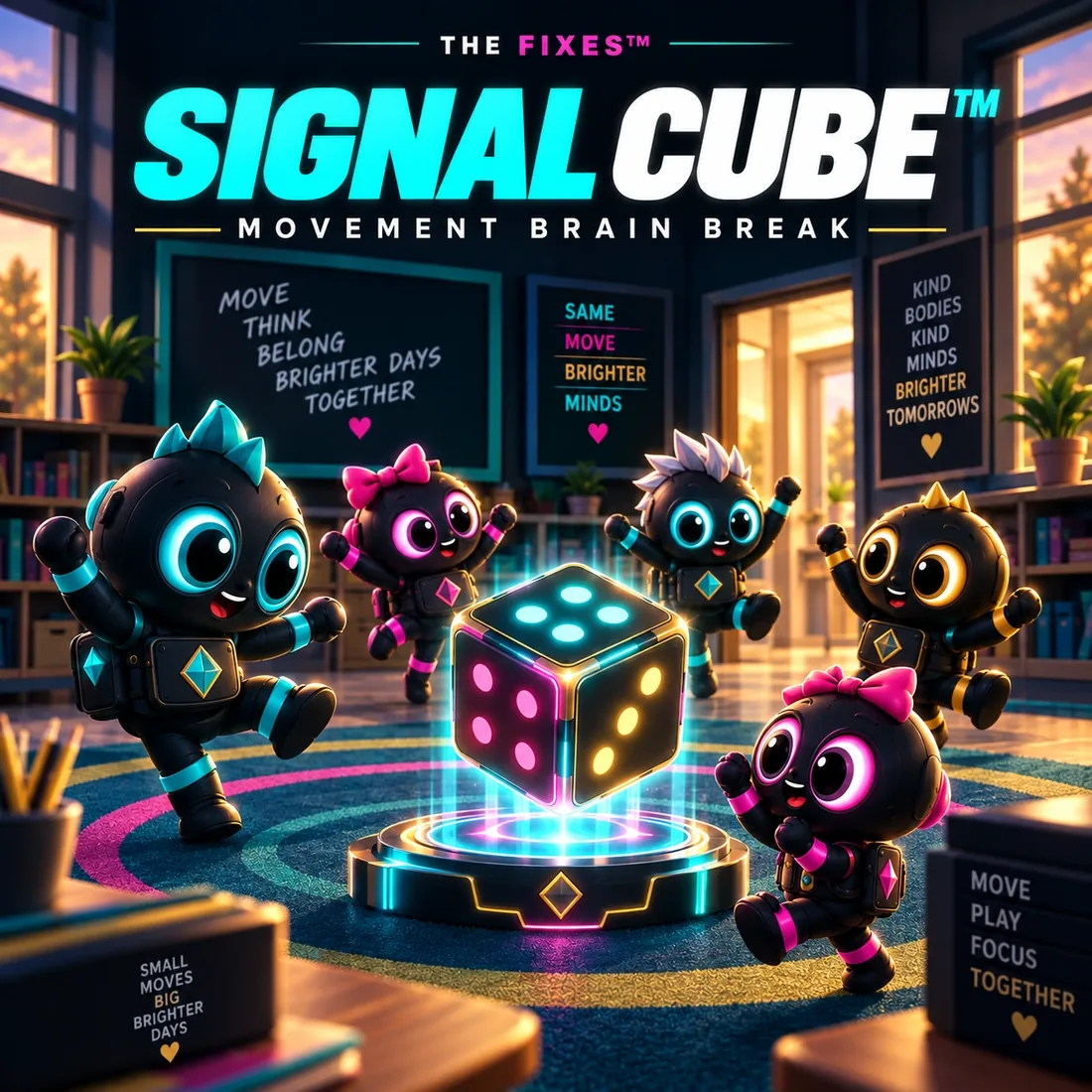
Signal Cube is a three-to-four-minute movement brain break for the moment when a class needs to move but you do not want to launch a loud competition or explain six new rules. The cube unfolds one face at a time, the creature demonstrates a movement pattern, and the class copies it twice before the face locks.
How it works in the room
Put it on one shared screen and press Start. Students watch first, then move with the character. A full run uses all six faces. The Class Core saves completed runs locally on the teacher device, so repeat use feels connected without requiring a student login or individual tracking.
What the teacher actually does
- Choose a safe amount of personal space before starting.
- Tell students to watch the demonstration before copying.
- Let the screen handle the face sequence and short sound cues.
- Use the completed cube as the finish point, then move directly back to the next classroom task.
When it earns its place
It fits especially well after a long seated block, after recess when students still need a controlled movement bridge, or during a five-minute gap when starting another lesson would make no sense. The activity is short enough to use without sacrificing the next transition.
What to watch for
The goal is not maximum speed. If students start racing the animation, widen the space, lower the volume and return to “watch first, copy second.” The visual model should reduce teacher narration, not become another source of frantic movement.