
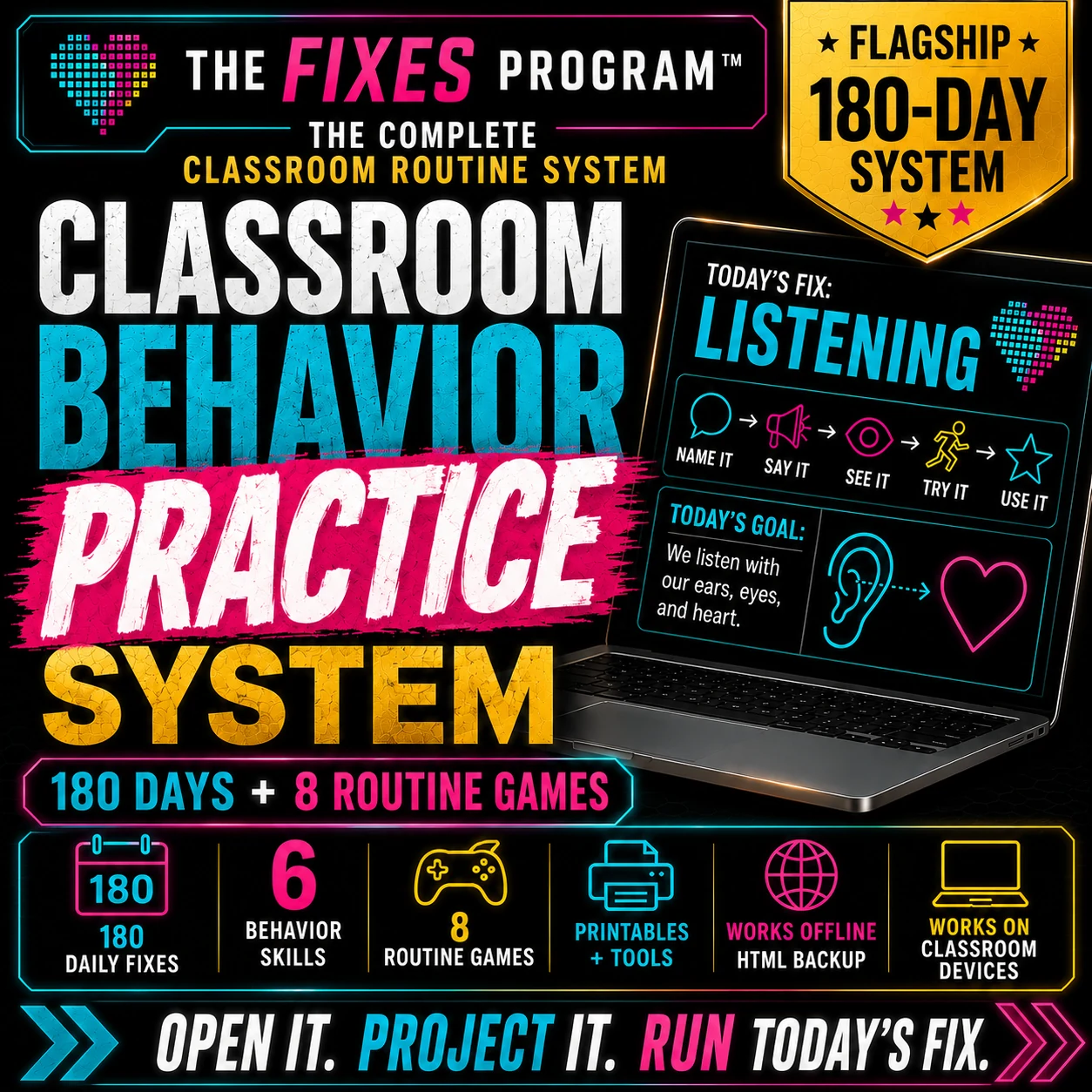
Full-year system
The Fixes Program™ / Behaviour OS
A full-year behaviour practice system that turns expectations into visible models, short reps, classroom use and repair.
Behaviour practiceRoutinesWhole-class reset
Explore teacher page →When reminders keep repeating, use a Fix that actually rehearses the expectation. These tools help teachers model, practise, reset and repair without turning behaviour into more paperwork.
A full-year behaviour practice system that turns expectations into visible models, short reps, classroom use and repair.

Nine connected classroom worlds where schools compete in a fair weekly league, powered by real Clean Reps.
Explore teacher page →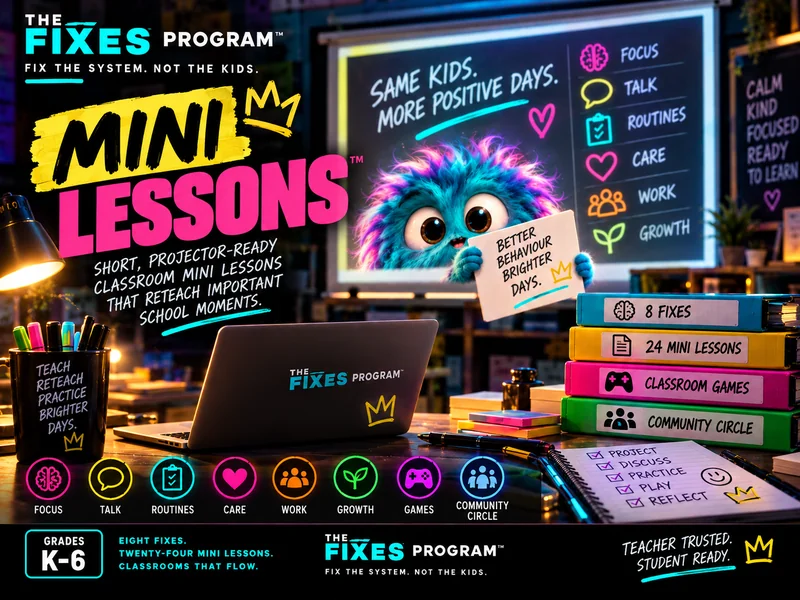
Eight Fixes, 24 original mini-lessons and 10 optional quick resets for real classroom habits.
Explore teacher page →
Nine event skins turn classroom routines into clean reps, personal bests and season progress.
Explore teacher page →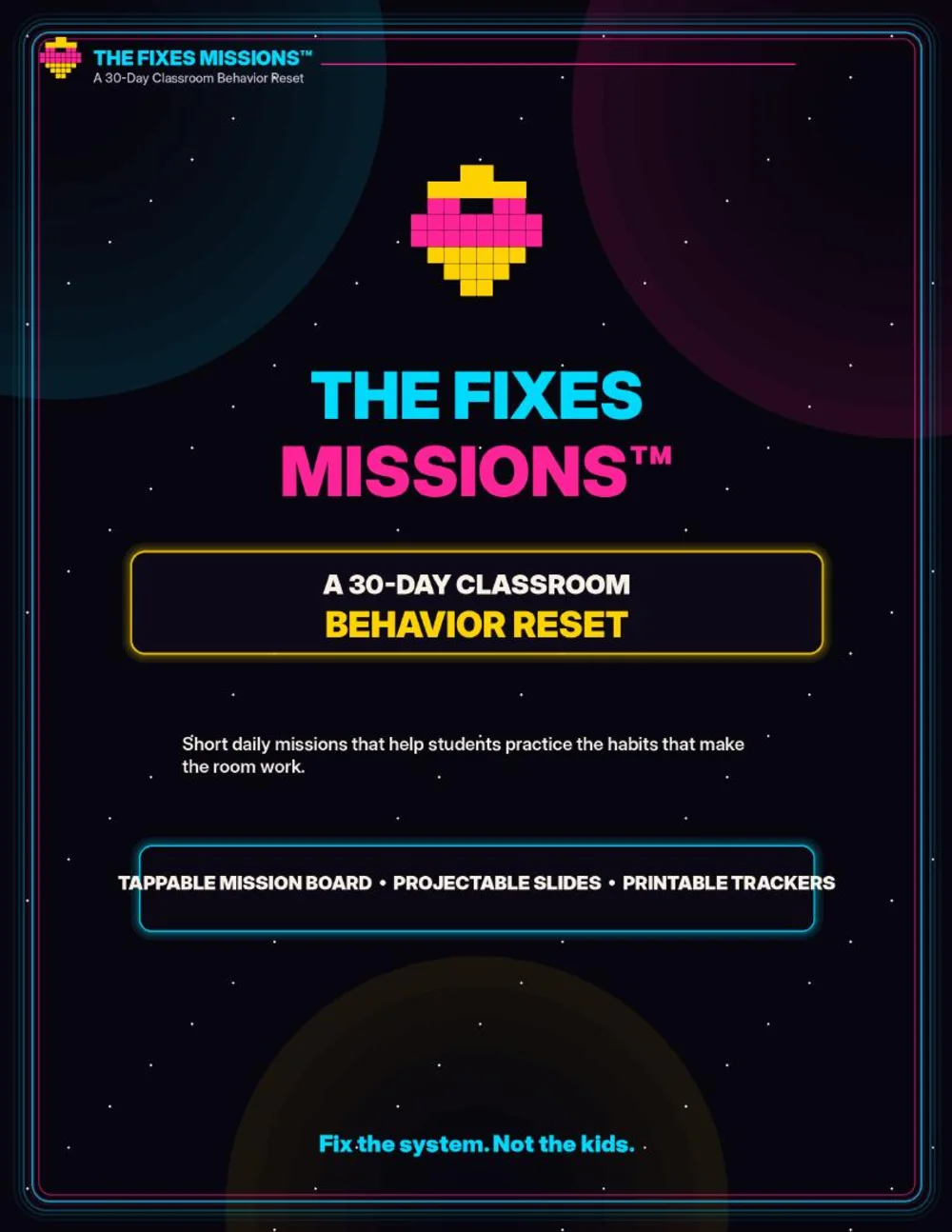
Thirty short behaviour missions that turn reminders into repeatable practice.
Explore teacher page →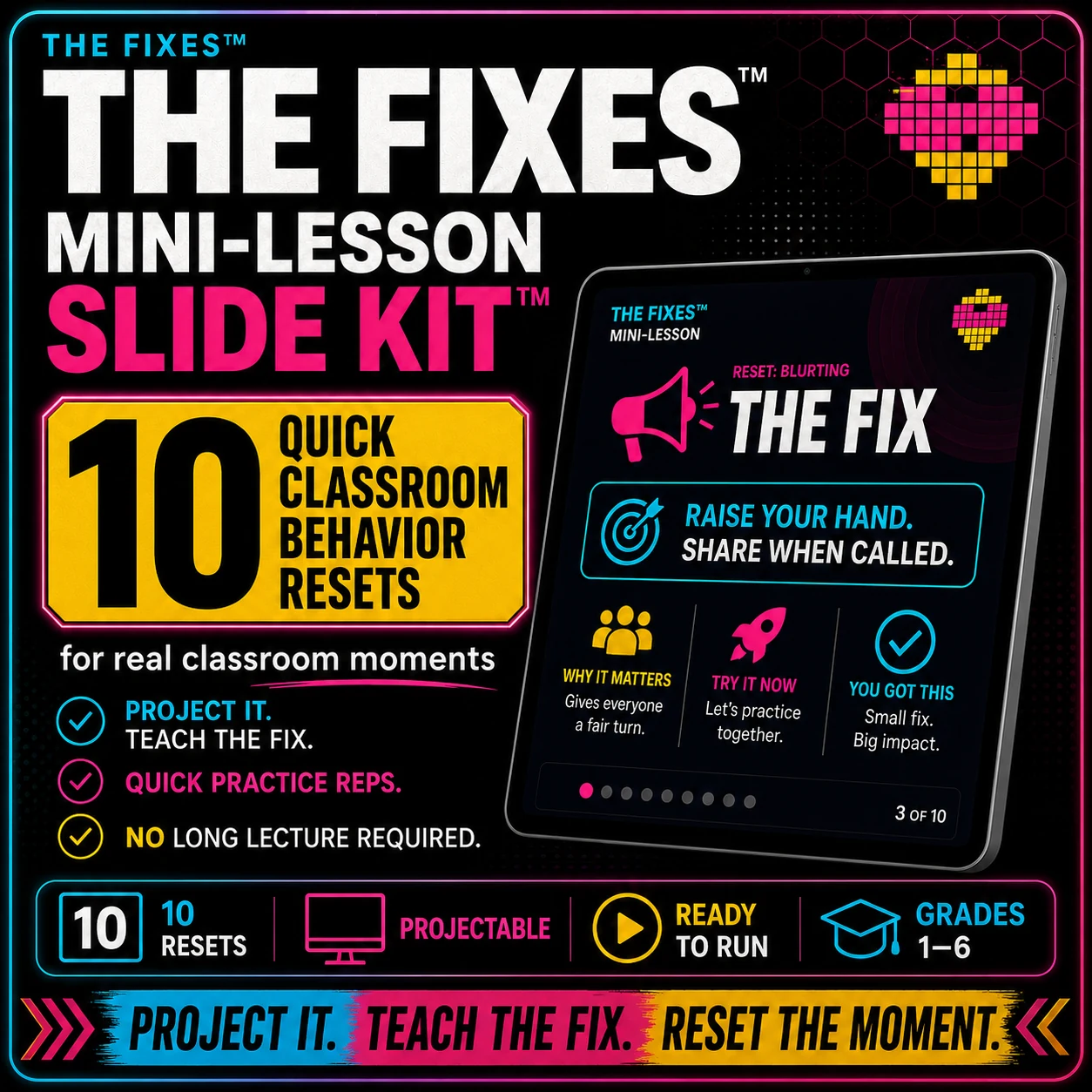
Projectable mini-lessons for the classroom moments teachers end up reteaching anyway.
Explore teacher page →
Twelve projectable tracks for greeting, conversation, gratitude, table manners, and everyday social routines.
Explore teacher page →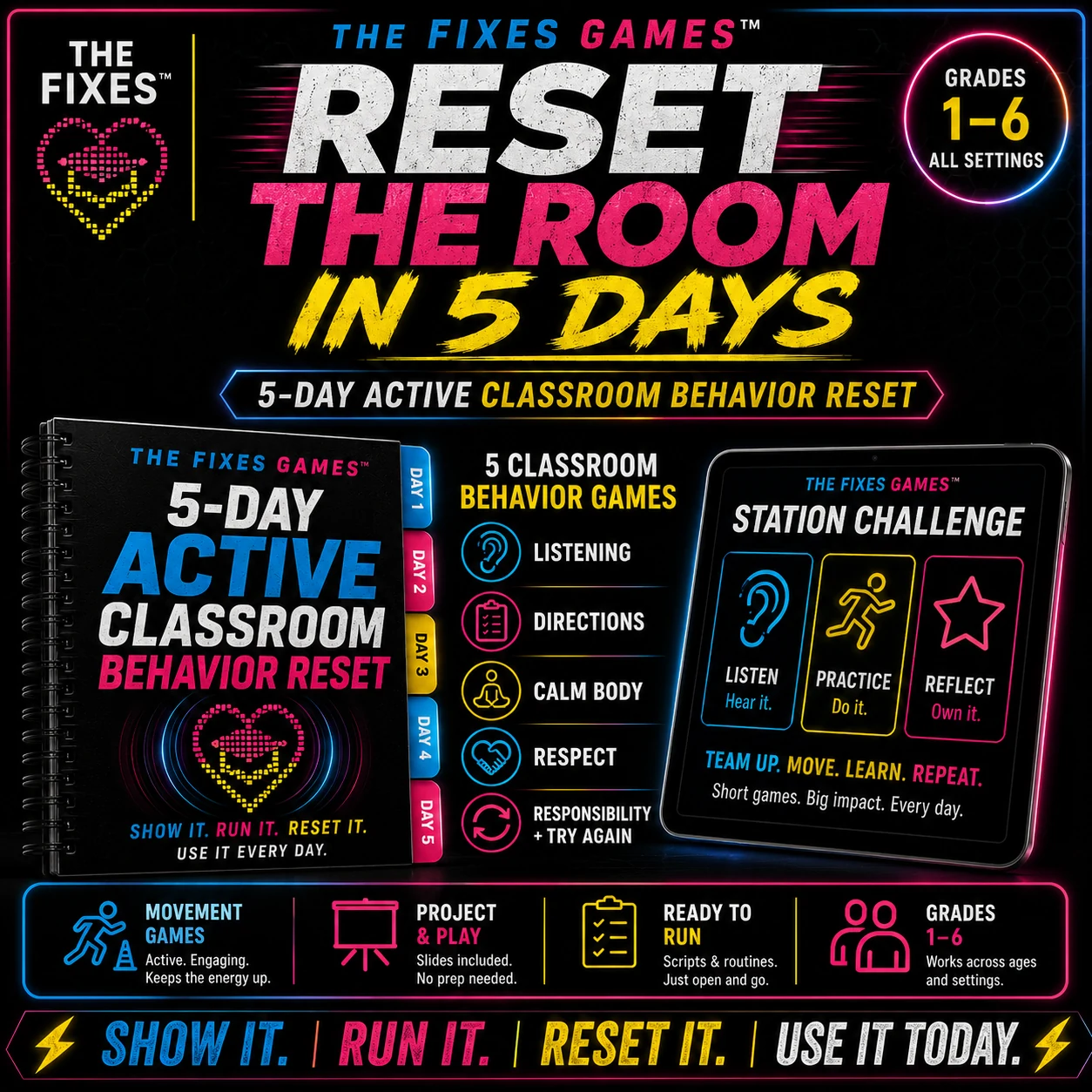
A five-day active classroom reset built around whole-class games and behaviour practice.
Explore teacher page →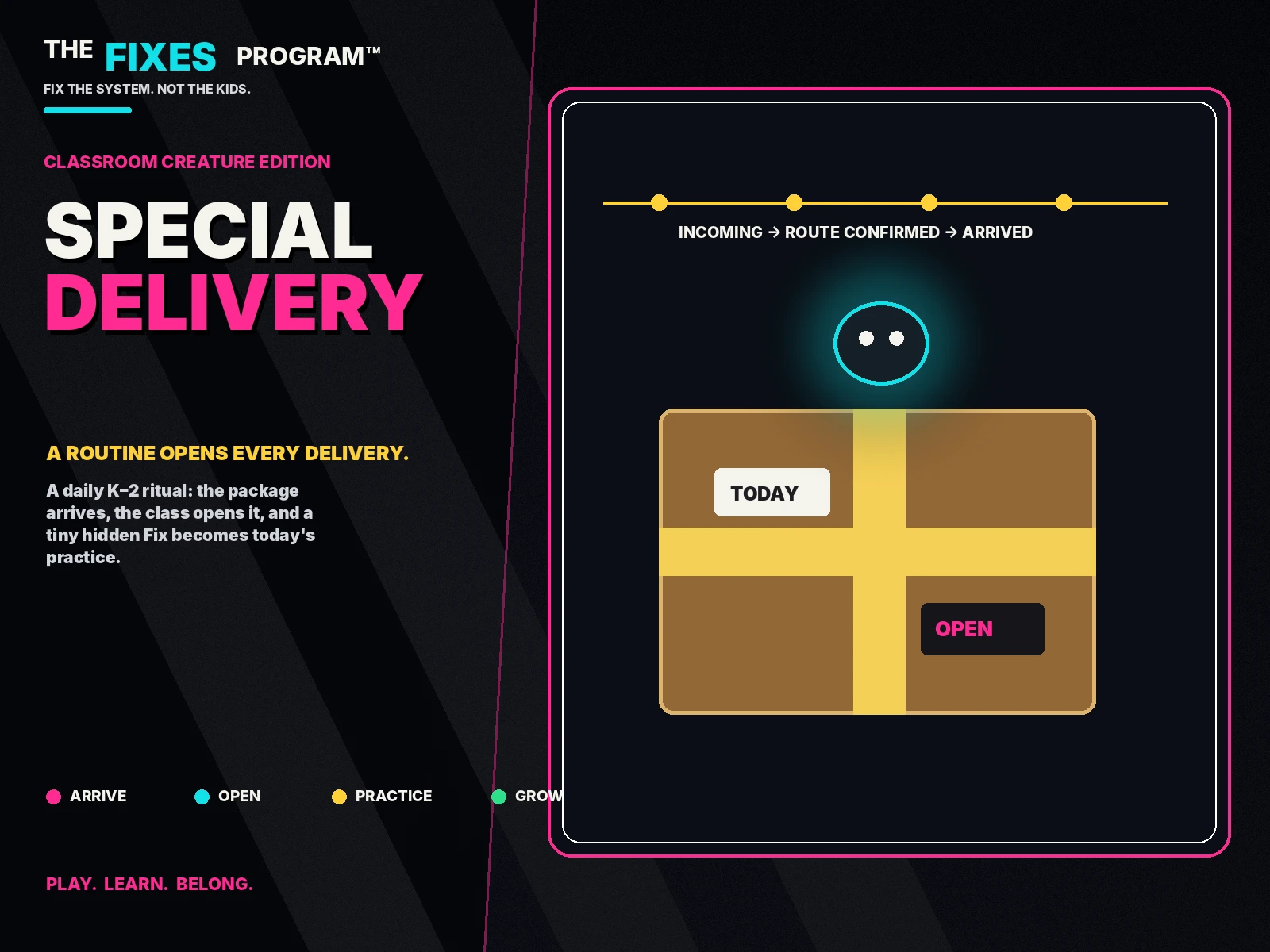
One sealed classroom delivery per school day. Practise a real routine, then unlock a creature or habitat surprise.
Explore teacher page →When a class is off track, it is tempting to explain the expectation again in more words and with more intensity. Sometimes the expectation was never the missing piece. Students may already know the rule but not be fluent at using it during the noisy, rushed or social moment when it matters.
The resources here treat behaviour as something that can be modelled, rehearsed, cued and repaired. That does not remove accountability. It changes the first question from “Why will they not do it?” to “What part of the system is not carrying the behaviour yet?”
The full-year system is for expectations that deserve repeated practice across the year rather than one emergency reset. It gives common behaviour areas a model → practice → use → repair rhythm.
Thirty short missions create a concentrated reset without asking the teacher to invent a new consequence or worksheet each day. The value is repetition around a small set of behaviours, not novelty for its own sake.
If materials, waiting, listening or a transition is failing right now, a short targeted reteach is often more useful than restarting an entire behaviour program. Narrow the target until students can actually show it.
A redo is practice, not public embarrassment. Stop, return to the start point, show the first move and run it again. Long post-mortems can accidentally give the failed attempt more attention than the successful one.
A Fix has done its job when the teacher can use the normal cue and students can perform the routine without the full tool. Keep the shared language; reduce the scaffolding.