 THE
THE PROBLEM
Young students often understand a routine but still need dozens of calm repetitions before it becomes automatic.
Repeating the same verbal reminder can lose its power quickly.
One sealed classroom delivery per school day. Students practise a real routine for 20–60 seconds, then the class unlocks a creature change, habitat surprise or keepsake.
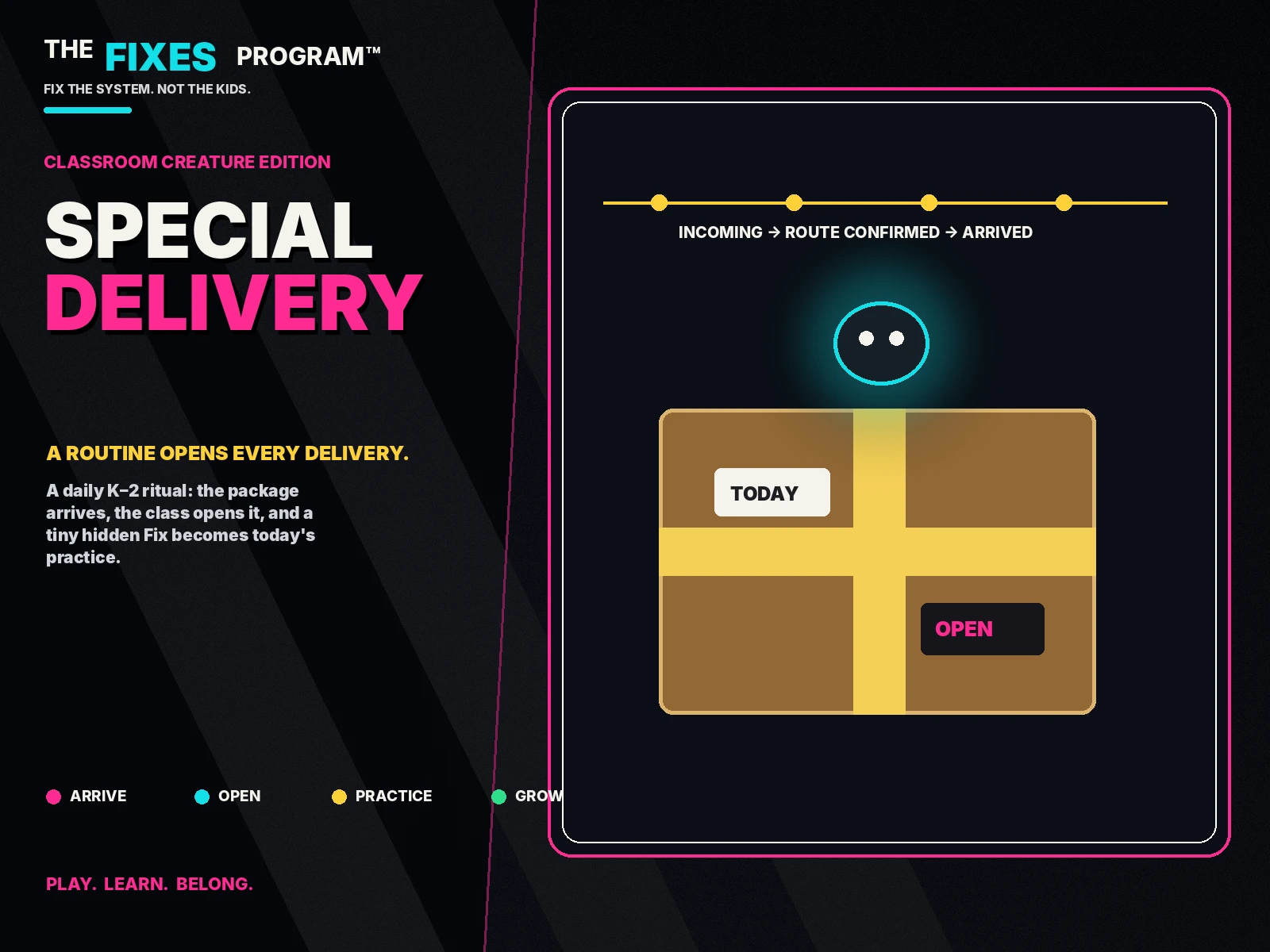
Special Delivery turns the procedures teachers already need—line-ups, carpet moves, cleanup, materials, work starts and transitions—into a tiny daily classroom ritual.
Repeating the same verbal reminder can lose its power quickly.
The screen adds anticipation. The behaviour practice still happens in the room.
The classroom version is teacher-controlled, locally saved and designed for one shared screen.
Choose the procedure the room actually needs: line up, freeze and listen, transition, cleanup, materials, carpet, hallway, work start or a custom routine.
Students complete the procedure in the room. The screen shows three simple visual steps; the teacher confirms when the class is ready.
The sealed parcel opens only after the routine. Across the year, visitors grow, habitats change, class choices stick and keepsakes remain.
line-ups · carpet ready · cleanup · materials · hallway · work starts · transitions · freeze and listen
If you want a one-page teacher reminder before you launch the classroom version, keep the quick start guide handy.
A one-page overview of what it is, how it runs, routine ideas, and the key design rules for K–2 classrooms.
Teacher Guide (PDF) ↗The live classroom route is separate from this teacher page and does not load AdSense, Stripe, the Teacher Time Receipt or the teacher analytics layer.
Young students can understand a routine long before they can perform it automatically in every context. Special Delivery wraps a short real classroom procedure—line up, clean up, move to the carpet, handle materials, freeze and listen—inside a sealed daily reveal. The surprise creates attention, but the practice still happens in the room.
The ritual only works if it stays small. The package should lead quickly to the routine and then get out of the way so the class can return to the day.
Do not invent a behaviour goal simply because a delivery is available. Pick the procedure that will matter again later: the next transition, hallway move, material pickup or work start.
A short cue such as “Package waiting” or “Sleeping-box voices” can survive after the screen closes. Reuse the phrase in the real moment so the story language becomes a memory cue rather than a one-time joke.
The reveal comes after the class completes the agreed procedure. Keep the criteria simple enough that students know what success looks like before they begin.
Characters and habitats are useful when they make the routine memorable. If the teacher needs a long story explanation before every rep, the support has become larger than the skill it was meant to practise.
A daily reveal can build early repetition, but the goal is not permanent dependence on a package. When the class performs the routine from the normal classroom cue, celebrate that independence and use Special Delivery for a different target or less often.