

Daily routine tool
Signal Fix™
Turn Line Up, Carpet Move, Tidy Up, Materials, Quiet Talk, or Pack Up into one-touch team missions.
Line upTidy upPack up
Explore teacher page →Transitions cost time when the routine lives only in the teacher’s voice. Signal Fix and Schedule make the routine visible so students know what happens next without another speech.
Turn Line Up, Carpet Move, Tidy Up, Materials, Quiet Talk, or Pack Up into one-touch team missions.

Use a two-minute Daily Rep or a full meet to rehearse line-up, cleanup and other repeated routines.
Explore teacher page →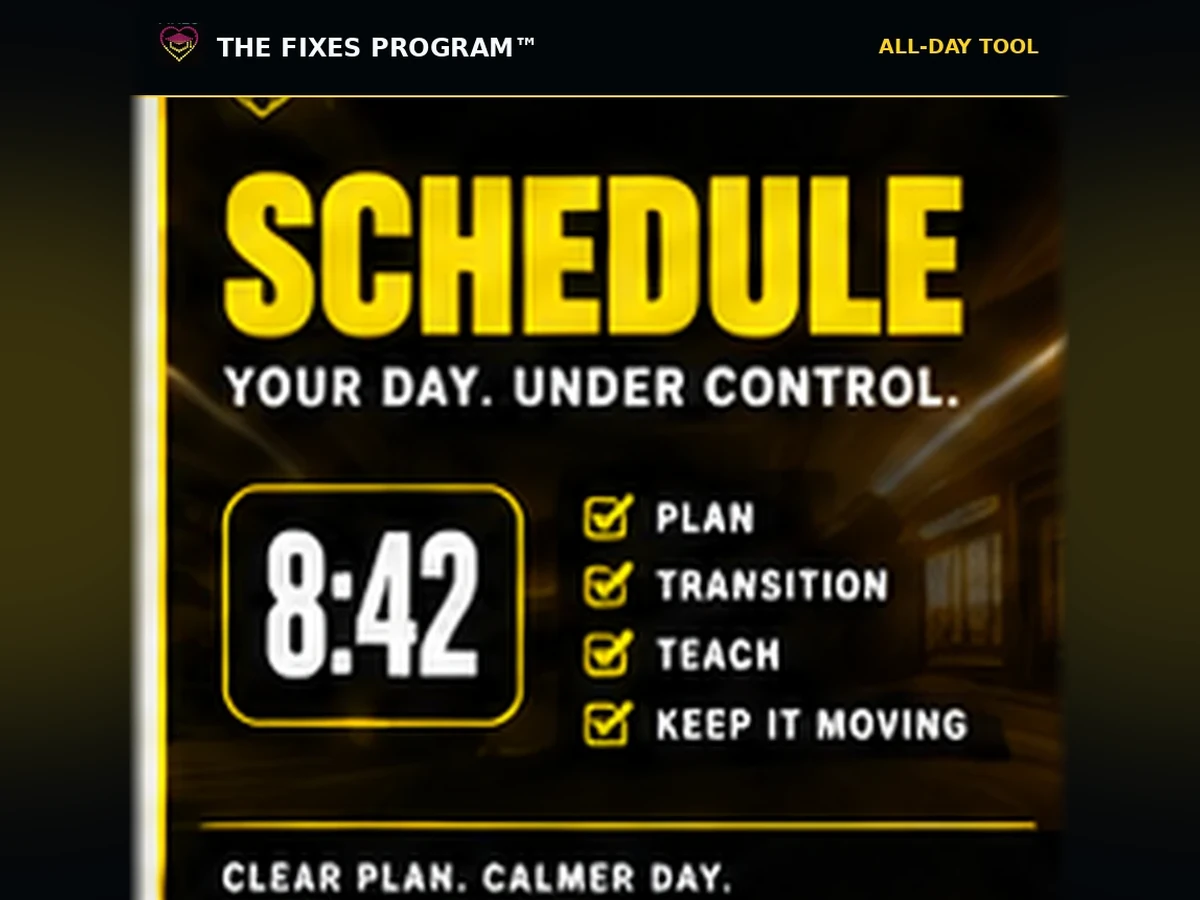
A projectable visual daily schedule and live timer designed to stay useful all day.
Explore teacher page →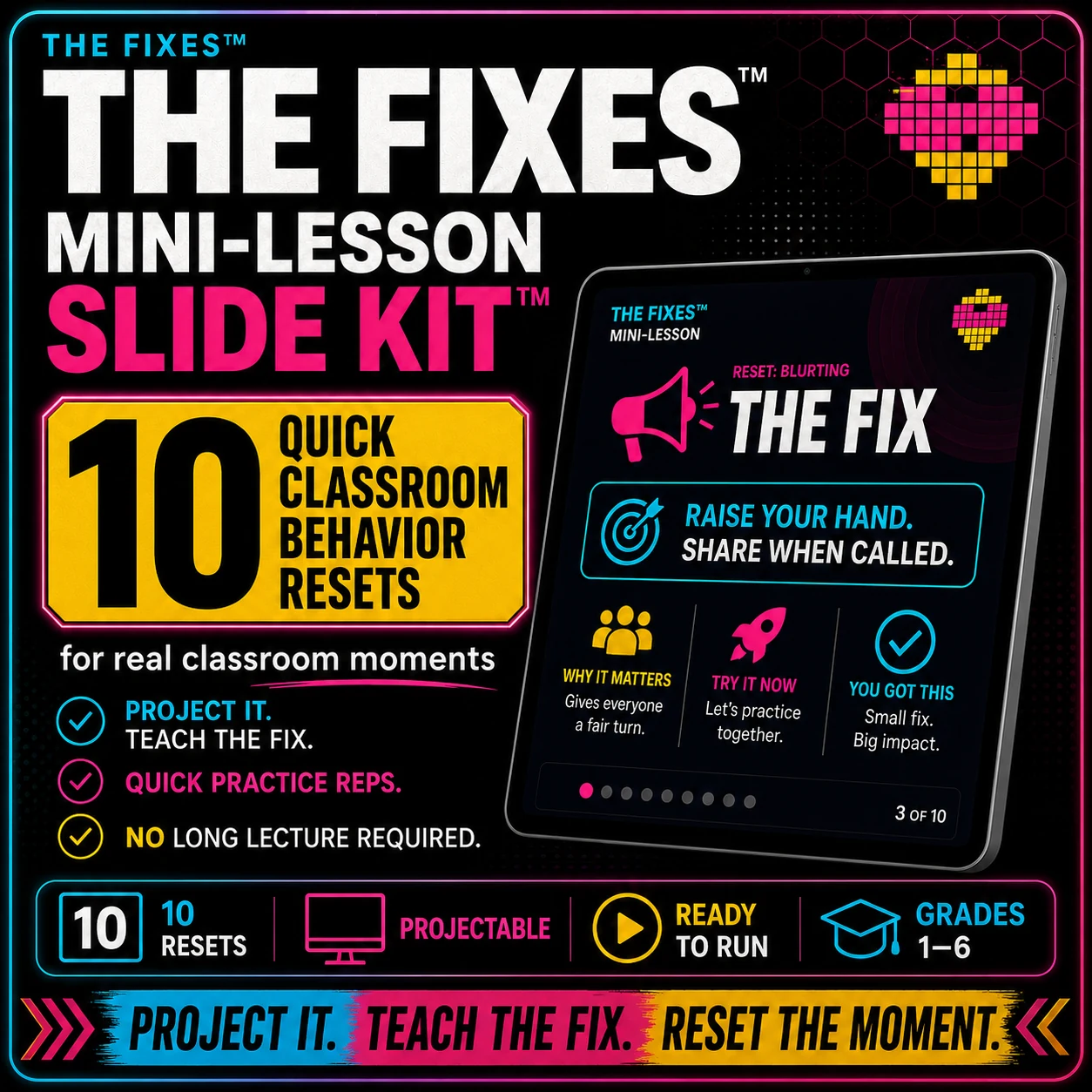
Projectable mini-lessons for the classroom moments teachers end up reteaching anyway.
Explore teacher page →
Turn one of the day’s most repeated transitions into a visible baseline-and-improve challenge.
Explore teacher page →
Practise moving to the carpet with a clear finish point, a visible time and less repeated teacher narration.
Explore teacher page →
A visible morning-arrival challenge for unpacking, getting ready and starting the day without repeated prompting.
Explore teacher page →
A staged cleanup and end-of-day routine that moves from trash to bags to the final line with one visible sequence.
Explore teacher page →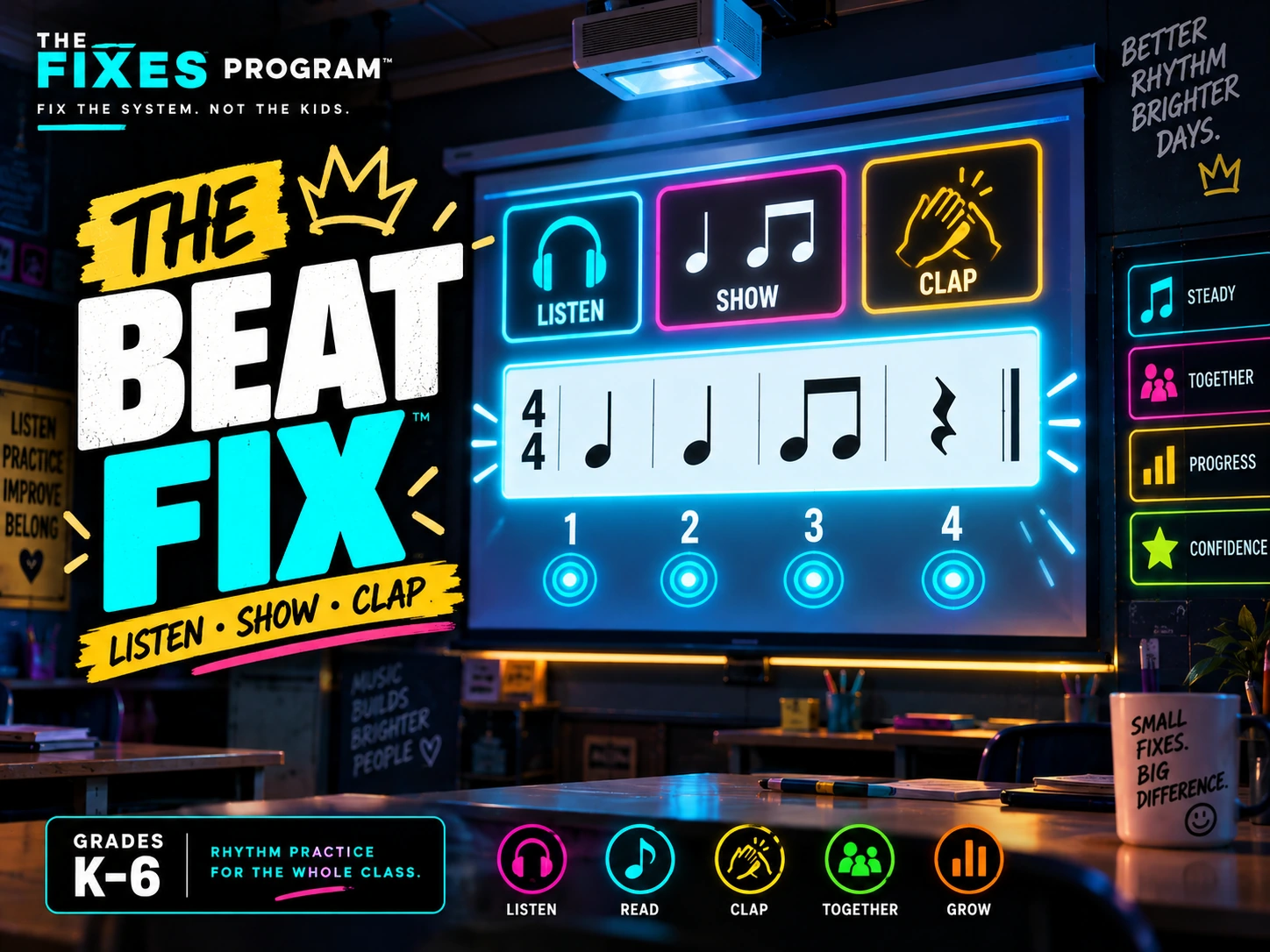
Hear it, see it, clap it: a projector-ready 4/4 rhythm routine that makes beats, rests and subdivisions visible.
Explore teacher page →“Get ready for math” can contain five different actions: finish the current task, put materials away, move, collect the next materials and become ready. Teachers see the whole sequence at once. Students have to execute it one step at a time. When transitions repeatedly stall, the problem is often that the sequence, route or finish state is not visible enough.
The tools in this section solve different parts of that problem. Choose the one that matches the breakdown instead of adding another reminder to the same routine.
Use a consistent one-touch cue when students know the routine but keep waiting for individual prompts. The signal should start a known sequence; it should not introduce a brand-new list of directions every time.
A dayboard is useful when uncertainty about NOW and UP NEXT is creating repeated questions or slow starts. It carries information across the day so the teacher does not have to rebuild the context at every change.
Lineup Race and Carpet Race are short rehearsals for two common movement routes. They make the beginning and finish visible so the class can improve the routine without being compared with another class.
A timer cannot repair a routine students do not understand. Use Mini-Lessons or a neutral rehearsal when the class needs the sequence modelled again. Practice is more useful than timing a confused attempt.
Doorways, cubbies, bins, carpet edges and shared shelves create predictable congestion. Staggering who moves first or changing the route can solve what looks like a behaviour problem without adding a consequence.