
New at The Fixes · teacher-built · free to use

Lineup Race™

A free projectable classroom transition race that helps a class establish a lineup baseline and improve it without turning the routine into a lecture.

Grades 1–61–4 minutesNo student accountsClassroom launch ad-free
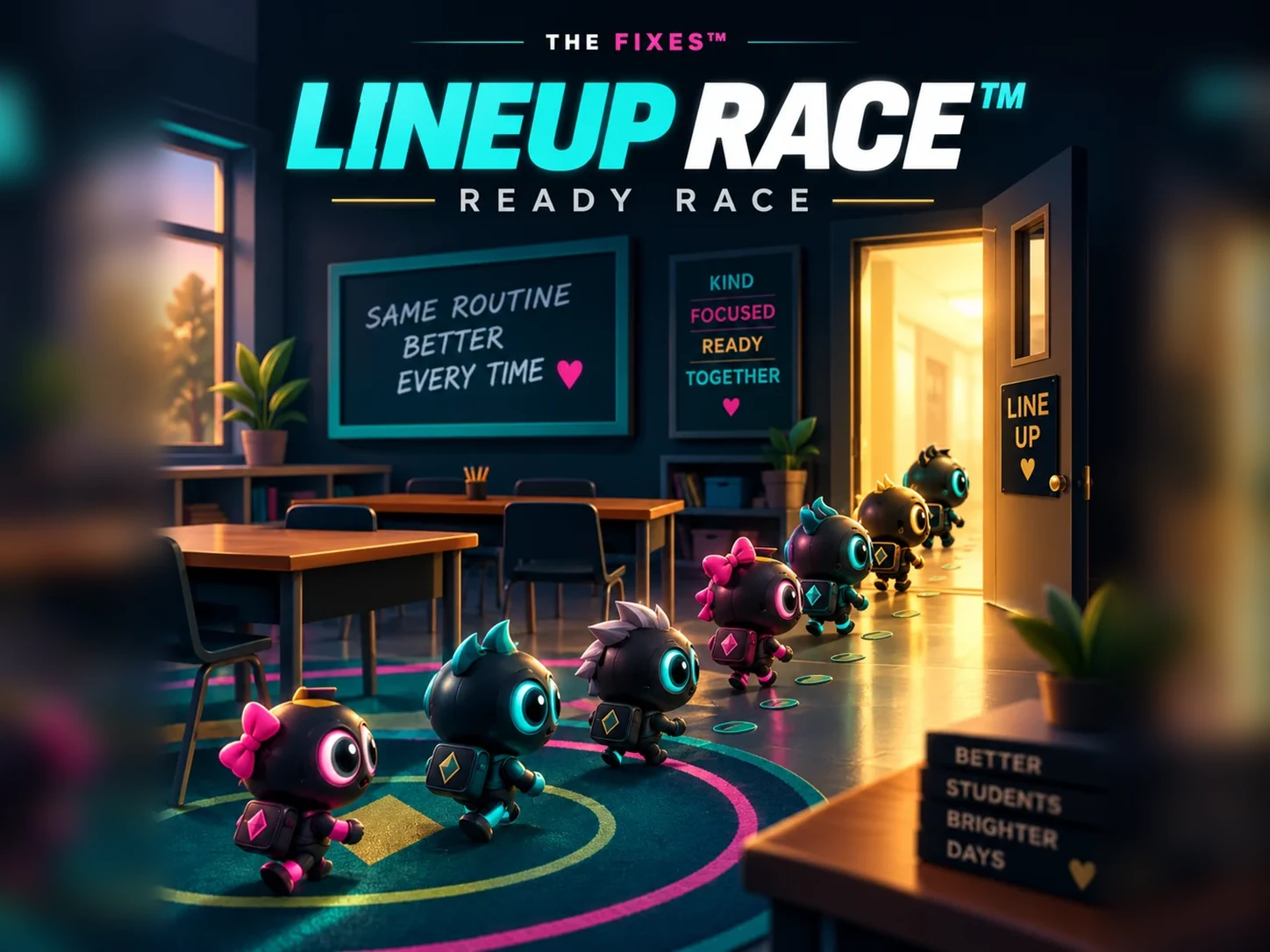
Lineup Race™ cover

What this Fix is for

Lineup Race is for a transition teachers repeat constantly. Instead of saying “line up properly” for the hundredth time, the class gets a visible baseline and a clear finish. Success is measured against the class’s own previous performance rather than against another class.

How it works

Run the normal lineup once to establish a baseline. On later rounds, the class tries to complete the same routine a little more efficiently. The tool manages the timing and the visible challenge while the teacher keeps the safety expectations and destination clear.

Why teachers keep it simple

  • Turns a repeated routine into brief practice
  • Class competes with its own baseline
  • Minimal teacher clicking
  • Built for the real doorway transition, not a pretend game

What students actually see

The live screen gives the class one visible target: move from the current activity into the agreed line safely and beat the class baseline without sacrificing spacing or control.

When to use it

Use it for lining up, hallway transitions, leaving for recess, gym or library, or whenever the doorway has become a daily bottleneck.

Use it without over-explaining it

Set the baseline on an ordinary attempt, then practise the same route again. Praise the specific system improvement—chairs in, walking path clear, voices off—rather than only celebrating a faster number.

Built to be reusable

Once the class consistently reaches the line with fewer reminders, use the timer less often. The race is practice for the routine, not the routine forever.

Hallway routine, not speed contest

The number only matters if the line is actually ready to leave.

Lineup Race is useful when a routine everyone understands still takes too many reminders to perform. The first run creates a real baseline from the class’s ordinary line-up. Later attempts give the class one shared target while the teacher watches the things a stopwatch cannot measure: safe movement, spacing, materials left where they belong and a line that is genuinely ready.

The class is competing with its own previous routine, not another class and not an imaginary perfect time. That keeps the improvement local to the group in front of you.

Measure the full routine, not the first student at the door

Start when the transition actually begins and stop when the class reaches the agreed finish state. If the last five students are still packing while the timer stops, the baseline is measuring the wrong thing.

Fix doorway traffic before asking for more speed

Chairs, backpacks, cubbies and a single doorway can create a bottleneck no amount of motivation will solve. Change who moves first or where students wait before expecting the time to improve.

Praise the system improvement

Name what made the attempt cleaner: materials were away before movement started, the walking path stayed open, voices dropped after the cue. The time is feedback; the repeatable behaviour is the real target.

Reset calmly after a messy attempt

Do not turn a failed round into a lecture. Identify one repair, return to the start and run it again when the room is ready. A neutral redo gives students another repetition without adding drama.

Fade the timer once the cue is enough

When the class can line up safely with little prompting, stop timing every trip. Bring the tool back after a break, schedule change or period of slippage. The routine should eventually outgrow the race.

Do not reduce the target if the improvement came from running, pushing or leaving jobs unfinished. Clean beats fast. The race is successful only when the faster time represents a better hallway routine.