
New at The Fixes · teacher-built · free to use

Carpet Race™

A free classroom carpet-transition challenge that makes moving to the meeting area visible, repeatable and easier to practise.

K–41–4 minutesNo student accountsClassroom launch ad-free
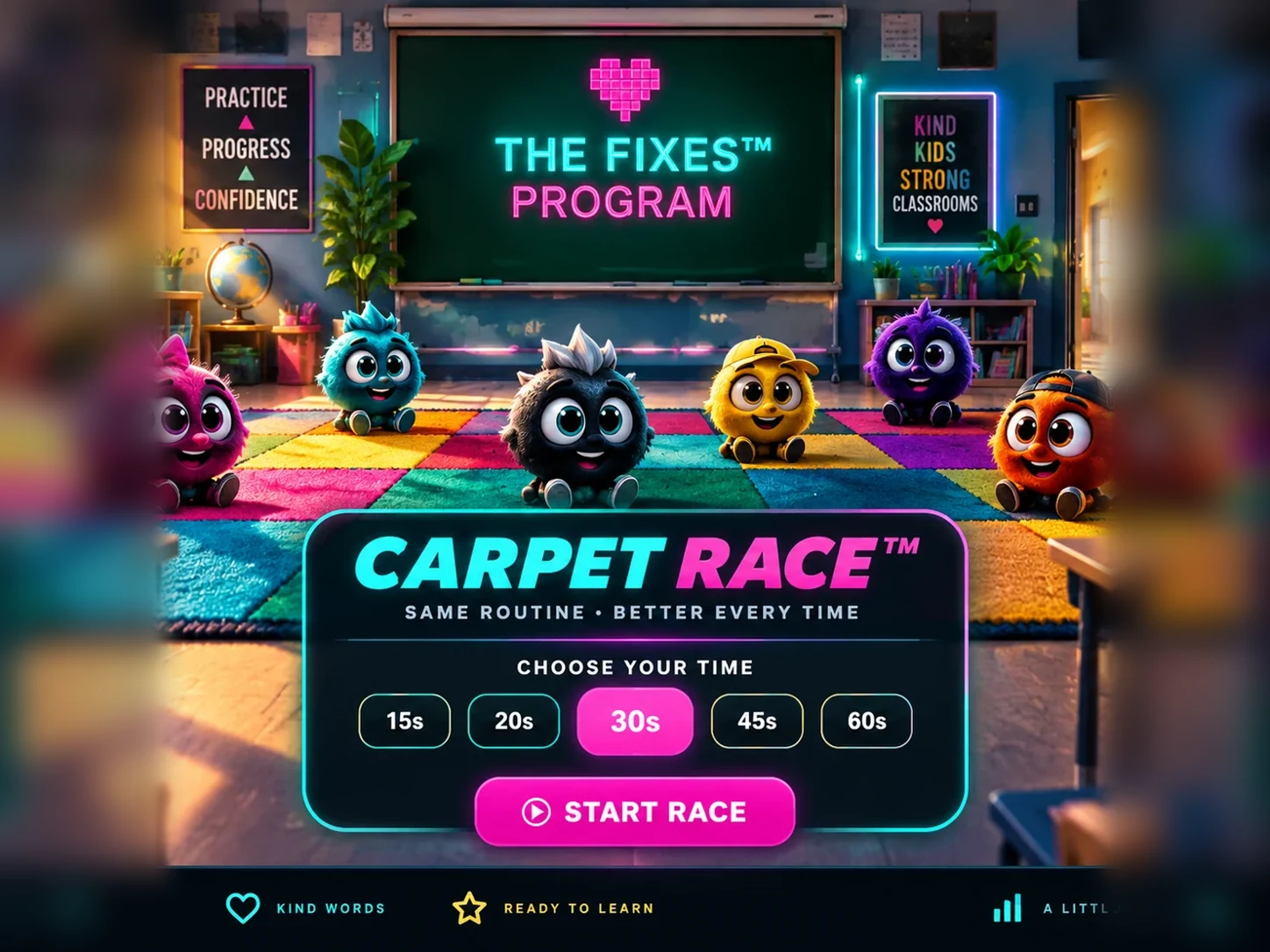
Carpet Race™ cover

What this Fix is for

Carpet Race targets a small transition that can quietly eat minutes all day. Students know they are supposed to move to the carpet, but the route, finish and ready position are often carried only in the teacher’s voice. This gives the class one visible routine to practise.

How it works

Start the round, complete the normal move to the carpet and use the same finish cue each time. The baseline gives the class a target, but the goal is not rushing. The goal is a smoother transition with fewer stops, side conversations and repeated directions.

Why teachers keep it simple

  • Works with the carpet or meeting-area routine you already use
  • Keeps the target visible
  • Short enough to practise without derailing the lesson
  • Teacher keeps control of safety and readiness

What students actually see

The student screen keeps the target visible: move from the current classroom position to the carpet safely, then settle into the agreed finish position.

When to use it

Use it for carpet time, circle time, read-aloud transitions, mini-lessons, meeting-area moves or any routine where students cross the room and settle together.

Use it without over-explaining it

Use the race when the transition is still teachable, not after the room has already unravelled. Name the finish position, start the attempt and debrief only the one thing that would make the next round smoother.

Built to be reusable

Keep the finish cue and scoring logic stable. Repetition is what turns “go to the carpet” from a teacher reminder into a routine the class can run.

Meeting-area fluency

Getting to the carpet is only half the transition. Becoming ready is the finish.

Carpet Race targets the move from independent or table work into a shared meeting space. That route has different problems from lining up: students are choosing spaces, crossing paths, carrying attention from the previous task and deciding what “ready” means once they arrive. A useful baseline includes the settling, not just the travel.

The tool gives the class one short practice loop. The teacher defines the ready position and protects the route; the timer makes the transition visible enough to improve.

Show the finish position before the first run

If “on the carpet” could mean sitting, talking, finding a friend or still turning around, the routine does not have one finish. Name the body position, materials and attention cue that count as ready in your room.

Reduce crossing paths

The fastest improvement may come from changing the route. Release one side first, give tables a clear path or move a chair that creates a choke point. Traffic design is often more effective than another reminder to hurry.

Keep seat choice from becoming the whole task

If choosing a carpet place creates repeated negotiation, simplify the choice temporarily. The goal is to practise the transition, not to spend the timer resolving where everyone wants to sit.

Debrief one thing, then teach

The carpet is usually the start of another lesson. Keep the feedback short: one thing that improved and one thing to try next time. Do not turn a successful transition into a five-minute meeting about transitions.

Retire the race when the meeting-area cue carries it

Once students move and settle from the normal cue, use the race only as an occasional tune-up. The strongest routine is the one that no longer needs a special event every time.

Carpet Race is not for making young students sit perfectly still. Define readiness in a way that fits the age, activity and students in front of you. The target is a workable shared start, not identical bodies.