

Playground training
The Playground Fixes™
Teach one clear version of common playground games inside, then transfer it outside.
RulesDisputesTransfer outside
Explore teacher page →Most playground problems happen in the hard moments: close calls, restarts, boundaries and disputes. The Playground Fixes rehearse those moments inside before students take the game outside.
Teach one clear version of common playground games inside, then transfer it outside.
A whole-class training game for teaching students to run Four Square fairly, safely, and independently.
Explore teacher page →
Practise the close calls that usually create kickball arguments before students take the game outside.
Explore teacher page →
Practise safe tags, clear boundaries, rescues, and quick rotations before recess.
Explore teacher page →
Five players, four corners, one clear system for safe switching and tie disputes.
Explore teacher page →
Teach a small-sided, safe, conflict-resistant version of playground soccer.
Explore teacher page →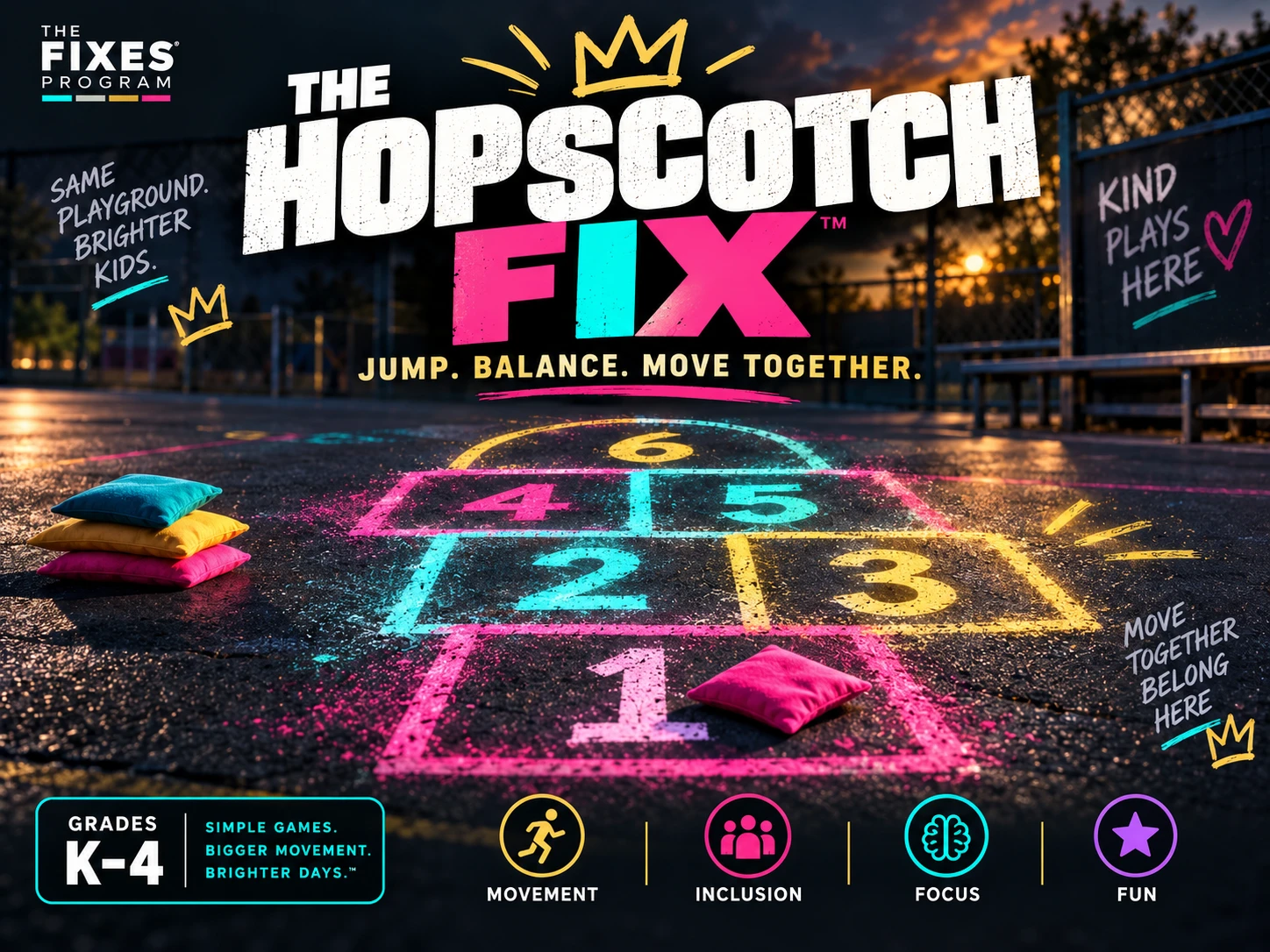
Teach one clear Hopscotch version before recess: marker tosses, single and double squares, line calls, balance, pickup and rotation.
Explore teacher page →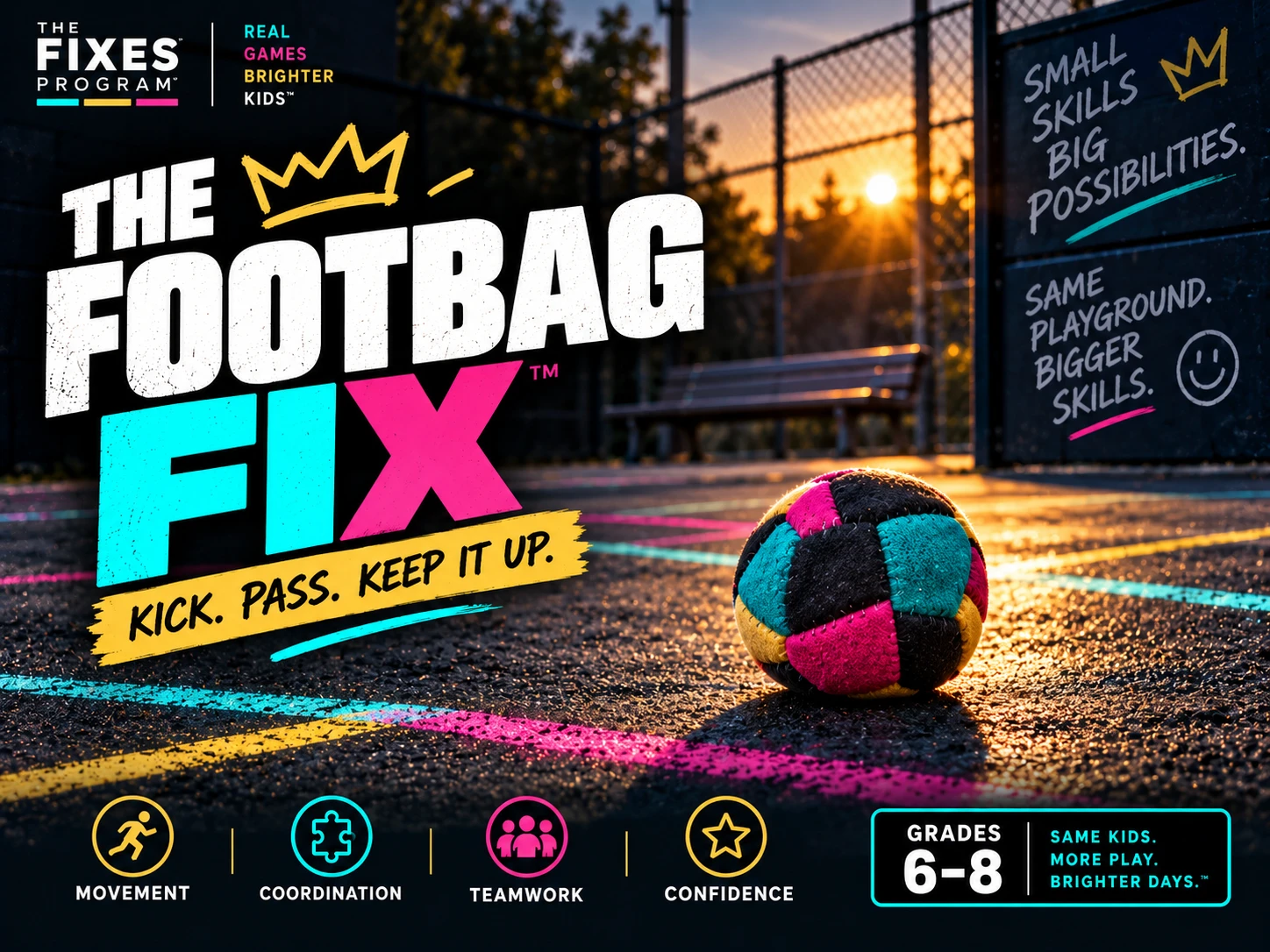
A four-square footbag version for older students with one-contact play, low kicks, visible landings and fixed rotation.
Explore teacher page →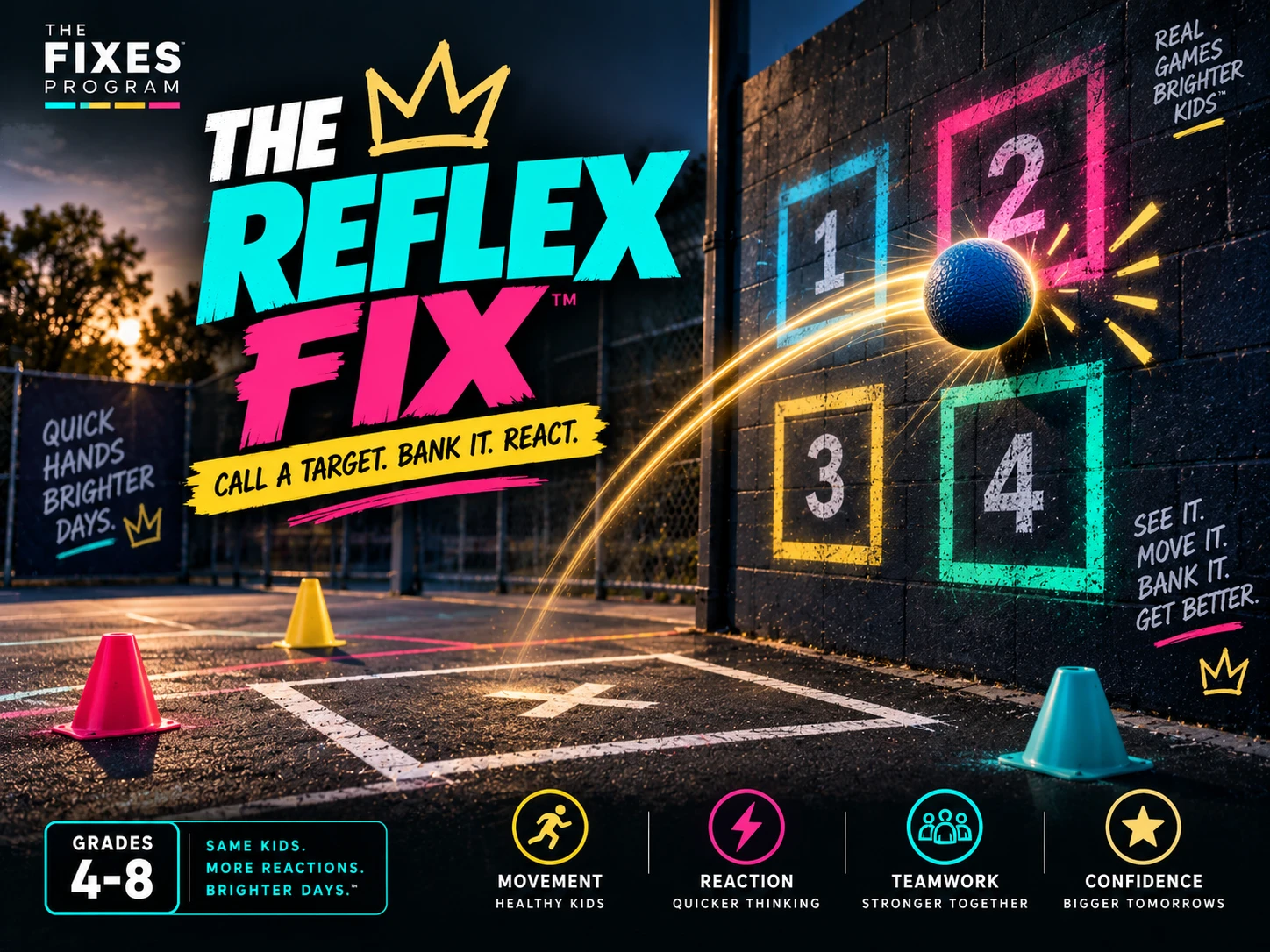
An original wall-reaction recess game using called targets, a launch line, one rebound box and a clear two-player rotation.
Explore teacher page →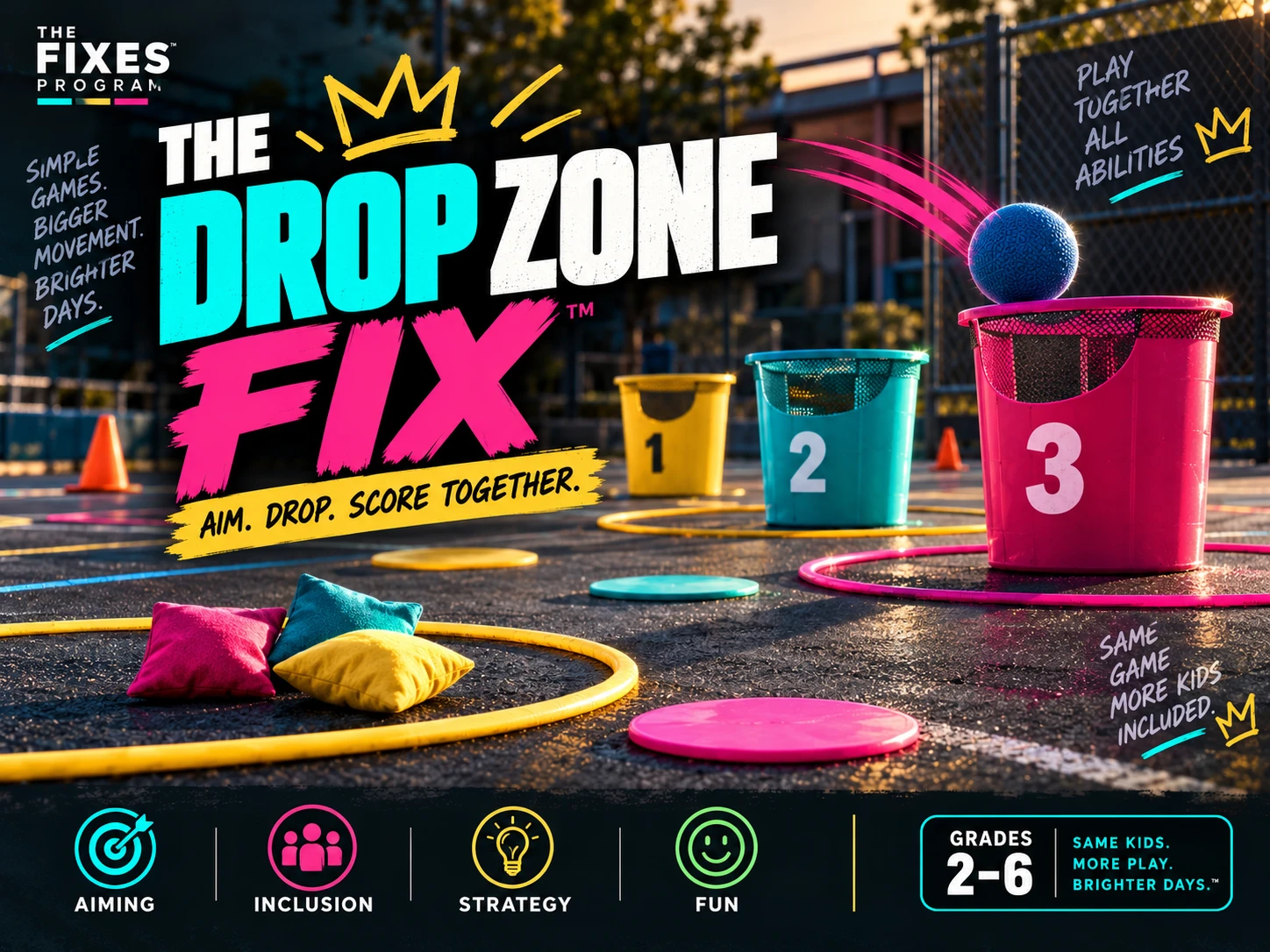
An original four-zone ball-drop playground game with prediction, safe waiting zones, a clear next-server rule and protected access.
Explore teacher page →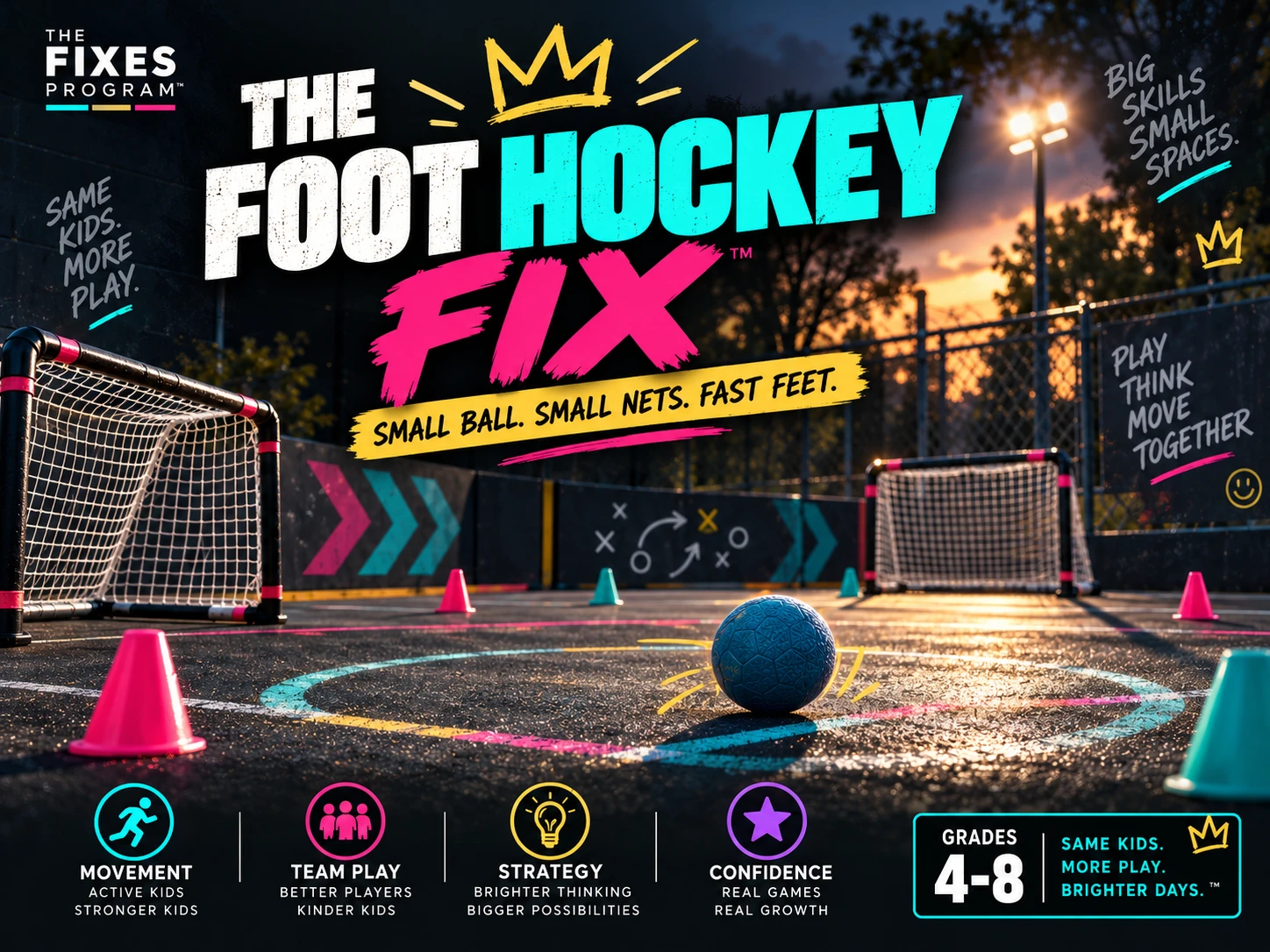
A small-sided 5 v 5 playground game with small goals, feet-only field players, one goalie per team and no body contact.
Explore teacher page →
A kicking-and-baserunning playground game with smooth rolls, fixed kicking order, no tagging or pegging, and simple pitcher/base outs.
Explore teacher page →This collection focuses on common schoolyard games because familiarity is useful: students are more likely to use a game independently when they already recognize the basic idea. The teaching work is in the version—clear boundaries, simple restarts, safe contact rules and a way to settle the close calls that normally stop play.
Use these guides before recess, during a class meeting or as a quick indoor rehearsal. The purpose is transfer. Students should be able to take the simplified version outside without carrying a projector with them.
Use it when disputes about lines, outs and who enters next are slowing the game. Keep the service and replay rules simple enough that students can restart in seconds.
Teach what happens on common boundary and base decisions before the field is noisy. If the game still produces constant debate, simplify the field or reduce the number of active decisions.
The important teaching is not “how to chase.” It is where tags are safe, what frozen means, how a rescue works and when the round restarts.
Use a small, clear system for switching and deciding simultaneous arrivals. The less interpretation required in the close call, the faster students can return to play.