
New at The Fixes · teacher-built · free to use

The Beat Fix™

A free projector-ready rhythm mini-lesson: hear the beat, see the beat and clap the beat with rests and subdivisions made visible.

Grades 1–65–12 minutesNo student accountsClassroom launch ad-free
The Beat Fix™ cover

What this Fix is for

The Beat Fix turns a short rhythm lesson into a sequence students can hear, see and perform. The design starts with a steady 4/4 pulse, keeps the snare as a reliable guide, makes rests visible and then introduces how a beat can split into smaller parts. It works as a music mini-lesson, a listening challenge or a focused brain break.

How it works

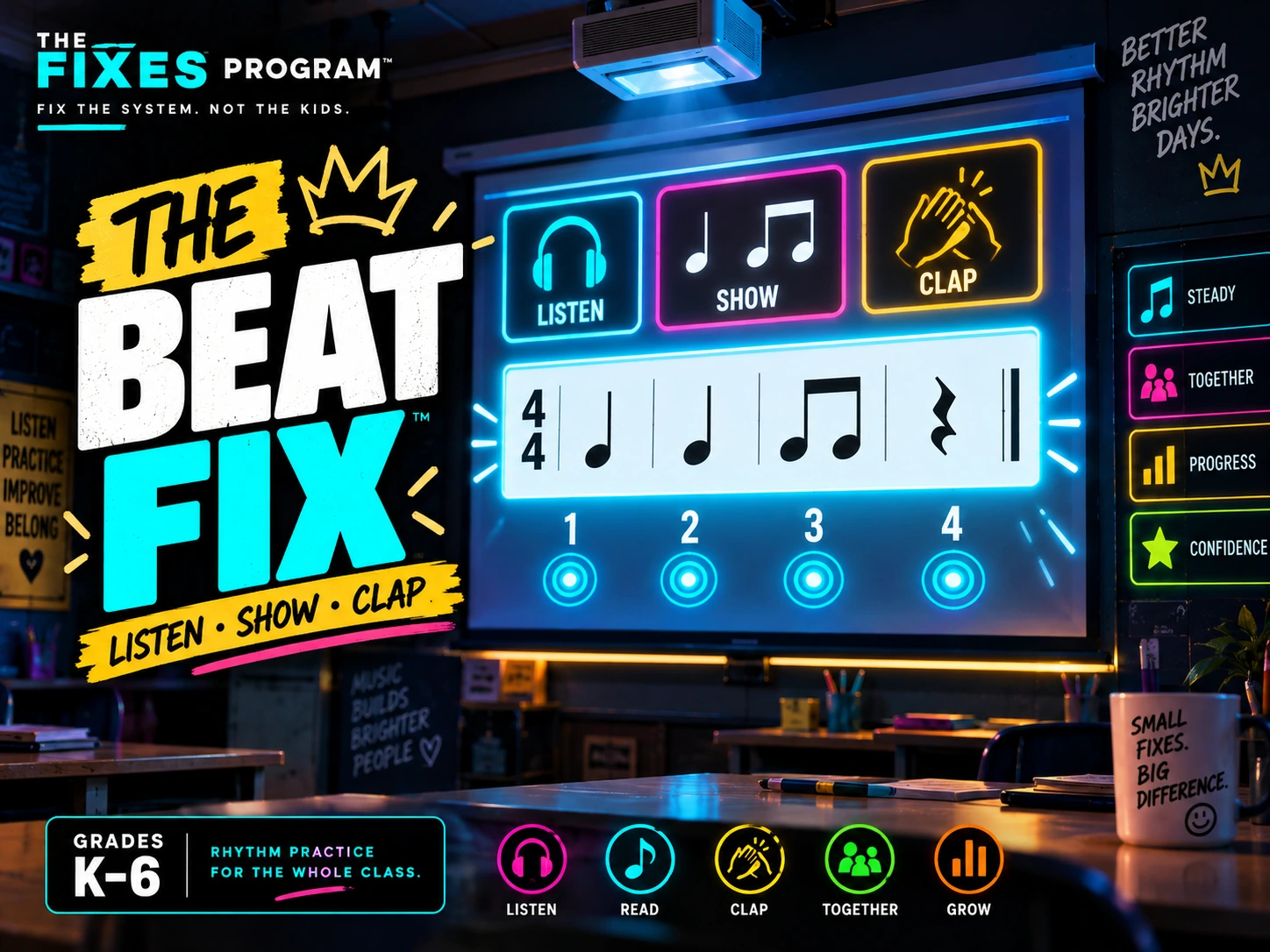
The teacher starts the experience from one shared screen. Students listen first, then watch the visual beat and finally clap the pattern. The repeated sequence lowers the amount of explanation needed because the beat stays visible while students practise it.

Why teachers keep it simple

  • Hear → see → clap progression
  • Visible rests instead of assumed silence
  • Optional browser audio with a consistent beat guide
  • Short enough for a mini-lesson or focused movement break

What students actually see

The classroom screen strips away everything students do not need. They see the pulse, the notation and the cue sequence while the teacher controls when the class listens, watches and claps.

When to use it

Use it when you need a rhythm lesson, music warm-up, listening activity, clapping pattern, quick brain break or a five-to-ten-minute activity that still feels instructional.

Use it without over-explaining it

Open the Beat Fix before the class starts performing. Say “listen first,” run the pattern once, then use the same listen → show → clap sequence on the replay.

Built to be reusable

Rhythm practice gets easier when the sequence stays familiar. Keep the same listening cue and finish signal so students can spend their attention on the changing pattern instead of relearning the routine.

Hear it before you perform it

The rhythm becomes easier to repair when students can tell whether the pulse, rest or subdivision is the part that broke.

Beat Fix uses the same short sequence repeatedly: hear the pattern, see the pattern, clap the pattern. Keeping that order gives students one source of information at a time. The steady beat and visible notation provide a reference while the teacher listens for where the class is actually losing the pattern.

The goal is not to click through examples quickly. It is to make a small rhythm problem clear enough that the class can attempt it again with a better cue.

Start with listening only

Ask students to keep hands still on the first pass. If they immediately clap, they are trying to perform before they have had a chance to notice the pattern.

Separate pulse problems from subdivision problems

If the steady beat disappears, simplify and rebuild the pulse. If the pulse is stable but the split beat is uneven, point to the subdivision instead. Those are different errors and need different repairs.

Make the rest visible

Silence inside a rhythm is still part of the pattern. Point to the rest before replaying rather than simply telling students not to clap there.

Keep one stable auditory guide when adding difficulty

Removing every support at the same time can make the next attempt a guess. A predictable snare or pulse lets students focus attention on the new rhythmic change.

Transfer the routine beyond music

Hear → see → do can also support a chant, movement cue or repeated verbal pattern. The reusable skill is attending to a model before performing, not only clapping this particular beat.

If the class is consistently missing the same pattern, slow the problem down. More repetitions at the same confusing speed are not automatically better practice.