Shared Reading Fix records visible bumps during the first pass so the second read has a purpose. It is better for whole-class oral rereading than for diagnosing an individual reader. Keep individual assessment separate.
Reading · math · language · rhythm
Curriculum Fixes
Quick whole-class tools for the parts of curriculum practice that benefit from one shared screen: rereading, fact fluency, phonics, vocabulary, language review, rhythm and visible self-assessment.
Teacher-ledProjector-readyNo student accounts
Explore the collection
Curriculum practice, Fixes style.
9 resources
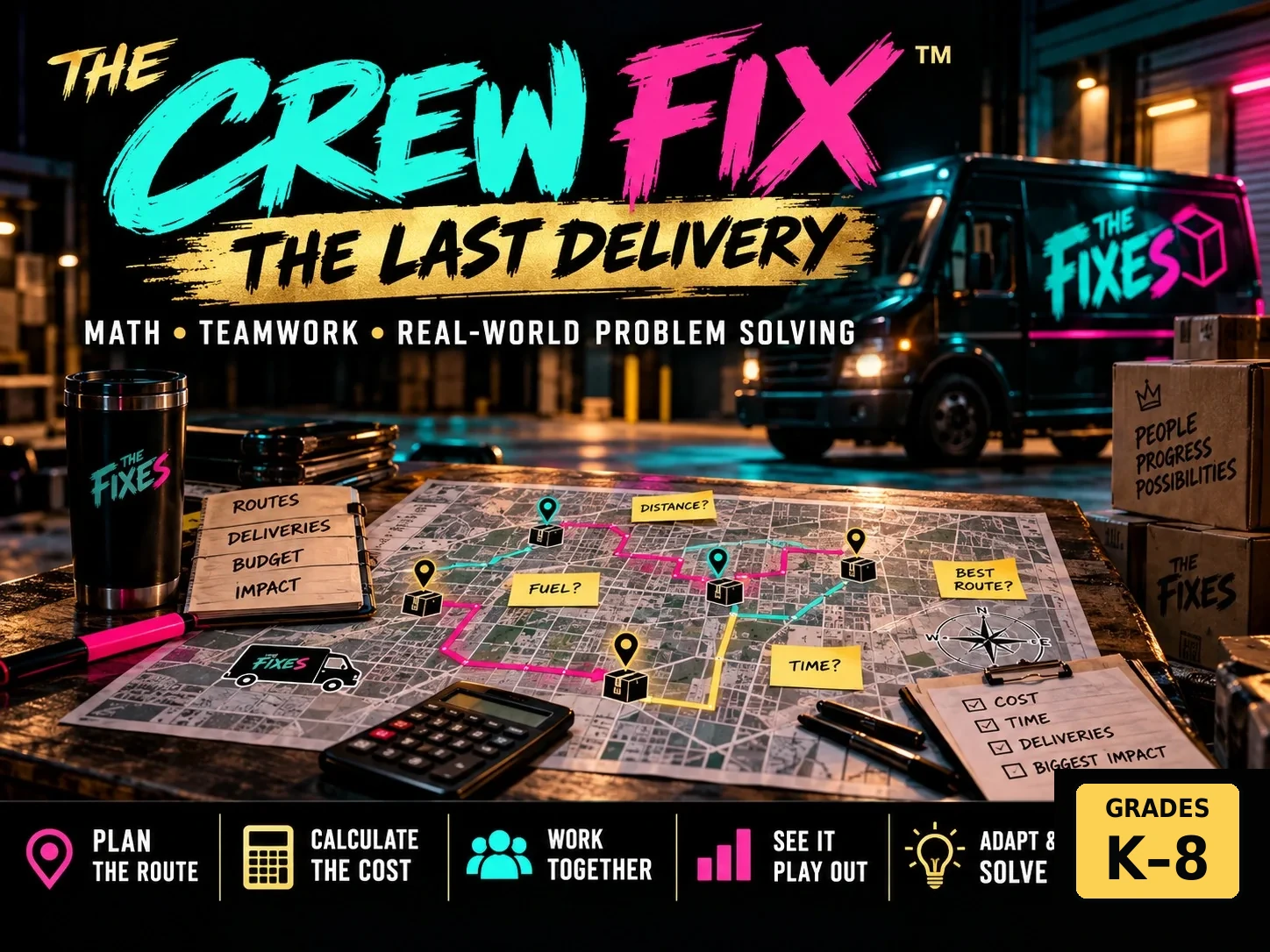
Math + teamwork mission
The Crew Fix™: The Last Delivery
Teams plan routes, calculate trade-offs, commit, adapt and compare solutions.
Explore teacher page →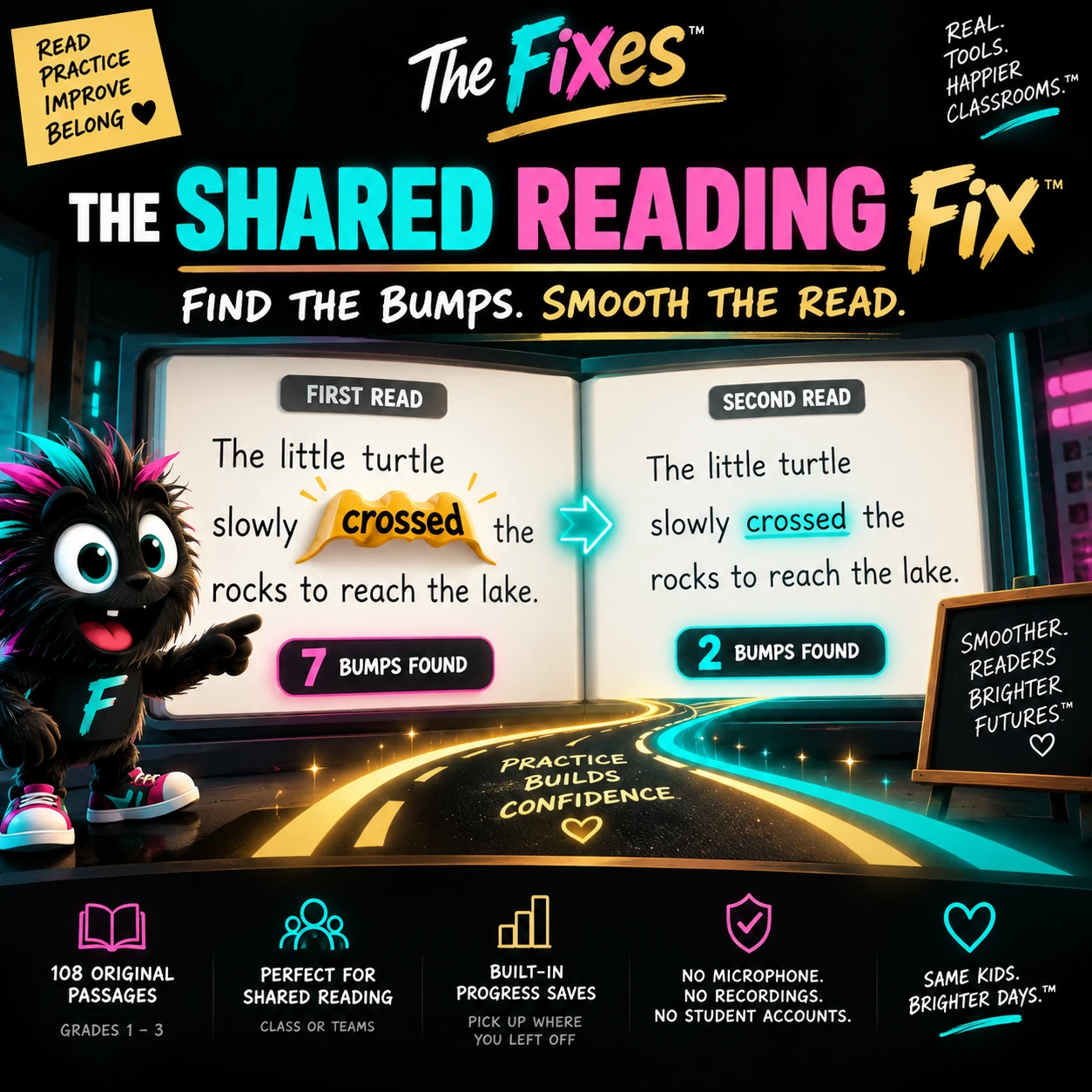
Shared reading routine
The Shared Reading Fix™
A teacher-led shared-reading routine that turns miscues into visible bumps, tracks them locally and makes the reread matter.
Explore teacher page →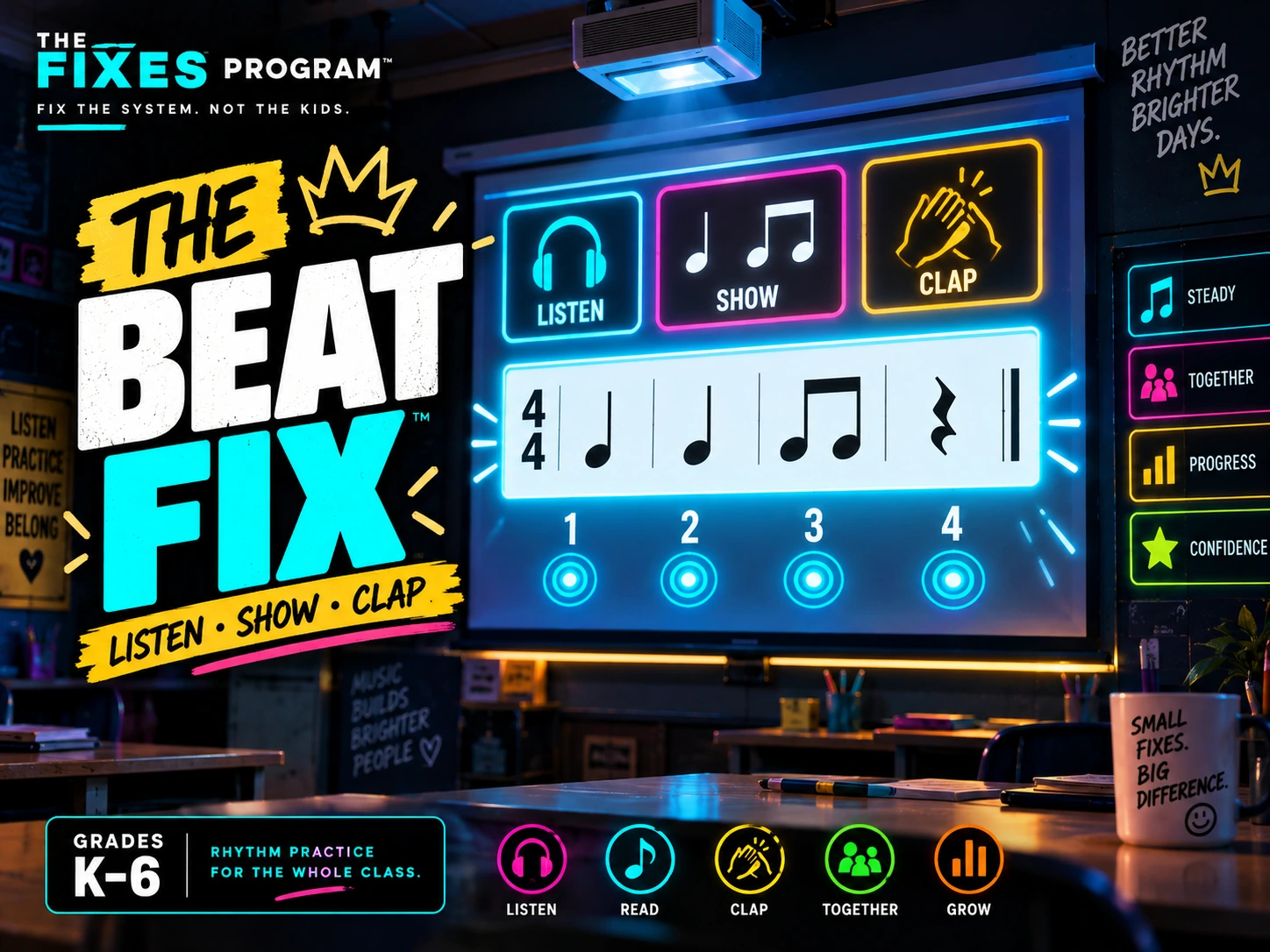
Rhythm mini-lesson
The Beat Fix™
Hear it, see it, clap it: a projector-ready 4/4 rhythm routine that makes beats, rests and subdivisions visible.
Explore teacher page →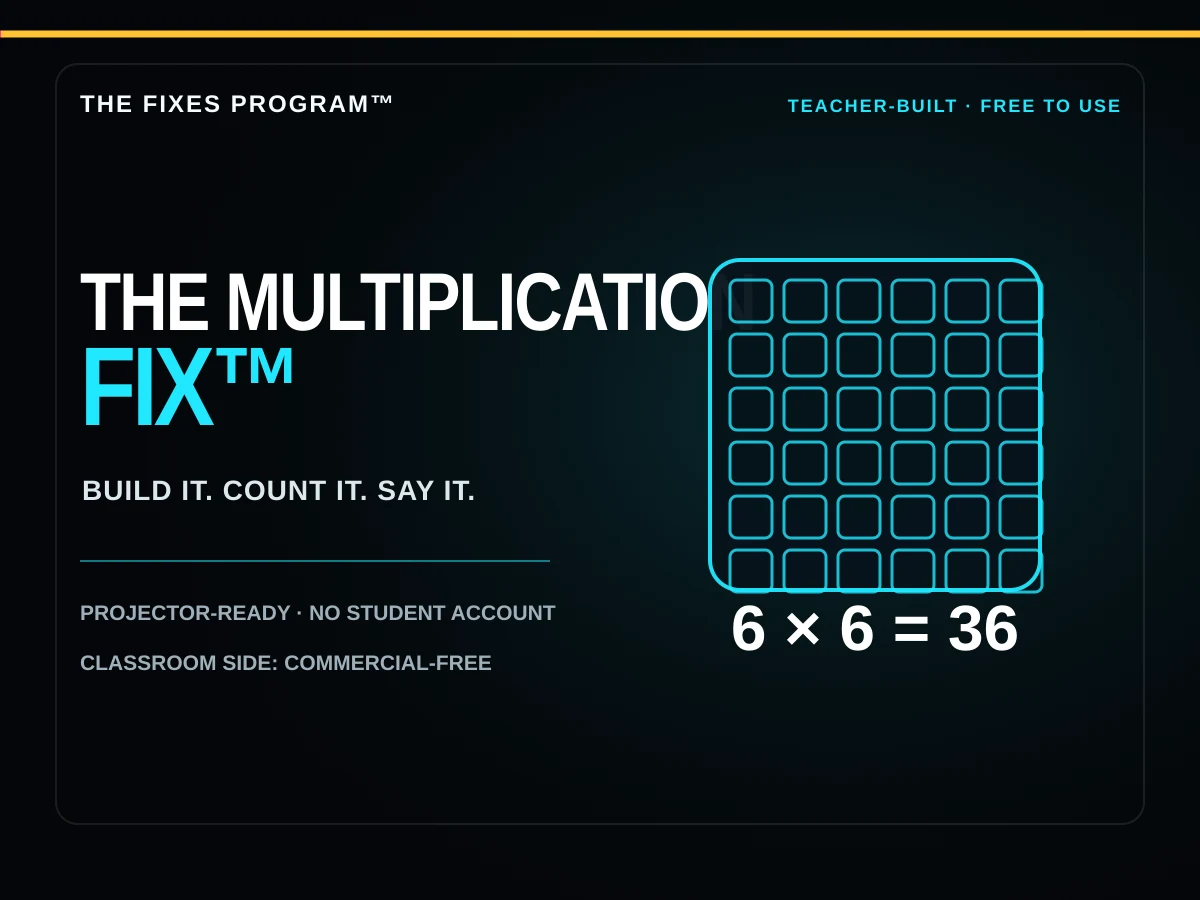
Whole-class math routine
The Multiplication Fix™
Whole-class multiplication fluency with array repair and local class-level memory.
Explore teacher page →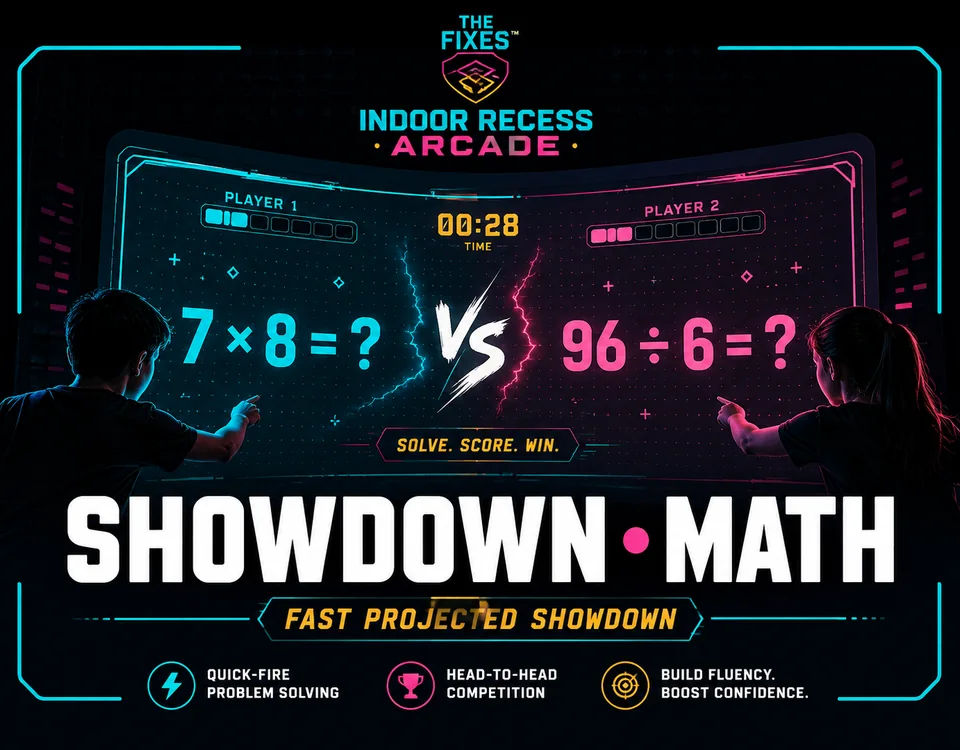
Arcade game
Showdown · Math
A fast projected math showdown.
Explore teacher page →
Arcade game
Showdown · Language
A fast projected language showdown.
Explore teacher page →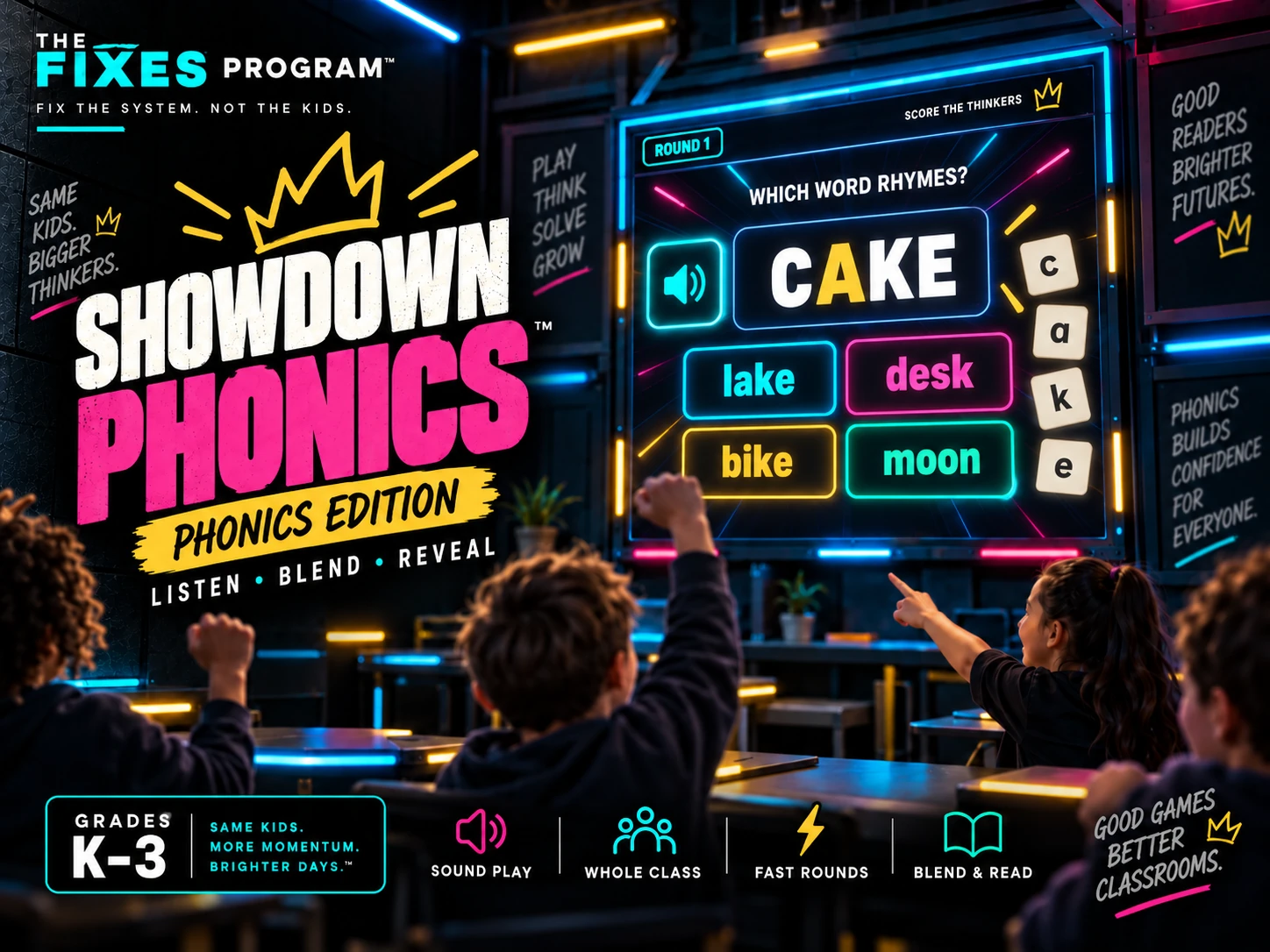
Arcade game
The Showdown Fix™: Phonics Edition
Play The Showdown Fix™: Phonics Edition, a free teacher-led classroom game from The Fixes™ for review, transitions, indoor recess and empty moments. No student accounts required.
Explore teacher page →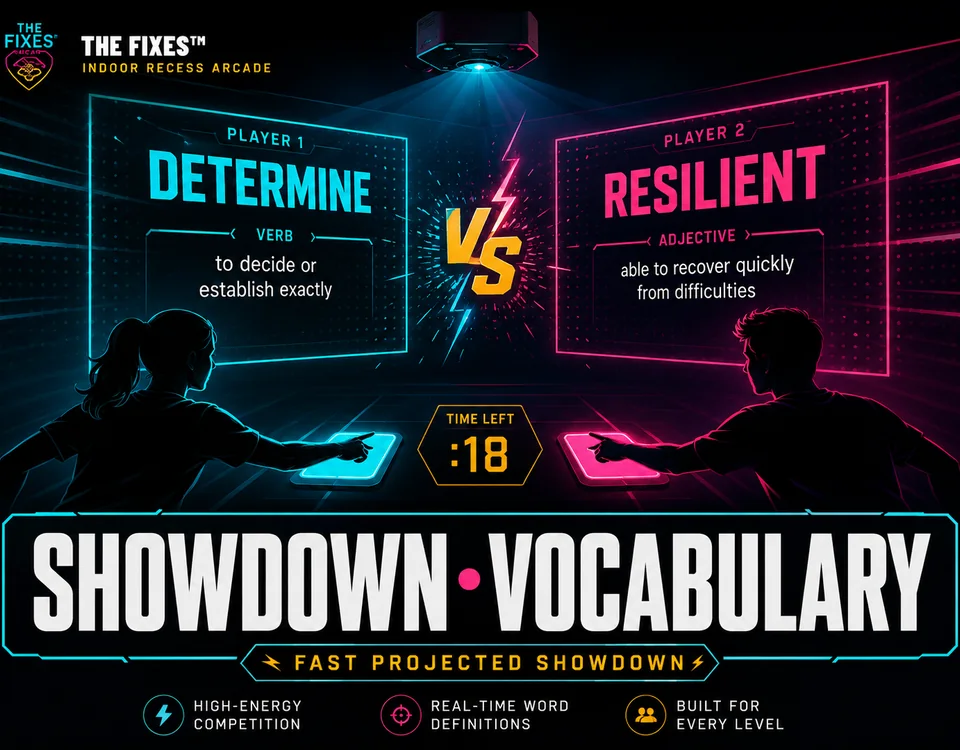
Arcade game
Showdown · Vocabulary
A fast projected vocabulary showdown.
Explore teacher page →
Arcade game
Showdown · Word Lab
A projected word-building showdown.
Explore teacher page →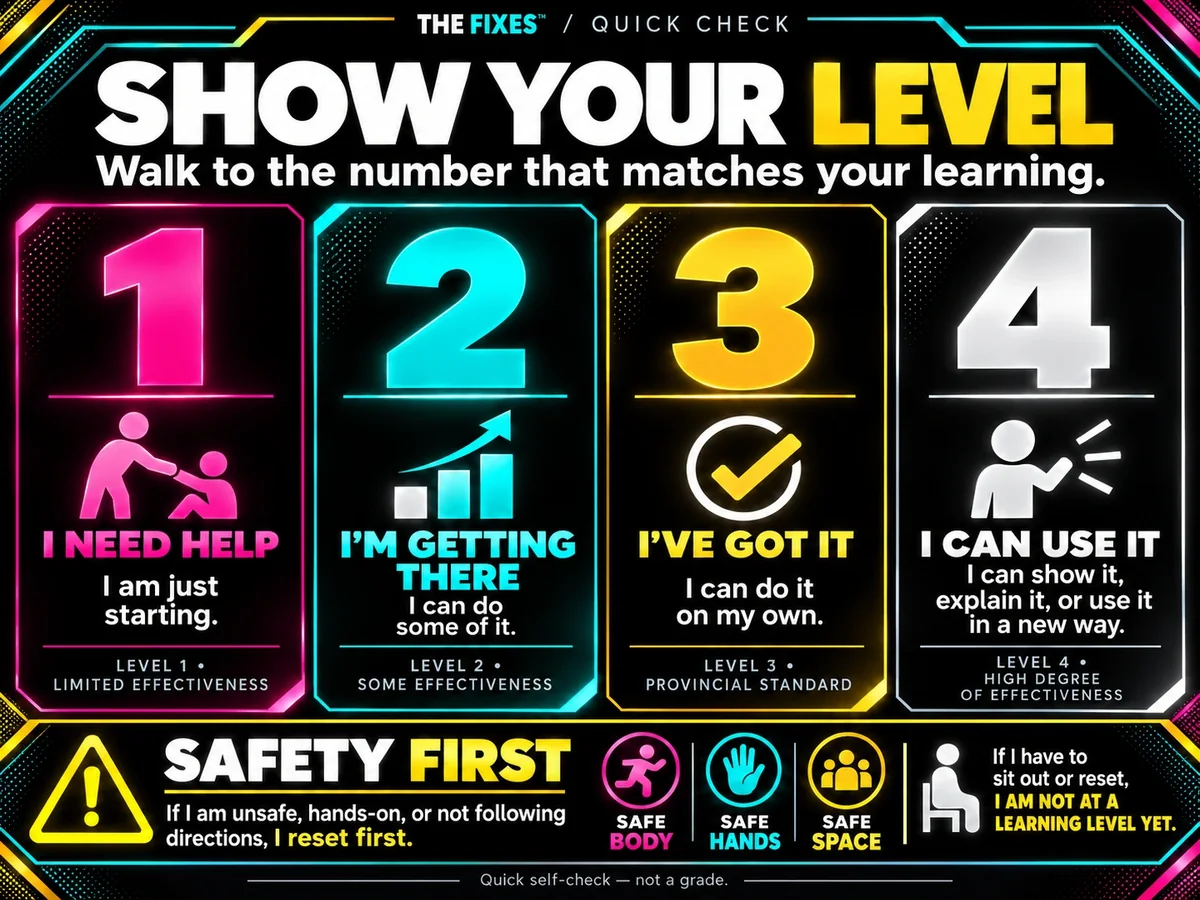
Assessment support
The Fixes Quick Check
A four-level visual self-assessment support for PE, drama, dance, health and other performance-based learning.
Explore teacher page →Choose the representation
Curriculum Fixes are short practice structures, not replacement programs.
The shared-screen tools in this section are most useful when the class already has a learning target and needs one part of it made more visible, repeatable or discussable. The point is not to replace a literacy, mathematics, music or assessment program. It is to give the teacher a focused practice routine that can fit inside the lesson already being taught.
Choose by the learning problem. A student who cannot see equal groups needs a different support from a student who knows the multiplication structure but cannot retrieve a fact fluently.
Multiplication Fix rebuilds shaky facts with arrays. Use it when the representation matters. If students are still unsure what equal groups mean, stay with the array rather than pushing response speed.
Beat Fix separates listening from watching and clapping so students are not asked to process everything at once. Visible rests and subdivisions give the teacher something concrete to point to when a pattern breaks down.
Drawing Fix uses WATCH → WAIT → DRAW → CHECK. The drawing is the vehicle; the classroom practice is attention, memory, pacing and recovering from an imperfect line without starting over.
Quick Check can make a four-level reflection visible after PE, drama, dance, health or another performance task. It works best as a conversation starter about evidence and next steps, not as an automatic mark generator.
A shared-screen routine is strongest when it gives the class something concrete to see, hear, compare or rehearse. If the screen adds directions without clarifying the learning, close it and teach the idea more directly.