You have time to fill, but not time to invent a game.
Enter a reusable class word list, then generate reading, spelling, memory, sorting and word-analysis challenges from the same bank.
 THE FIXES PROGRAM™The Showdown Fix™: Word Lab Edition
A reusable word-list game that turns teacher-entered spelling, sight-word or content vocabulary into multiple projected challenge types.
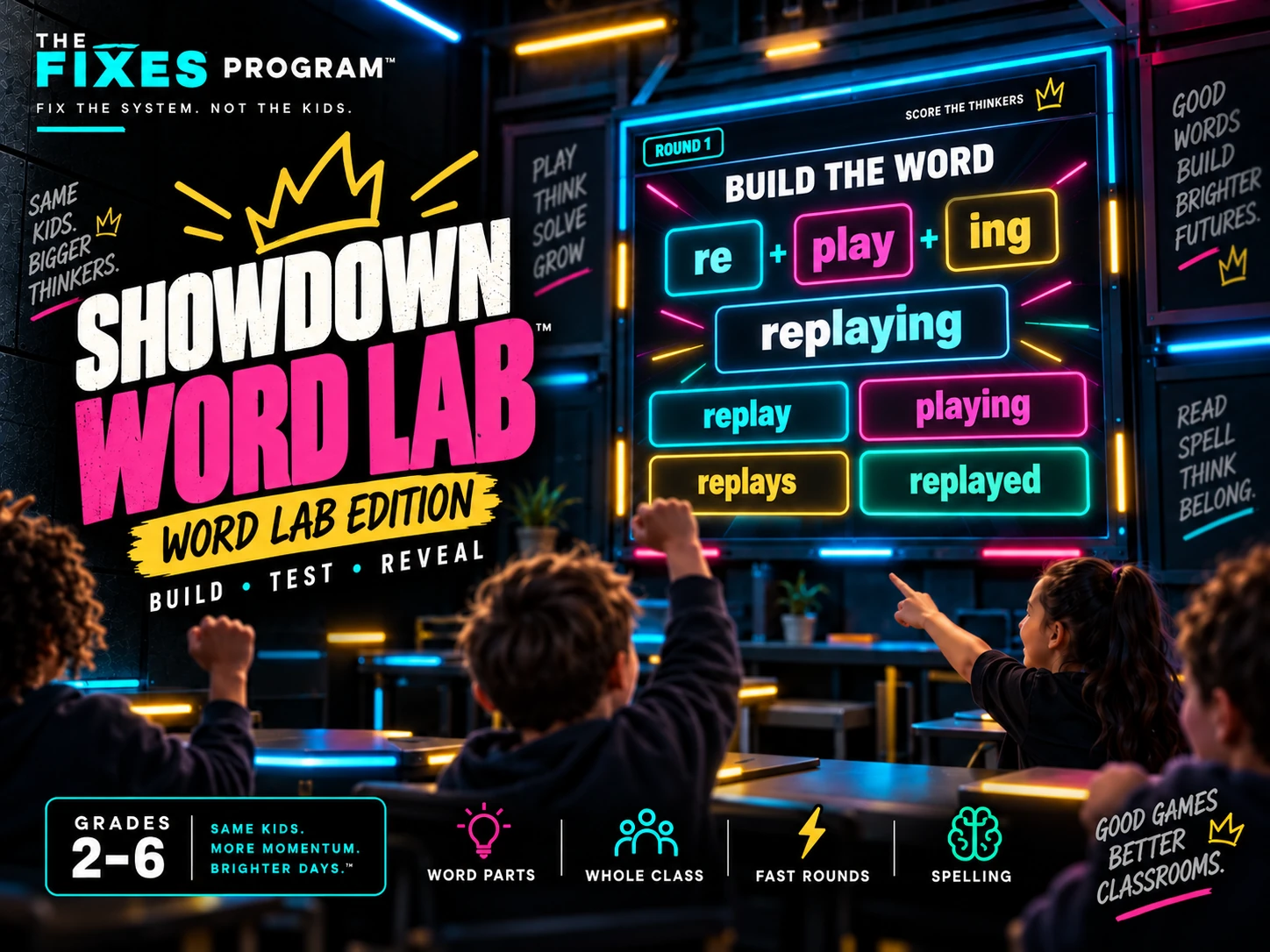
Word Lab keeps each language decision short, visible and shared so the class can practise without a long setup explanation.
Enter a reusable class word list, then generate reading, spelling, memory, sorting and word-analysis challenges from the same bank.
A reusable word-list game that turns teacher-entered spelling, sight-word or content vocabulary into multiple projected challenge types.
The exact flow below comes from the actual game instructions.
Enter and save a weekly or unit word list.
Choose Quick Play or a practice type.
Two students read, spell, remember, sort or repair the displayed word.
These files are teacher-facing supports. The classroom launch remains separate and ad-free.
Printable teacher guide for setup and play.
Teacher Guide / How-To ↗The Word Lab edition keeps the familiar Showdown rhythm so students can spend less attention learning the game and more attention responding to the content. The teacher still controls the quality of the prompt and the amount of thinking time before a response.
Let students explain the change that created the new word on selected rounds. The explanation shows whether the pattern is understood or simply spotted by chance.
Give students a moment to build or alter the word mentally before the class commits. Word play becomes more useful when everyone is tracking the change, not only the first student who spots it.
Ask what changed between the two words on selected rounds: a sound, letter pattern, ending or meaning. Naming the change turns a successful guess into a reusable observation.
When the same word-building pattern keeps breaking, slow it down and show the change explicitly before returning to the duel. The next round should test the clarified pattern, not repeat confusion.
The next route is the actual full-screen browser game. No ads, no Stripe and no marketplace layer.