What this resource is for
The Fixes Quick Check gives students a fast four-level way to show where they think their learning is right now. It works especially well in subjects where evidence is visible in performance rather than on a worksheet: physical education, drama, dance, health, music, oral language and practical tasks.
Use it as a check, not the grade
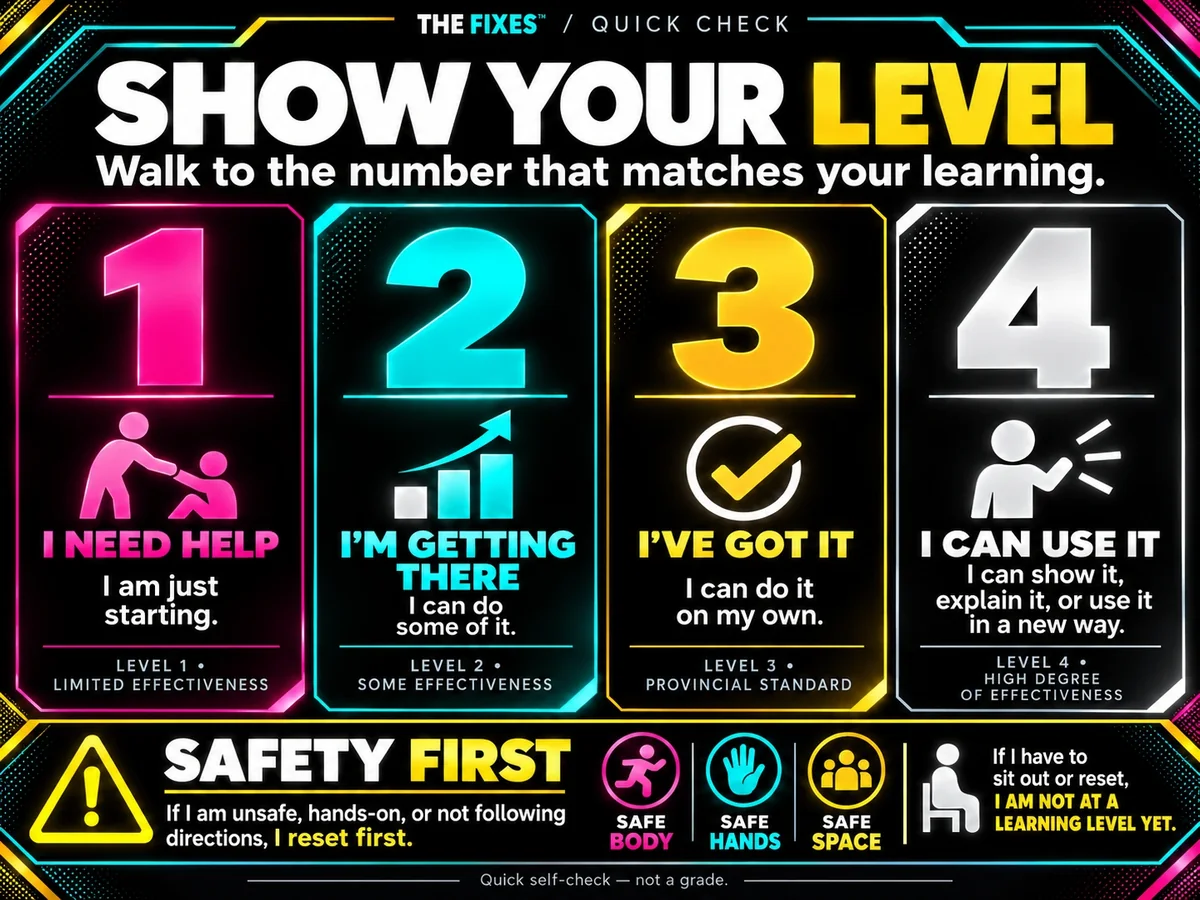
The visual deliberately says “quick self-check — not a grade.” A student choosing Level 2 is giving you information, not assigning a final mark. The value is in the follow-up: “What part can you do?” “What would move you one level?” or “Show me the part you are confident with.”
The four student-friendly levels
- 1 · I need help: I am just starting.
- 2 · I’m getting there: I can do some of it.
- 3 · I’ve got it: I can do it on my own.
- 4 · I can use it: I can show it, explain it, or use it in a new way.
What this looks like in PE
After practising an overhand throw, project the four levels and ask students to move to, point to or privately hold up the number that matches their current confidence. Then take thirty seconds to ask each group what they need next. The Safety version adds a visible reminder that safe space, safe movement and safe learning level come before performance.
What this looks like in drama, dance or health
In drama, the check can follow a short scene: “Can you use voice and body to make the role clear?” In dance: “Can you perform the sequence on your own and adapt it?” In health: “Can you explain the strategy and apply it to a new scenario?” The same four levels stay familiar while the success criteria change.