
Start with control and foundational object handling before asking students to move faster. Speed magnifies whatever pattern is already there, including the unstable one.
5 UNITS · 40 LESSONS · GRADES K–3
KEEP THE WHOLE CLASS
MOVING AT ONCE.
Parallel PE™ uses one repeatable station structure across five complete units. Teachers get the setup. Students get more movement. Click a unit cover below to see the teacher page before opening the actual lessons.
40lessons
160stations
5units
8lessons each
The system
MEET HERE.
THEN MOVE.
Every unit keeps the organizational grammar familiar while the movement skill changes. Students know how the room works; the teacher can spend more time coaching the skill.
01 · SET
SET
Create four stations around a clear central MEET HERE point.
02 · TEACH
TEACH
Use the full-page station visual to explain the lesson quickly.
03 · MOVE
MOVE
Students rotate through the four stations with minimal teacher reset.
Five complete units
Same structure.
New movement problem.
Each unit gets its own teacher-facing page before the actual lesson viewer opens.
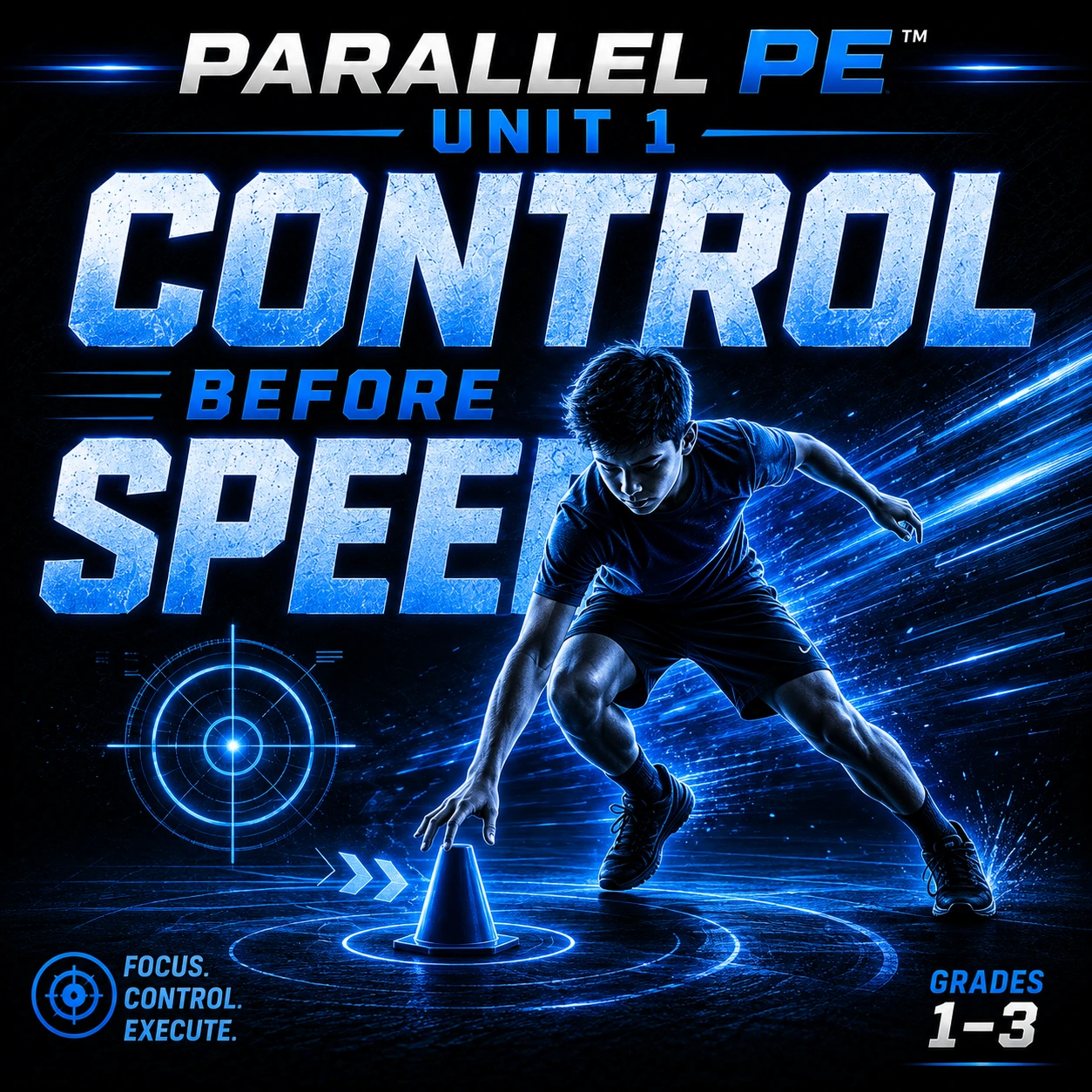
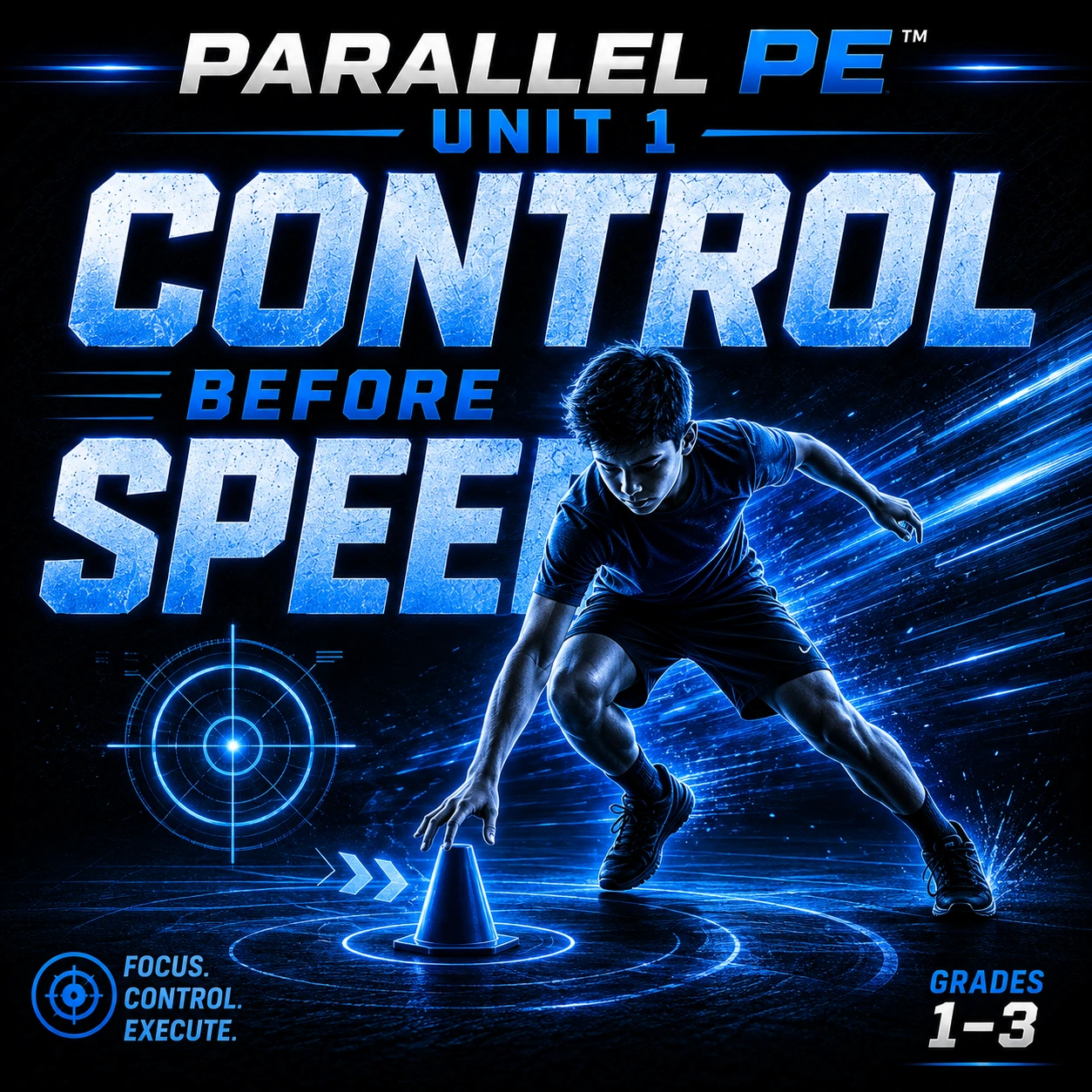
Unit 1 · 8 lessons
Control Before Speed
Movement control, stopping and spatial awareness.
Explore the unit →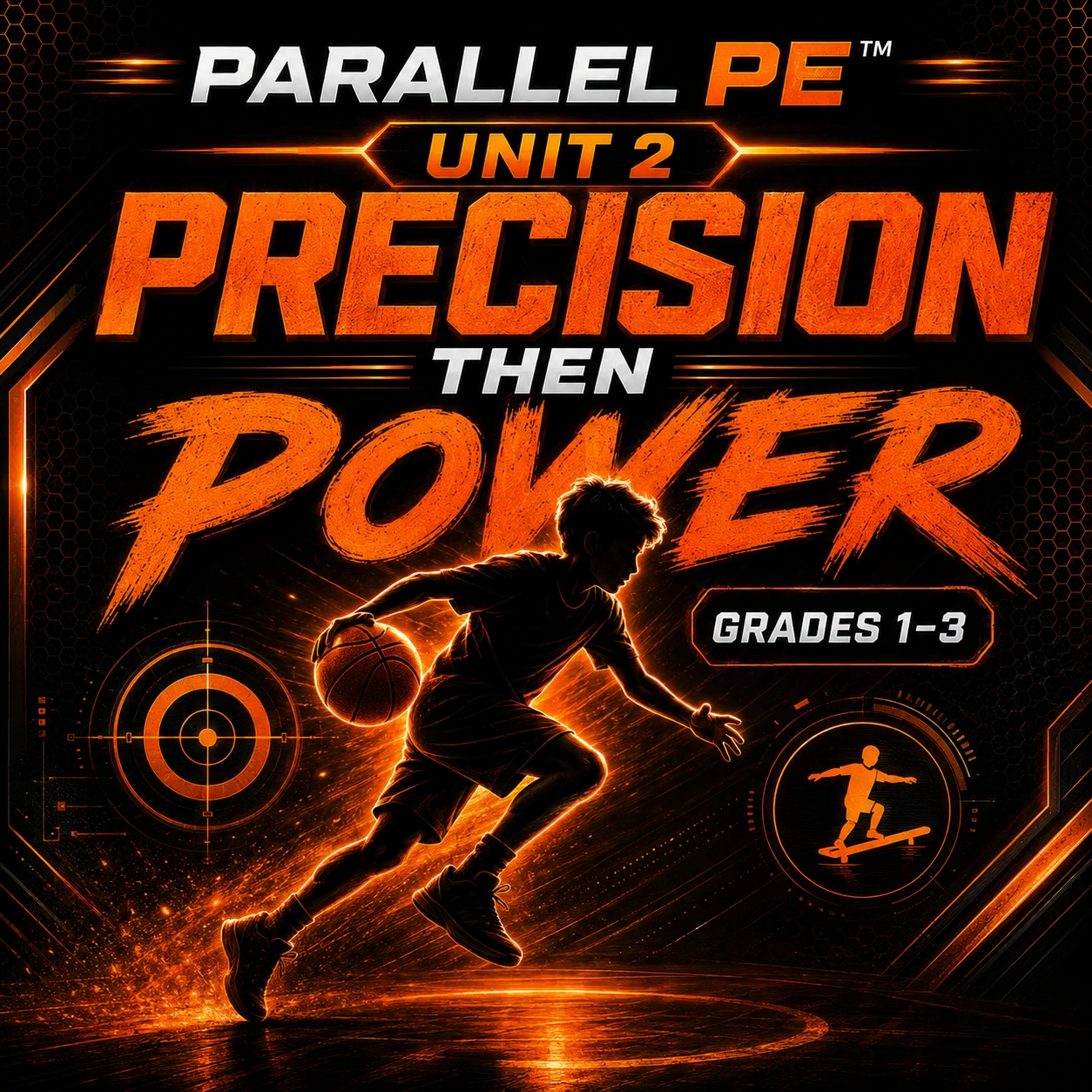
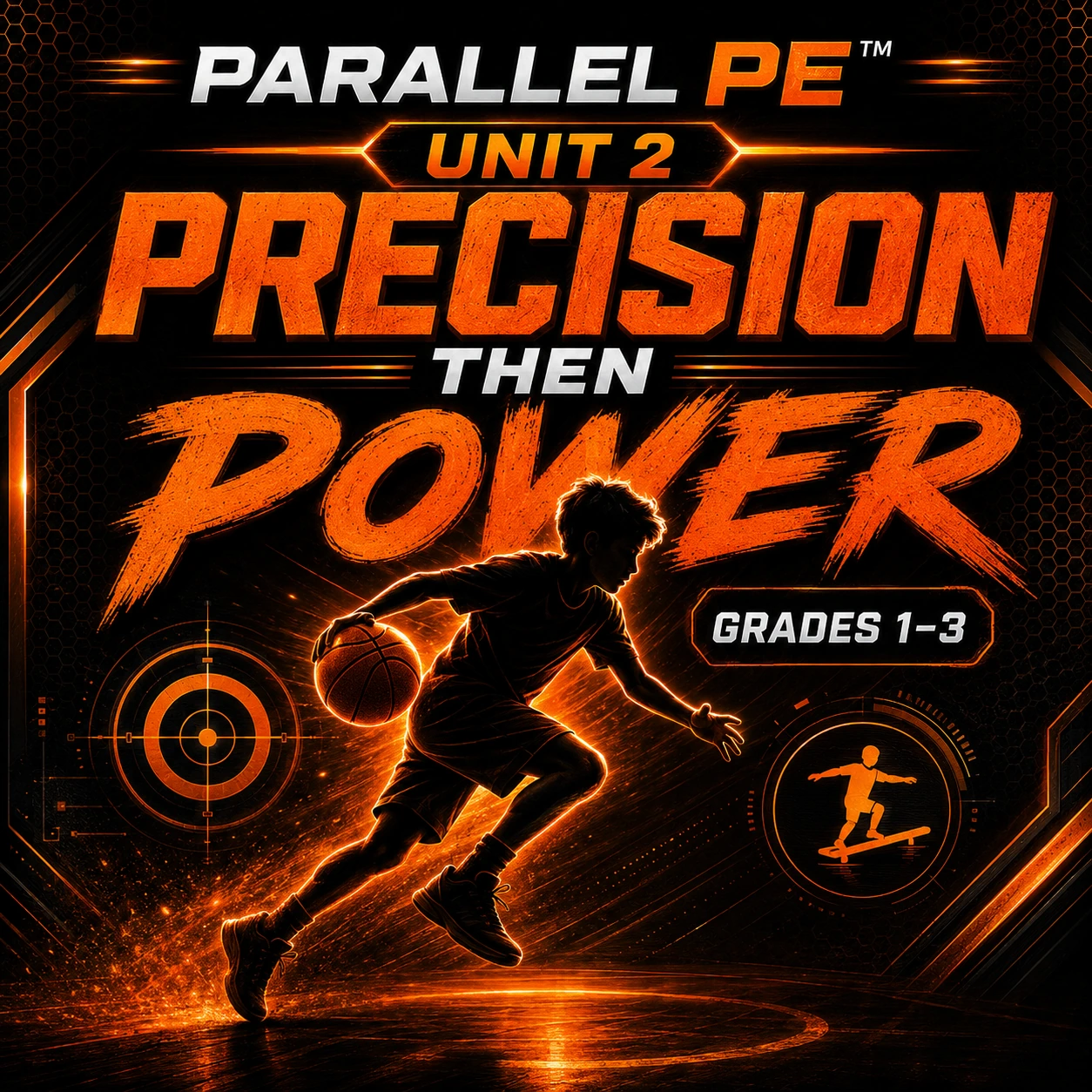
Unit 2 · 8 lessons
Precision Then Power
Accuracy, controlled force and target work.
Explore the unit →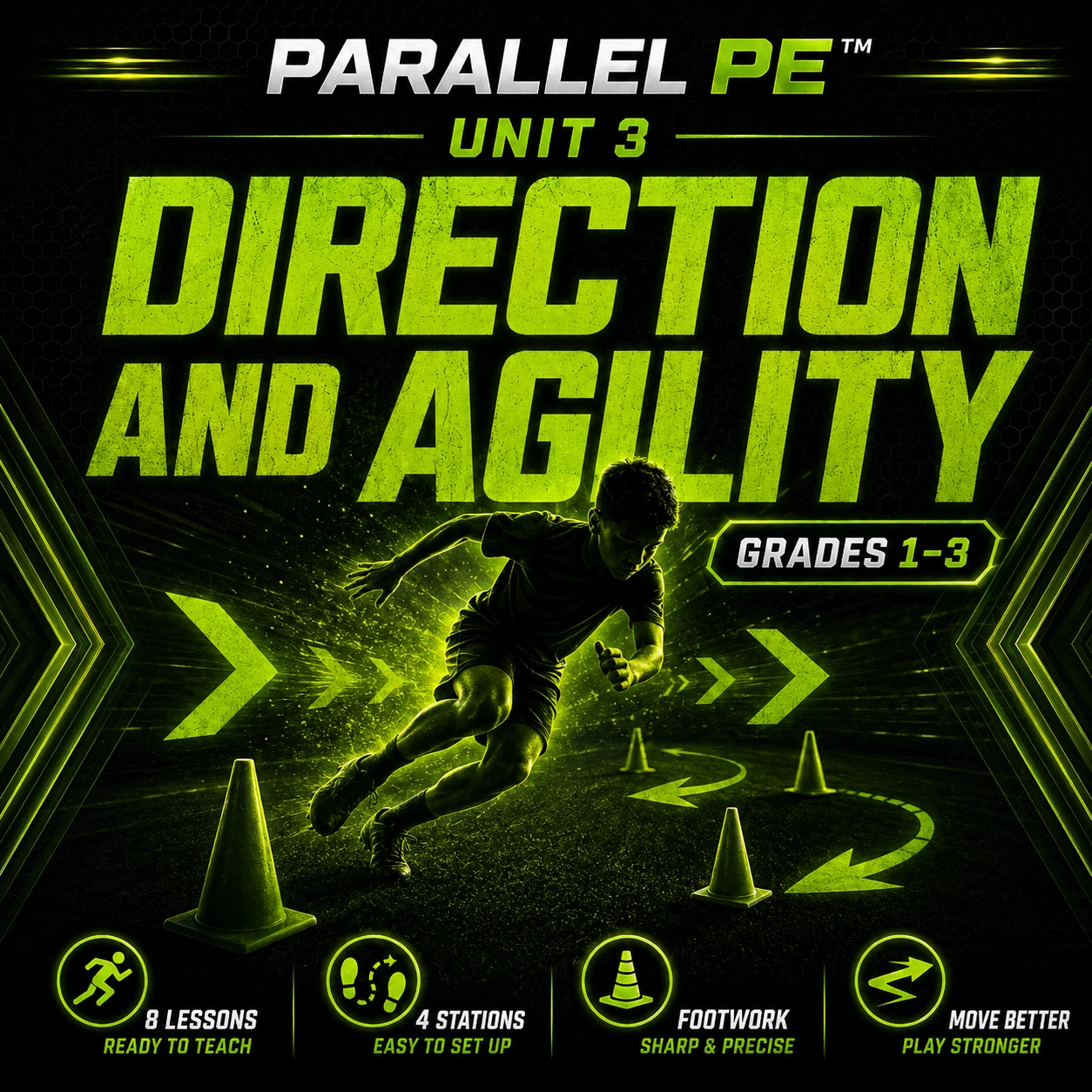
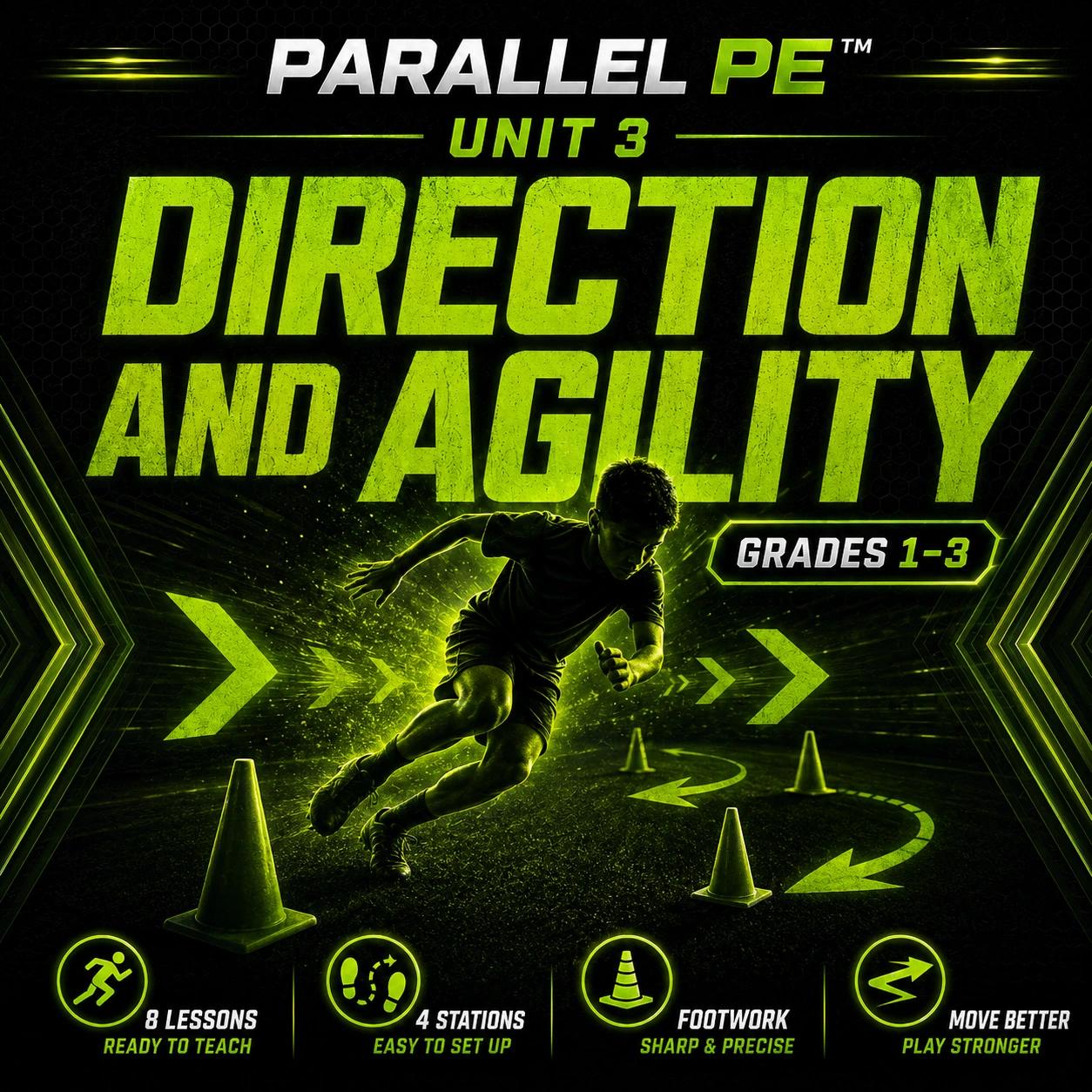
Unit 3 · 8 lessons
Direction & Agility
Changing direction, pathways and responsive movement.
Explore the unit →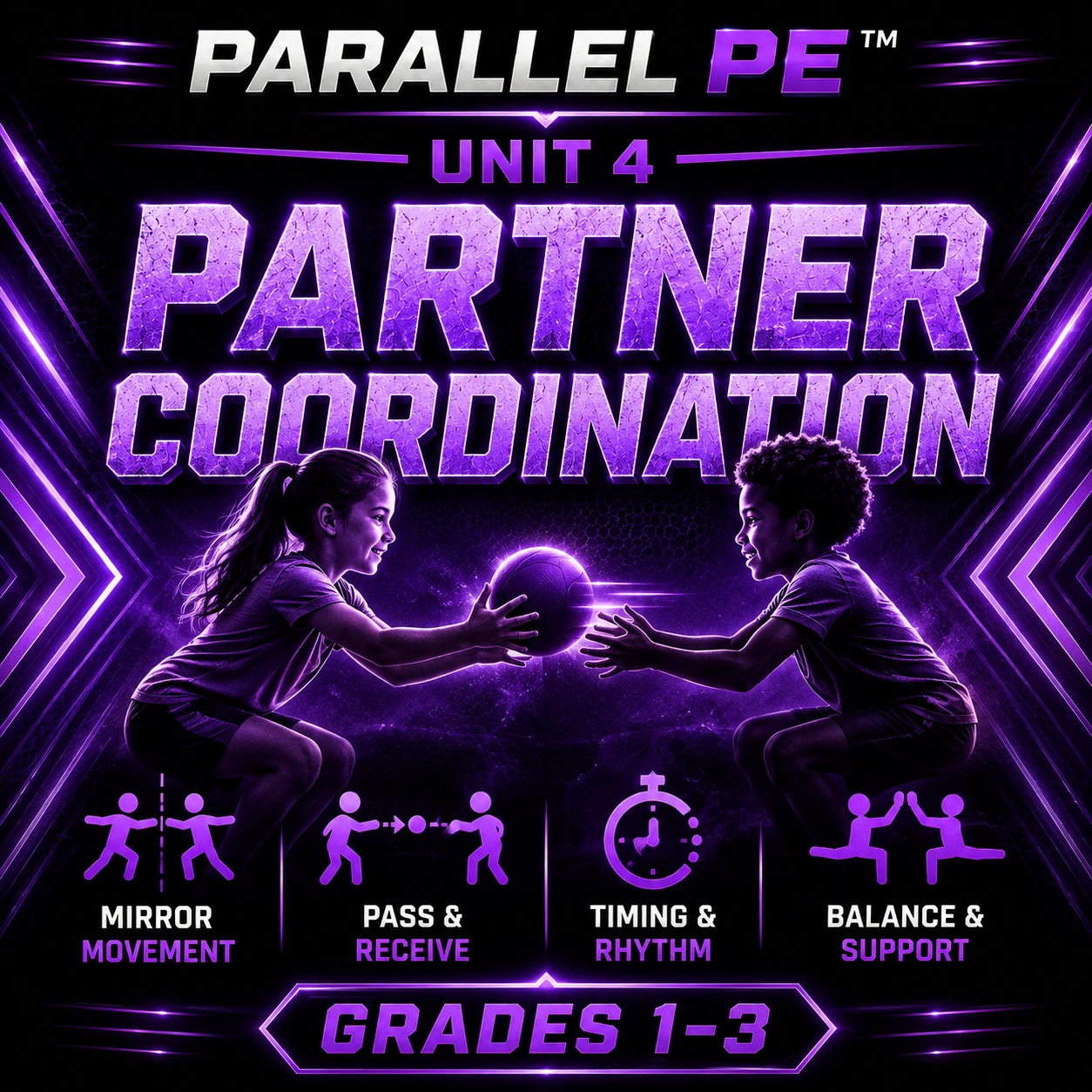
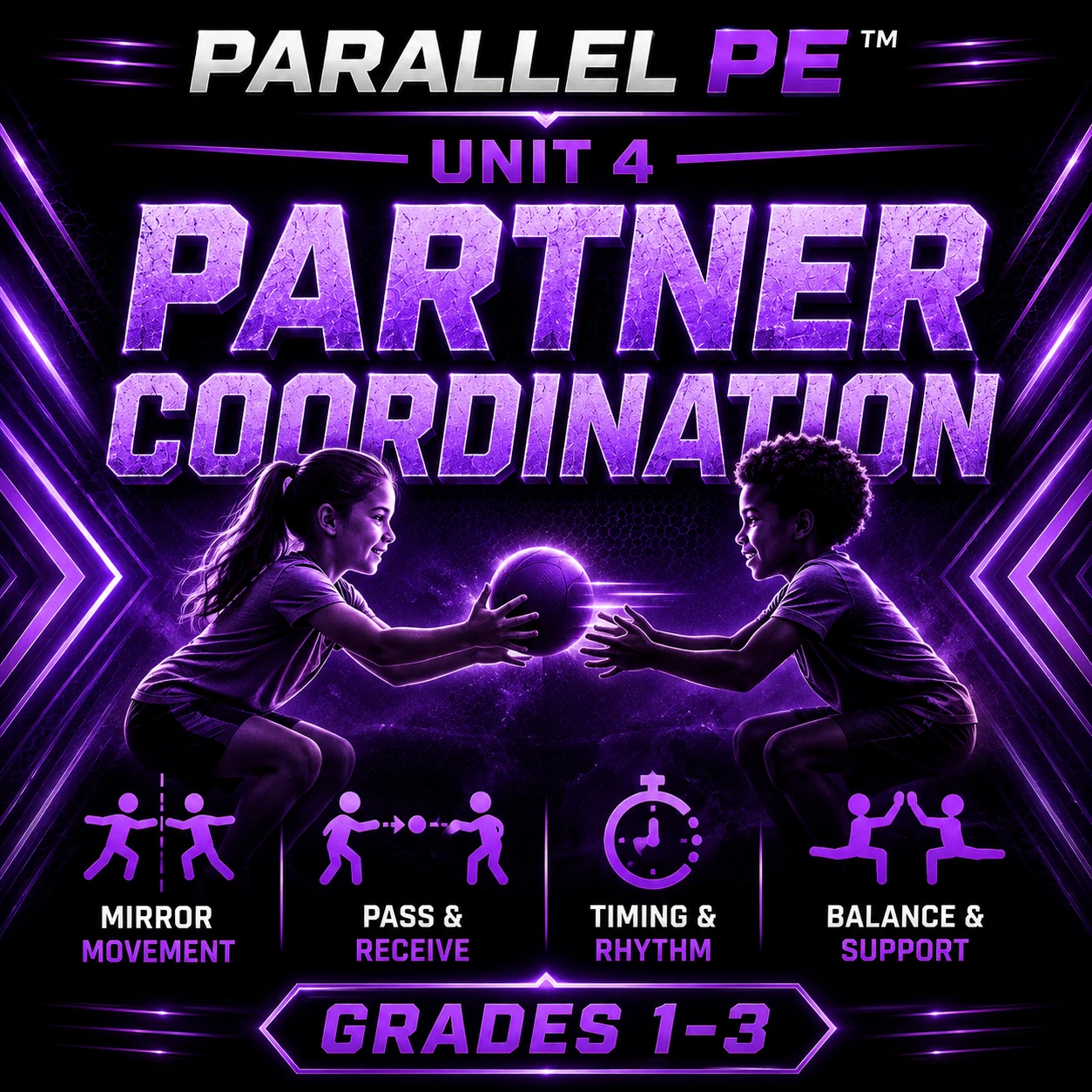
Unit 4 · 8 lessons
Partner Coordination
Mirroring, passing, timing, balance and cooperative movement.
Explore the unit →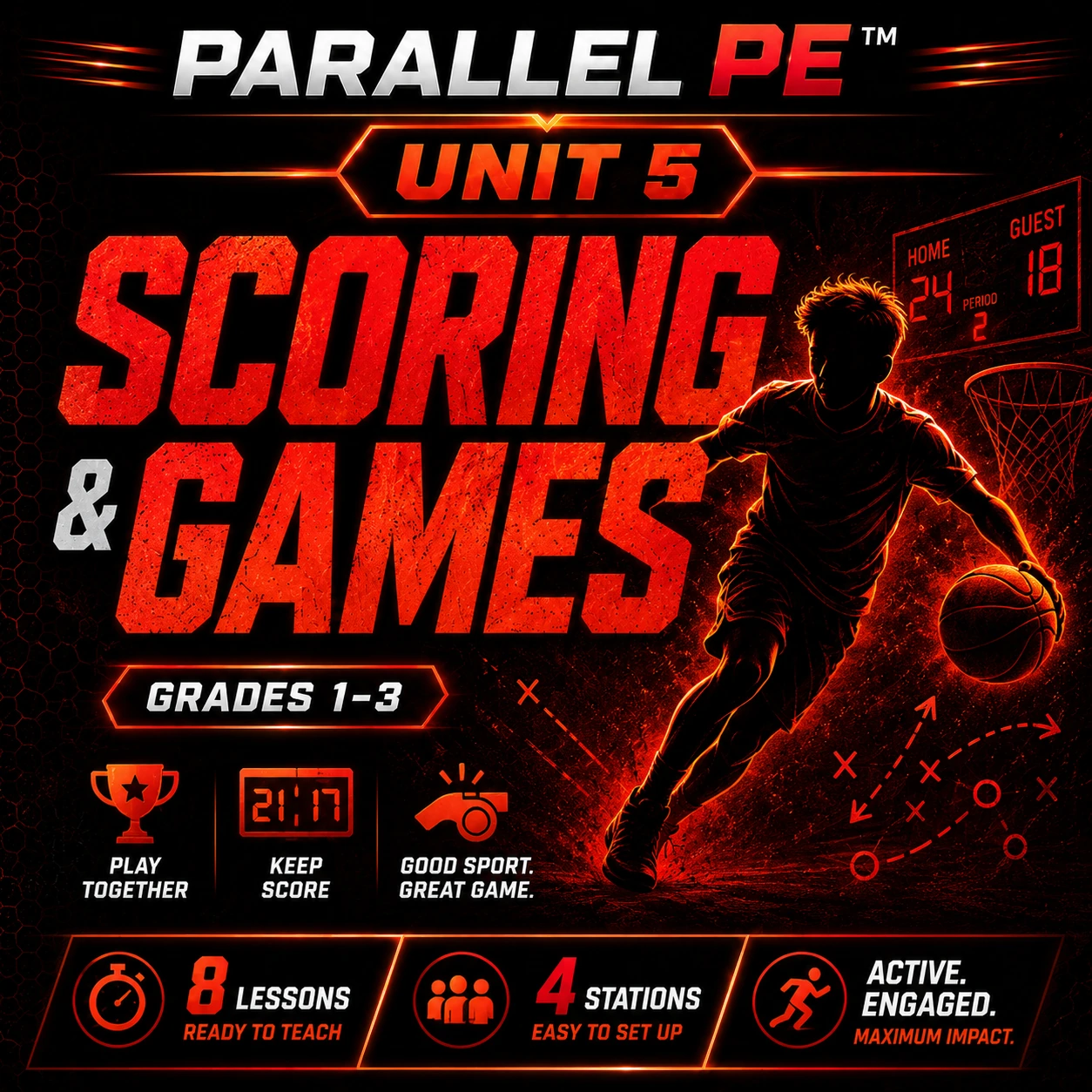
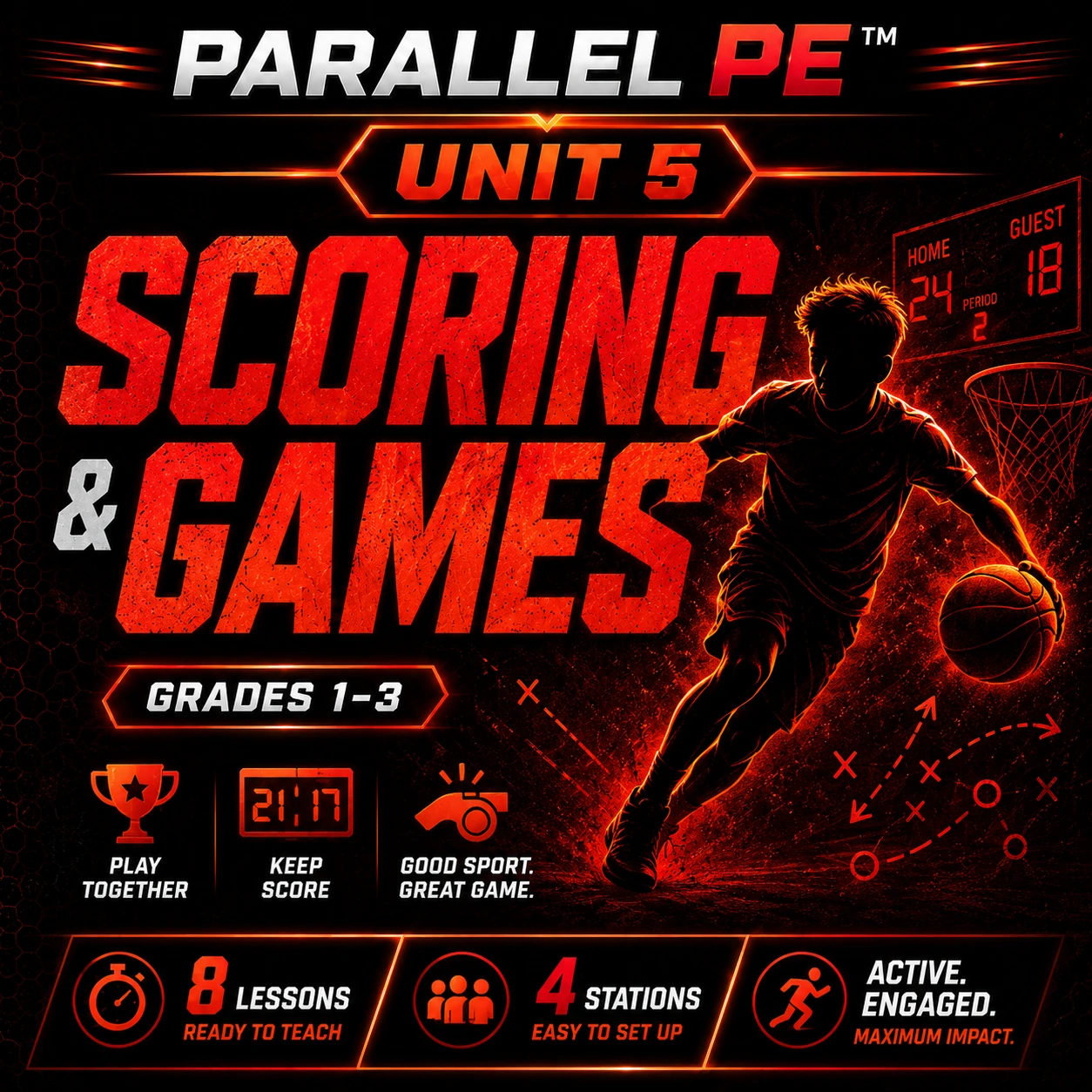
Unit 5 · 8 lessons
Scoring & Games
Rolling, dribbling, passing, catching and object-control games.
Explore the unit →Why it works
Less gym traffic.
More active minutes.
The visual station system keeps students moving in parallel instead of waiting for one long turn.
Four station visuals per lesson
Clear MEET HERE centre point
Equipment and setup notes
Quick Finish + cooldown
Teacher Cue for each lesson
Success criteria / observation support
Full-class movement focus
Ready-to-teach lesson pages
Why Parallel PE
The unit is designed around one stubborn PE problem: too much waiting.
A lesson can be well planned and still give students very little practice if everyone is waiting for one turn, one station or one demonstration. Parallel PE uses repeated lesson architecture and multiple active pathways so more of the class can work at the same time.
The five units move through different movement problems, but the organizing idea stays stable: give students a clear task, enough space to attempt it, a short feedback loop and another repetition before the explanation takes over.
Accuracy and target control come before adding force. Students can change distance and challenge without turning every attempt into an all-or-nothing throw or strike.
Movement pathways, direction changes and agility work best when the space has clear routes. Reduce collisions by solving the traffic pattern before increasing speed.
Partner work adds timing, communication and shared responsibility. Match the task to the pair so both students are active rather than one student becoming the permanent helper.
Apply the earlier skills inside simple game structures. Keep scoring clear enough that play can restart quickly; a game that stops for constant rule debates is not giving much practice.
Parallel does not mean uncontrolled. Set boundaries, equipment homes and a stop signal before activity begins. If the teacher has to shout over five different tasks to reset the room, simplify the number of simultaneous demands.