Partner work fails when one student becomes the performer and the other becomes the helper.
The repeated station structure reduces setup so the teacher can watch whether both partners are active, communicating and adapting the task together.
 THE FIXES PROGRAM™Parallel PE™ Unit 4: Partner Coordination
Students practise moving with a partner through mirroring, passing, rhythm, balance and cooperative challenges.
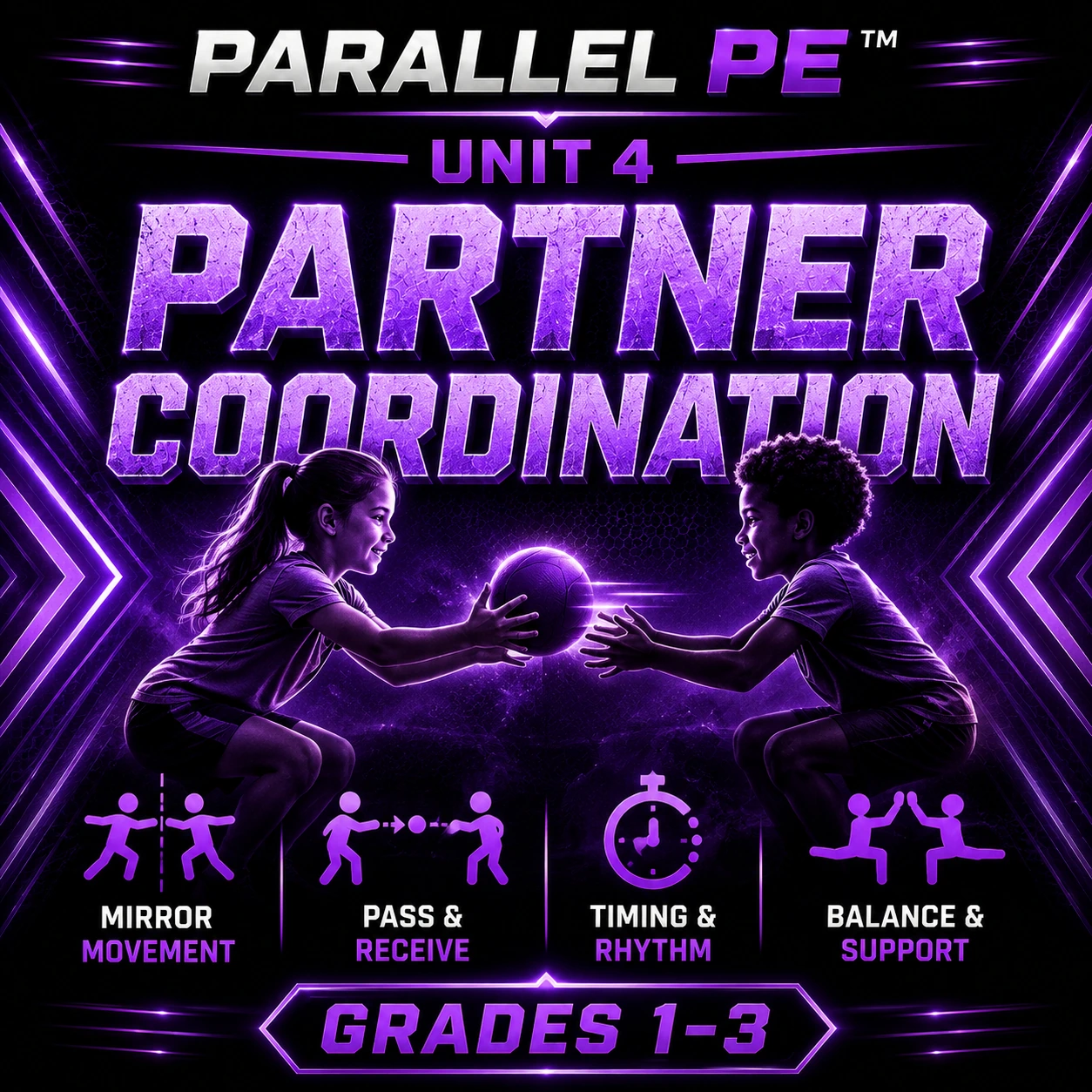
Unit 4 keeps the lesson map familiar while the challenge becomes coordination with another person: mirroring, passing, rhythm, balance and cooperative tasks require students to adjust to a partner rather than work only at their own pace.
The repeated station structure reduces setup so the teacher can watch whether both partners are active, communicating and adapting the task together.
Unit 4 uses the familiar MEET HERE + four-station structure so students can focus on partner coordination.
Meet at the centre, preview four stations, then let the class work in parallel.
Bring the class to the central MEET HERE point.
Use the lesson visual to preview all four stations.
Rotate through the stations while the teacher coaches and observes.
Screens and supporting visuals from this resource.
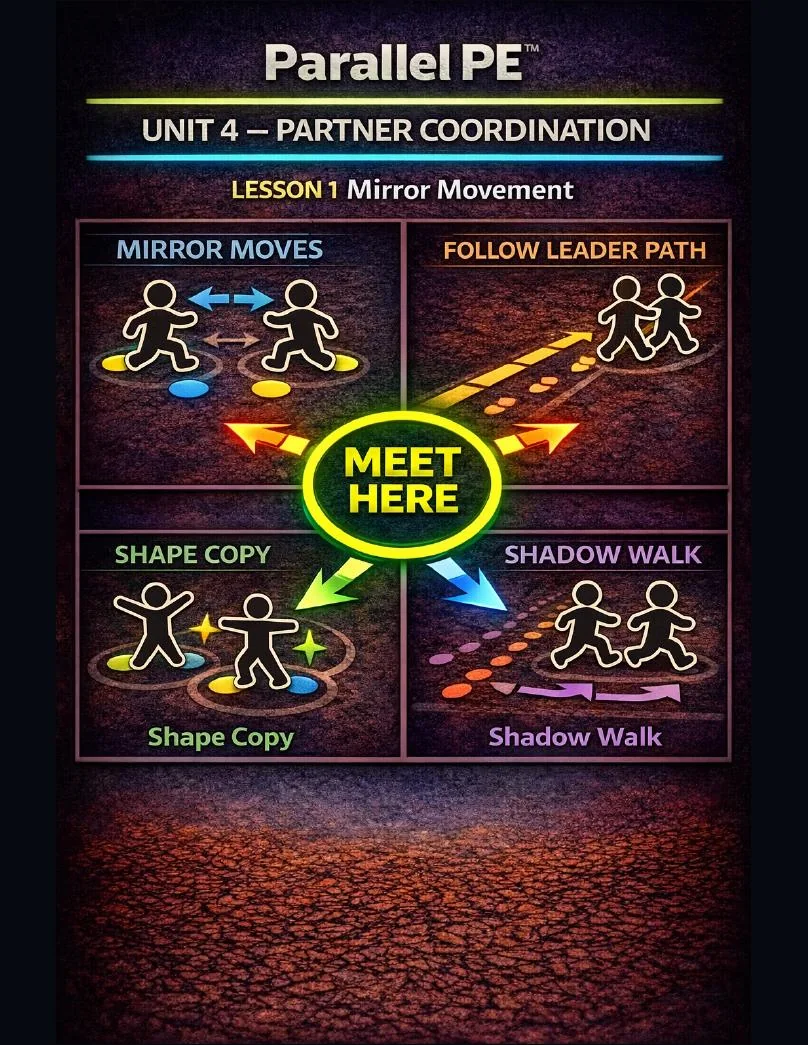
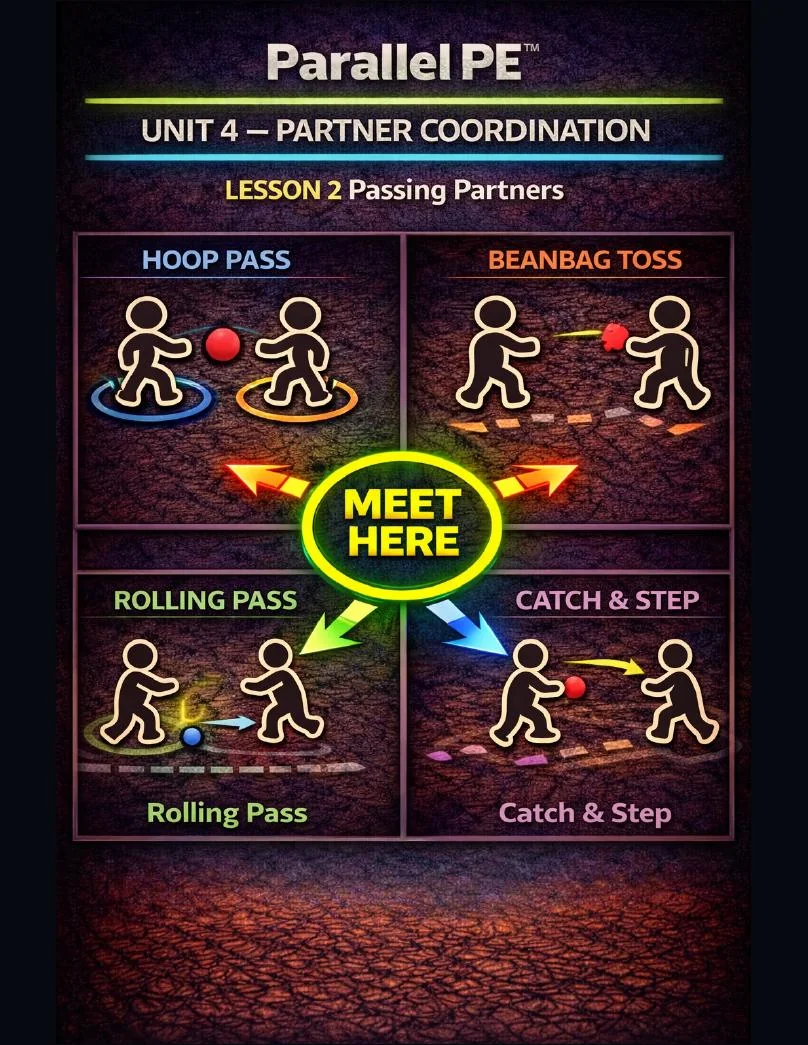
A good partner task is not one student demonstrating while the other waits. Unit 4 asks pairs to match timing, give usable passes, mirror movement, share balance demands or solve a cooperative challenge together. The teacher should be able to see contribution from both sides.
If partners are mismatched in confidence or skill, change distance, tempo or the object so both can participate. The goal is coordination, not proving that one partner can compensate for the other.
A ready word, eye contact cue or agreed count can make timing visible. Keep the communication functional rather than turning every station into a conversation lesson.
When tasks have a leader/follower or sender/receiver role, rotate it deliberately. Students need experience adjusting from both positions.
A dropped pass or missed mirror is useful information. Pairs should reset quickly and try again rather than stop to assign blame for the error.
The next route opens the actual unit pages in a clean teacher/classroom viewer. No ads or Stripe.