Power hides poor aim when students are asked to throw or strike hard too early.
Keeping the station pattern familiar gives the teacher more time to coach target choice, receiving position and force instead of re-explaining the room every lesson.
 THE FIXES PROGRAM™Parallel PE™ Unit 2: Precision Then Power
Students build accuracy and controlled force before adding power.
Unit 2 keeps the room organization familiar while the skill problem shifts to accuracy and controlled force. Students learn to send an object where they intend before being asked to send it harder.
Keeping the station pattern familiar gives the teacher more time to coach target choice, receiving position and force instead of re-explaining the room every lesson.
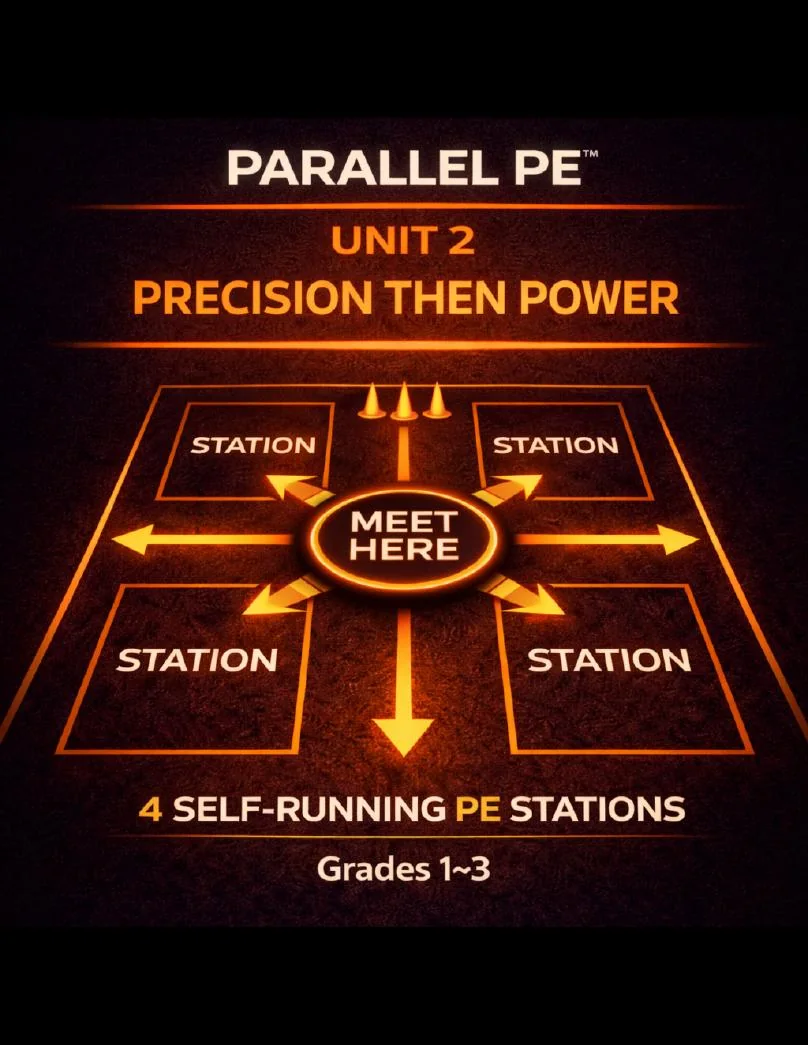
Unit 2 uses the familiar MEET HERE + four-station structure so students can focus on precision then power.
Meet at the centre, preview four stations, then let the class work in parallel.
Bring the class to the central MEET HERE point.
Use the lesson visual to preview all four stations.
Rotate through the stations while the teacher coaches and observes.
Screens and supporting visuals from this resource.
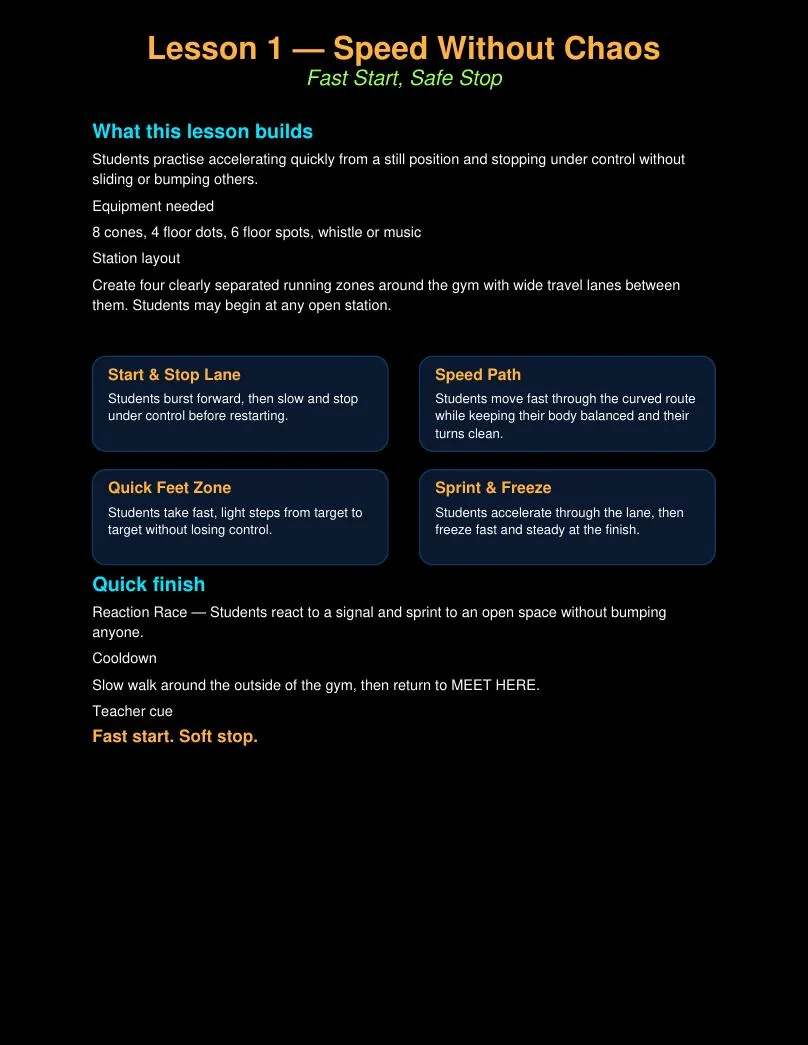
Precision and power are easier to teach when students can feel the difference between them. A successful Unit 2 rep is not simply an object moving quickly. It is a send or receive that matches the target, distance and partner demand with enough control to be repeatable.
A larger or closer target lets students experience accuracy. Make it smaller or farther away only after the intended action is showing up consistently.
“Harder” should mean enough force for the new distance, not the hardest throw or strike available. The useful question is whether the object still goes where the student intended.
Receiving position, readiness and tracking are part of the same skill exchange. Partner tasks break down when one student is practising and the other is only surviving the pass.
A miss left, right, short or long suggests a different adjustment. One specific change is more useful than telling students to “try harder.”
The next route opens the actual unit pages in a clean teacher/classroom viewer. No ads or Stripe.