Speed is not useful if students cannot stop, balance or control the object yet.
The first unit keeps the traffic pattern stable so students can repeat the foundations without spending each lesson learning where to stand or where to go next.
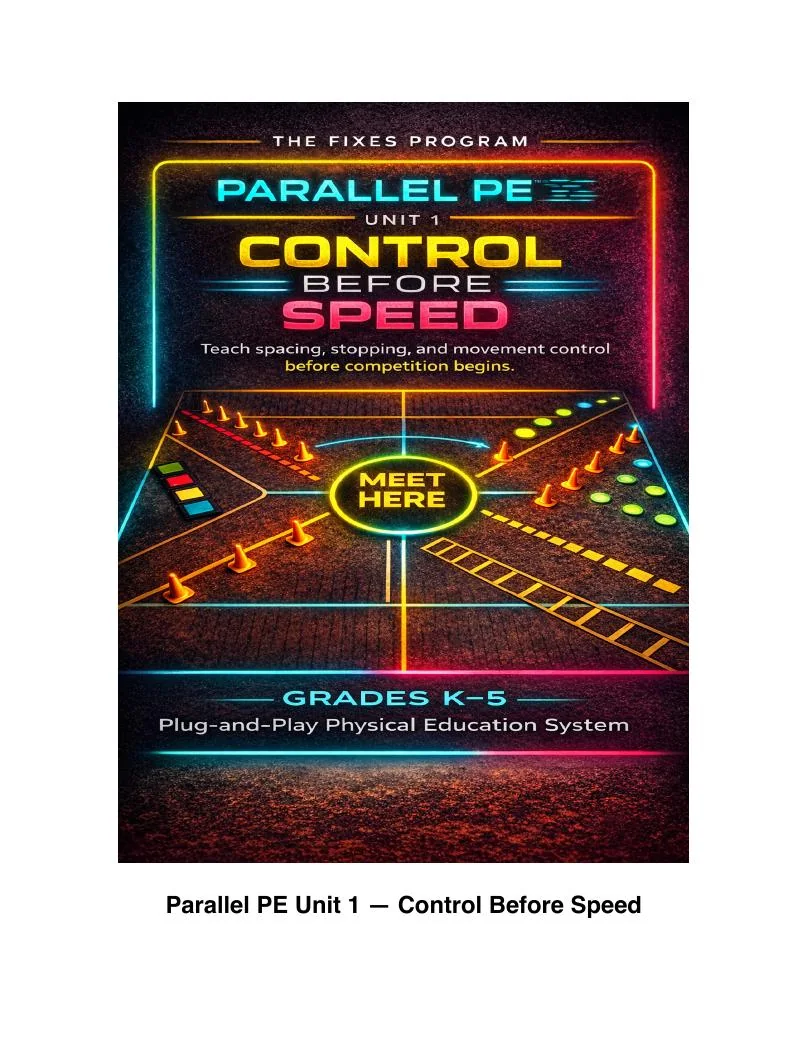
 THE FIXES PROGRAM™Parallel PE™ Unit 1: Control Before Speed
Students build control, stopping, balance and safe movement before speed becomes the goal.
Unit 1 uses the familiar four-station architecture to teach control before speed: stopping, balance, safe pathways and object control stay visible while the tasks gradually become more demanding.
The first unit keeps the traffic pattern stable so students can repeat the foundations without spending each lesson learning where to stand or where to go next.
Unit 1 uses the familiar MEET HERE + four-station structure so students can focus on control before speed.
Meet at the centre, preview four stations, then let the class work in parallel.
Bring the class to the central MEET HERE point.
Use the lesson visual to preview all four stations.
Rotate through the stations while the teacher coaches and observes.
Screens and supporting visuals from this resource.
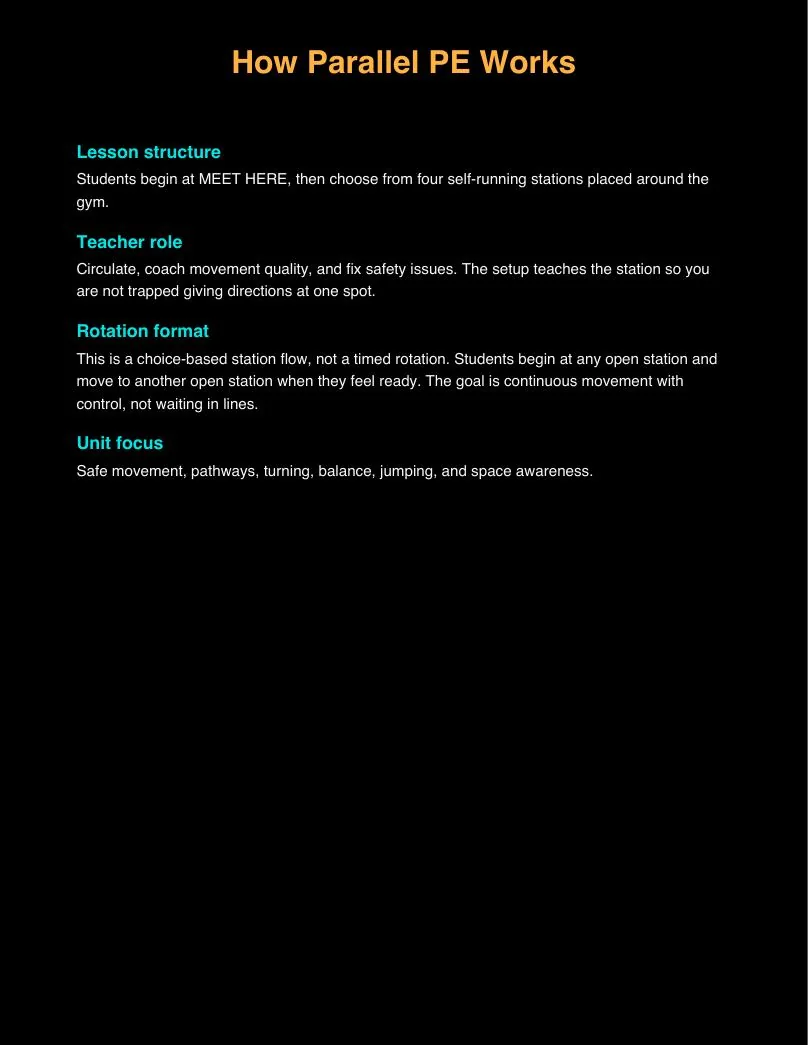
The easiest mistake in a first movement unit is to reward the fastest attempt before students can stop, change direction or keep an object under control. Unit 1 is intentionally built the other way around. Students get repeated chances to own the movement first; speed is added only when control can survive it.
Students need to know exactly what safe stopping looks like in the space. A clear stop position gives the teacher something observable to coach instead of relying on “slow down” after the fact.
Increase distance, speed or pathway complexity separately. When three variables change together, students cannot tell which part made the task harder.
If one station creates waiting, split it or create a second version. In this unit, another controlled repetition is more valuable than a perfectly tidy queue.
A short game-like task should require students to keep the same control while attention is divided. If the skill disappears under pressure, return to a simpler version before adding more speed.
The next route opens the actual unit pages in a clean teacher/classroom viewer. No ads or Stripe.